
The Complete Guide to Construction Budget Management in 2026
Last updated: April 2026
Quick Answer: Construction Budget Management
Construction budget management is the process of planning, tracking, and controlling all project costs from pre-construction through closeout. Effective budget management combines real-time job cost data, automated WIP reporting, and AI-powered forecasting to protect margins before problems become losses.
85% of large-scale construction projects go over budget, generating an estimated $1.6 trillion in global losses every year. That figure has not improved despite decades of awareness. The causes are consistent: inaccurate estimates, incomplete design packages, unmanaged change orders, and financial data that arrives too late to act on.
In 2026, the pressure has increased. Tariffs have repriced steel, aluminum, and lumber by 5 to 25% depending on sourcing. Nearly 40% of skilled tradespeople are over 45, tightening the labour supply. Global construction cost inflation is tracking at approximately 4% per year, with some regional markets running twice that rate.
Construction companies that manage budgets well are not doing anything exotic. They track costs in real time, automate WIP reporting, and forecast where each job will land before the overrun compounds. Platforms like Premier Construction Software exist for exactly this reason.
This guide covers the core components of modern construction budget management, from direct and indirect cost structures to AI-powered forecasting and risk detection.
Key Components of Construction Budgeting
Every construction budget has the same basic architecture. The difference between companies that control margins and those that lose them is how precisely they track the details.
Direct vs. Indirect Costs
Direct costs typically account for about 70% of a project budget. They include:
• Materials, equipment purchases, and rentals
• Labour wages and subcontractor fees
• On-site utilities and project supervision
Indirect costs cover the remaining 30% and include office rent, administrative salaries, software licences, and corporate insurance premiums. Both categories require separate tracking to understand true project profitability.
Premier Construction Software tracks both cost types through automated systems that link field activity directly to accounting records, eliminating the need for manual reconciliation between systems.
Digital Cost Code Structures
Cost codes are the foundation of accurate job costing. They assign every expense to a specific budget line, making it possible to analyse spending at the project level, the trade level, or the individual task level.
When cost codes are set up correctly and applied consistently, project managers can compare budgeted hours against actuals in real time rather than waiting for month-end reports. Field teams enter time against specific cost codes from mobile devices, and that data flows directly into the financial system.
The result is a live view of where a job stands, not a reconstruction of where it was two weeks ago.
Resource Allocation
Resource allocation systems track how labour, materials, and equipment are distributed across active projects. With live cost data, project managers can identify idle resources before they become a budget problem and rebalance workloads before delays compound.
Construction teams using modern allocation tools adjust their distribution based on up-to-the-minute project needs, reducing bottlenecks and cutting idle time.
Digital Tools Transforming Budget Management
Construction financial management software has changed how companies track budgets. The shift from spreadsheets and legacy accounting tools to modern construction ERPs has produced measurable improvements in cost control, close cycle times, and forecasting accuracy.
Construction ERPs and Financial Platforms
A modern construction ERP connects field operations, project management, and accounting into a single system. Costs recorded on-site update financial reports instantly. Change orders flow through automated approval workflows and post directly to the affected budget lines.
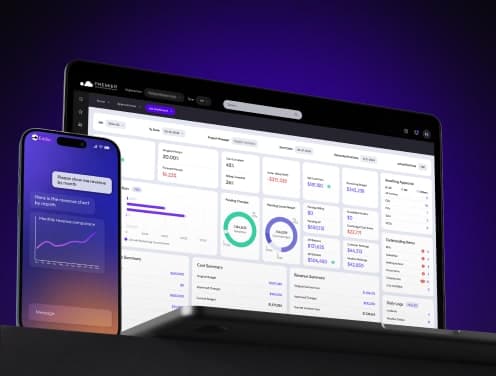
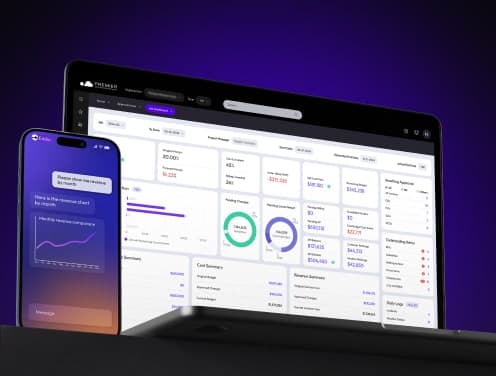
Premier Construction Software is built specifically for this workflow. Its job dashboard shows every project's financial position at a glance, with drilldown access to the transaction level. WIP reports take two clicks, not two days.
"Premier does everything great. It does everything you want it to do. It does it in a very easy to understand way. And it correlates all of your data and puts it in one location that your entire team can access and use very effectively." -- Scott Largley, Senior PM, Ally Construction Services
Key features of modern construction financial management platforms include:
• Automated cost tracking: expenses post directly from field entries without manual data re-entry
• Integrated payroll and AP: payroll and accounts payable tie directly to job cost codes
• Live financial indicators: margin, cash flow, and billing status visible without running month-end reports
• Multi-project dashboards: portfolio-level visibility across all active jobs simultaneously
Real-Time Budget Tracking
Live tracking gives project managers the ability to respond to cost variances as they occur rather than discovering them weeks later. Field teams record production tracking, time, and material usage from mobile applications, and that data reaches the financial system within minutes.
Construction companies using real-time tracking report significantly better cost control outcomes. The speed of the feedback loop determines whether a problem gets corrected or compounds.
"We can pull reports in real time, drill down into costs, and see exactly what's happening." -- Nancy Ocampo, Sr. Accountant, Legacy Construction
AI-Powered Analytics
AI-powered analytics platforms convert raw financial data into actionable forecasts. Construction companies can now:
1. Generate automated job cost reports with no manual assembly
2. Produce financial forecasts that update as costs change
3. Track project performance against historical benchmarks
4. Monitor risk indicators before they become budget events
Premier's AI assistant, Eddie, provides on-demand financial answers across any job without requiring a manual report. The platform also includes predictive intelligence that identifies red flags early and flags budget anomalies automatically.
"Premier allowed us to catch red flags as soon as they happen and protect our margins." -- Carlo Frediani, Controller, Broccolini
Data-Driven Budget Forecasting
AI-powered cost estimation models achieve accuracy rates between 91% and 97% on well-documented projects. That range represents a meaningful shift from traditional estimating, where subjective judgment and fragmented data create budgets that look solid at bid day and erode under execution.
Predictive Analytics
Predictive analytics identify potential project issues before they become cost overruns. Machine learning models analyse variables including material price fluctuations, labour availability, equipment utilisation rates, and historical cost patterns to forecast where a project will land at completion.
Premier's integrated predictive intelligence flags these risks automatically, giving controllers and PMs time to intervene rather than simply record the damage.
Machine Learning for Cost Estimation
Research shows AI estimation systems can analyse historical project data with up to 97% accuracy. Bridge construction projects using machine learning have achieved 98% accuracy in cost estimates. Neural networks show approximately 93% accuracy when predicting highway project costs.
Machine learning has also reduced estimation time by approximately 80%. Construction teams using these systems can generate multiple cost scenarios quickly, analyse more project variables simultaneously, and respond to market changes in days rather than weeks.
Historical Data Analysis
Accurate forecasting depends on clean historical data. Past project outcomes, labour productivity rates, subcontractor performance, and material costs all inform future estimates.
Construction companies that maintain detailed records in a structured system gain a compounding advantage over time. Each completed project makes the next estimate more accurate.
Premier helps companies build and maintain this data asset automatically. Past project data feeds directly into estimation and forecasting workflows without manual extraction or reformatting.
Construction Budget Performance Metrics
Tracking the right metrics determines whether a company manages its budget or reacts to it.
Essential KPIs for Budget Tracking
Construction companies monitoring financial health track a consistent set of indicators:
• Cost Performance Index (CPI): budgeted costs versus actual expenses at any point in the project
• Cost variance percentage: the gap between planned and actual spend by cost code
• Working capital ratio: current assets minus current liabilities, indicating short-term stability
• Accounts receivable aging: how quickly the company collects billed amounts
• EAC (Estimate at Completion): the forecasted final cost of every active job
Premier's job dashboard displays all of these metrics in real time, with drilldown access to the underlying transactions.
"Probably one of the most valuable features from the dashboard is the forecasting data. It lets you know where you're going to be at the end of the project." -- Streamline General Contractors
Automated Performance Dashboards
Modern dashboards replace manual reporting with live data visualisation. Instead of waiting for a controller to run reports, every stakeholder with appropriate access sees the same current numbers.
Five advantages of automated dashboards:
1. Shared access eliminates version-control problems across teams
2. Budget risks surface immediately rather than at month-end
3. Financial reports generate automatically without staff time
4. Customisable views show each role the data they need
5. Decision-makers act on current data, not last week's summary
"WIP reports are instantaneously created out of Premier. You click a button, that report comes out. In the past it was a big process, took a lot of time." -- Mike Van Orman, Nomad Infrastructure
Real-Time Financial Health Indicators
Live financial tracking gives construction firms the ability to catch issues before they require write-downs. Key indicators to watch in real time:
• Quick ratio: whether the company can cover short-term obligations without selling assets
• Accounts receivable turnover: how quickly billing converts to cash
• Cost variance by job: which projects are trending over or under budget and by how much
• WIP overbillings and underbillings: billing position relative to earned revenue on every active contract
A positive cost variance deserves as much attention as a negative one. Under-billing is as harmful to cash flow as overspending. Premier flags both automatically.
Risk Management Through Technology
Technology is the practical mechanism for identifying and containing budget risk. 85% of large construction projects still go over budget globally, costing the industry an estimated $1.6 trillion annually. In 2026, tariff volatility and labour scarcity have made that risk harder to absorb and faster to compound.
Automated Risk Detection
AI-powered risk detection analyses historical project data to find patterns that indicate future problems. These systems monitor project expenses continuously and generate alerts when costs deviate from plan.
Premier's automated detection capabilities flag budget anomalies immediately, giving teams time to respond rather than simply record the variance. The BERT-based classification model used in advanced platforms achieves a 93.4% accuracy rate in detecting contractual risks.
Core advantages of automated risk detection:
• Continuous monitoring of expenses against approved budgets
• Automated alerts when costs deviate from plan
• Pattern recognition trained on historical project outcomes
• Integration with existing financial and project management workflows
Digital Contingency Planning
Construction companies typically reserve 3% to 10% of total project budget as contingency. In 2026, given tariff uncertainty and material price volatility, many risk analysts recommend a 15% to 20% buffer for projects with procurement exposure.
Digital contingency planning tracks reserve usage automatically and updates the available balance as costs are committed. Five steps to implement this effectively:
1. Conduct a risk assessment using historical data before finalising the budget
2. Allocate contingency reserves based on project type and procurement risk
3. Automate monitoring of contingency usage against committed costs
4. Configure real-time alerts when reserves reach predefined thresholds
5. Adjust reserve levels as the project progresses and risk profiles change
Budget Variance Analysis
Variance analysis compares actual costs against approved estimates and surfaces the specific areas where projects diverge from plan. Modern variance tools track:
• Project task costs versus budgeted estimates by cost code
• Resource utilisation rates versus planned allocation
• Labour cost variations against productivity targets
• Material and equipment expenses versus committed purchase orders
Premier flags areas where actual costs exceed budgeted amounts automatically. Project managers receive instant notifications rather than discovering overruns during monthly review cycles.
IoT sensors and mobile devices on-site generate the real-time data that feeds these variance systems. Construction firms that have added these tools report measurable improvements in budget control and risk containment.
"Premier has transformed our operations by streamlining accounts payable and enhancing project insights. The OData feature enables real-time modelling and analysis." -- Josh Richardson, CFO, Redbud Partners LLC
Why Premier Construction Software
Premier is a modern construction ERP built specifically for general contractors, land developers, and home builders with $5M to $500M+ in annual revenue. It combines accounting, project management, field tools, a subcontractor portal, document management, and AI-powered intelligence in one platform.
Implementation takes as few as 60 days, led by construction-focused CPAs and project managers who build a customised Operational Playbook for each customer. Every implementation includes a 30-day money-back guarantee.
Premier is rated #1 Construction Cloud ERP by Forbes Advisor in 2026 and carries 1,000+ verified reviews across G2, Capterra, GetApp, and Software Advice.
Key results from Premier customers:
• JM Construction: "I've gone from probably about 3% profit up to about 8% by using Premier because I'm very confident that the numbers are right." -- Mark Marshall, Owner
• Streamline General Contractors: "In a span of 4 years we've doubled our size with Premier."
• Engelke Construction Solutions: "Since adopting Premier over a decade ago, we have grown our revenue by 30x."
• VPAC Construction Group: "Saving $50,000/year with Premier." -- Cassie Glover, Controller
• Ovation Property Management: "The transition from our server-based system to Premier's cloud-based platform reduced task clicks by 80%." -- Cherise Quimby, VP of Accounting
The construction management software market was valued at $8.18 billion in 2026 and is projected to reach $19.55 billion by 2036, growing at a 9.1% CAGR. Construction companies that adopt modern ERPs now are building the financial infrastructure to scale.
Conclusion
Construction budget management in 2026 is not a spreadsheet problem. The data exists. The tools exist. The gap is between companies still waiting for month-end reports and those tracking costs the moment they occur.
Real-time job cost visibility, automated WIP reporting, AI-powered forecasting, and automated risk detection are the four capabilities that separate companies protecting their margins from those discovering overruns too late to fix them.
Premier Construction Software brings all four into one platform, with a 60-day implementation timeline and a 30-day money-back guarantee. More than 800 customers and 15,000 users rely on it to run their projects without the guesswork.
See why growing contractors switch to Premier: Book a Demo
Construction ERP Software Comparison 2026
The table below compares leading construction ERP platforms across key buying criteria. Premier's row is highlighted.
Software | Best For | Starting Price | Key Features | Rating | Verdict |
|---|---|---|---|---|---|
Premier Construction Software | Growing GCs, $5M–$500M+ revenue | Contact for pricing 30-day money-back guarantee | • Real-time job cost dashboard • WIP report in 2 clicks • AI-powered predictive intelligence (Eddie) • Subcontractor portal (invoice in 45 sec) • Go live in as few as 60 days • Mobile field tools • OData real-time modelling | 4.7/5 (1,000+ reviews) | Best all-in-one construction ERP for mid-market GCs. Fastest implementation in the category. White-glove onboarding. |
CMiC | Large enterprise contractors | Custom enterprise pricing | • Full ERP suite • Document management • Field operations • Enterprise integrations | 3.8 / 5 | Powerful but expensive. Long implementations. Better suited to $250M+ contractors. |
Sage 300 CRE | Legacy mid-market contractors | ~$10,000+ upfront | • Job costing • Payroll • Service management • Legacy integrations | 3.5 / 5 | Long-standing product but aging UI. Steep learning curve. Limited cloud functionality. |
Acumatica | General contractors needing ERP customisation | ~$15,000+ per year | • General ERP • Construction module add-on • Cloud-based • Flexible integrations | 4.2 / 5 | Not construction-native. Requires heavy customisation. Strong general ERP features. |
Procore | Project management-focused GCs | ~$375/user/month | • RFIs, submittals, drawings • Field management • Bid management • No native accounting | 4.5 / 5 | Best-in-class for project management. No accounting. Often paired with Premier for full ERP coverage. |
Foundation Software | Small to mid-size specialty contractors | ~$350/month | • Accounting • Payroll • Job costing • Limited field tools | 4.1 / 5 | Good for smaller contractors. Limited scalability for growing GCs or multi-entity operations. |
Sources: Future Market Insights (2026) | Archbuildhunt Construction Cost Overrun 2026 | Monograph AI Estimating Accuracy | RSMeans AI Construction Estimates | EIN Presswire Construction Software Market 2026
Latest articles



Trusted by global leaders
Join those who have put their trust in us