
Construction Management vs. Project Management: Key Differences Explained (2026)
Last updated: April 2026
Quick Answer: Construction Management vs. Project Management
Construction management focuses on day-to-day site operations, trades, and field execution. Project management oversees the full project lifecycle, including budget, stakeholders, and strategic planning. Both roles are essential, but they operate at different levels of the project.
On large commercial builds, the line between construction management and project management blurs fast. You hear both titles thrown around in pre-construction meetings and on-site trailers. The confusion is real, and it leads to overlapping responsibilities, missed handoffs, and finger-pointing when something slips.
These are two distinct roles with different scopes, different skill sets, and different career paths. Construction managers run the field. Project managers run the project. Understanding where one ends and the other begins is the difference between a well-coordinated build and an expensive mess.
This guide breaks down the real differences, daily responsibilities, salary benchmarks, and career trajectories for each role in 2026.
Quick Comparison: Construction Software and Tools
Software/Tool | Type | Starting Price | Best For |
|---|---|---|---|
Premier | Construction ERP | Contact for pricing | General contractors needing full job cost + project management in one system |
Procore | Project Management | Contact for pricing | Project management only (no accounting) |
Sage 300 CRE | Legacy ERP | Contact for pricing | Mid-to-large contractors on legacy systems |
QuickBooks | Generic Accounting | From $30/month | Small contractors, not construction-native |
What Construction Management and Project Management Actually Mean
Construction management is the hands-on coordination of physical building activities. A construction manager (CM) lives on the jobsite. They direct subcontractors, schedule material deliveries, enforce safety protocols, and solve problems in real time. Their authority centers on field execution, getting the structure built to spec, on schedule, and without safety incidents.
Project management covers the full lifecycle of a construction project, from early planning through closeout. A project manager (PM) owns the budget, the schedule at a macro level, stakeholder relationships, and strategic decision-making. They sit at the intersection of the owner, the design team, and the field crew. Their job is to keep the entire project aligned with the client’s goals, timeline, and financial targets.
Daily Operations: What Each Role Looks Like
The Construction Manager’s Day
- Site walk and safety inspection
- Subcontractor coordination and scheduling
- Material delivery verification
- Resource allocation across trades
- Quality checks on completed work
- Daily progress reporting
- Incident documentation and response
The Project Manager’s Day
- Budget review and cost tracking
- Stakeholder update calls
- Client meetings and expectation management
- Periodic site visits
- Report preparation and distribution
- Change order evaluation
- Risk assessment and mitigation planning
Key Differences at a Glance
Construction Manager | Project Manager |
• Reports to project manager • On-site daily • Manages subcontractors and crews • Owns safety and quality execution • Tracks labor, materials, equipment • Communicates through site reports | • Reports to owner or C-suite • Split between office and field • Manages budgets and stakeholders • Owns strategic planning and compliance • Tracks budget, schedule, ROI • Communicates through briefings and reports |
Leadership and Team Structure
The Chain of Command
Construction managers report to project managers on most projects. The PM sets the strategic direction; the CM executes it in the field. Above the PM, the owner or C-suite sets overall project priorities and approves major scope changes. Below the CM, superintendents and foremen manage individual crews and daily trade activities.
Communication Protocols
CMs communicate through daily site reports, toolbox talks, RFI responses, and direct crew briefings. Their information flow is immediate, tactical, and field-focused. PMs communicate through weekly status reports, stakeholder briefings, budget summaries, and client presentations. Their communication is strategic, forward-looking, and audience-specific. The two roles must sync frequently to prevent information gaps between field and office.
Decision-Making Authority
Construction managers have authority over on-site operations. They can redirect crews, adjust daily sequencing, stop unsafe work, and approve minor field changes. If a decision affects budget, timeline, or scope beyond the field, it goes up to the PM.
Project managers hold broader decision-making power. They approve change orders, negotiate with the owner, authorize spending within approved budgets, and make calls on schedule acceleration or delay. On large programs, the PM may escalate to an executive sponsor or project owner for decisions above a certain dollar threshold.
Project Lifecycle: When Each Role Gets Involved
Pre-Construction
The PM leads pre-construction activities: design development, budgeting, value engineering, and contractor selection. The PM builds the master schedule and sets financial targets. The CM has limited involvement at this stage unless the project uses a CMAR (Construction Manager at Risk) delivery method, which brings the CM into design-phase planning for constructibility reviews and early procurement.
During Construction
Both roles are fully active once construction begins. The CM runs the field, managing daily operations, coordinating trades, and solving site-level problems as they appear. The PM monitors the full picture: budget performance, schedule milestones, client communication, and risk exposure. The PM also manages the change order process and keeps the owner informed of progress and cost status.
Post-Construction
The PM handles final approvals, financial reconciliation, warranty documentation, and client handover. They confirm that all contractual obligations are met and the project closes within budget. The CM closes out punch lists, compiles as-built documentation, coordinates final inspections, and demobilizes from the site.
Risk, Safety, and Compliance
Safety on the Jobsite
The CM owns daily safety operations. That means regular site inspections, toolbox talks before each shift, incident reporting, and enforcement of PPE requirements. When an incident occurs, the CM is the first responder and the first to document it. Safety culture on a jobsite starts with the CM.
Regulatory Compliance
The PM builds the compliance strategy. That includes OSHA documentation, environmental permits, local building codes, and insurance requirements. The CM executes that strategy on-site, verifying that every crew and subcontractor follows the established protocols. Both roles share accountability; the PM at the policy level, the CM at the operational level.
Quality Control
The CM verifies ongoing work quality through inspections, material testing, and spec compliance checks. The PM oversees the broader quality management system, setting benchmarks, reviewing inspection reports, and flagging trends that could affect project acceptance. Documentation from both sides feeds into the final project record.
Performance Metrics and KPIs
What Construction Managers Track
- Labor productivity rates
- Material waste percentages
- Equipment utilization
- Safety incident rates
- Quality pass rates on inspections
What Project Managers Track
- Budget variance (earned value)
- Schedule adherence and cycle time
- Customer satisfaction scores
- Return on investment
- Strategic goal alignment
Salaries in 2026
Construction manager salaries range from $85,000 to $165,000, with top markets exceeding $200,000 (The Birm Group). The Bureau of Labor Statistics reports a median of $106,980 as of May 2024 (Bureau of Labor Statistics). Project managers in construction earn a median around $112,000 (Coursera/BLS). Salary growth across both roles is expected at 4–6% in 2026 (The Birm Group).
Level | Construction Manager | Project Manager |
|---|---|---|
Entry Level | $85,000 – $105,000 | $85,000 – $100,000 |
Mid-Career | $105,000 – $135,000 | $105,000 – $130,000 |
Senior Level | $135,000 – $165,000 | $130,000 – $145,000 |
Sources: The Birm Group 2025 Salary Guide, Bureau of Labor Statistics, Coursera/BLS
Certifications That Move the Needle
For construction managers, the top credentials are the Certified Construction Manager (CCM), the Construction Manager-in-Training (CMIT), and the Certified Professional Constructor (CPC). The CCM requires renewal every three years with continuing education credits. For project managers, the PMI Project Management Professional (PMP) remains the gold standard. It signals competency in scheduling, cost management, and stakeholder coordination across industries, with strong recognition in construction.
Career Paths and Professional Development
Project managers looking to sharpen their skills should explore the AGC’s Project Manager Development Program (PMDP), which covers estimating, scheduling, contracts, and leadership. Construction managers benefit from the CMAA’s education programs, which align directly with CCM certification requirements and focus on field leadership, safety management, and project controls.
Both career tracks reward specialization. CMs who develop expertise in healthcare, data centers, or industrial construction command premium salaries. PMs who earn PMP certification and build a track record of on-budget, on-time delivery move into director and VP roles.
Final Comparison Table
Role Dimension | Construction Management | Project Management |
|---|---|---|
Main Focus | Site-specific operations and daily field execution | Full project oversight, strategy, and planning |
Daily Location | Primarily on-site | Split between office and site |
Typical Tasks | Subcontractor oversight, resource allocation, safety checks, quality control | Budget monitoring, stakeholder communication, client reporting, strategic planning |
Project Phase | Limited in pre-construction; heavy during construction; technical support post-construction | Involved from project inception through post-construction handover |
Authority Level | Reports to project manager; authority over on-site operations | Broader administrative authority over full project scope |
Communication Role | Daily site reports, team directives, specification changes | Stakeholder briefings, project-wide policies, client updates |
Safety and Compliance | Daily safety operations, site-specific compliance | High-level safety planning, compliance strategy development |
2026 Salary Range | $85,000 – $165,000 (top markets $200,000+) | $105,000 – $145,000+ |
Key Certifications | CCM, CMIT, CPC | PMI-PMP |
Where Premier Fits In
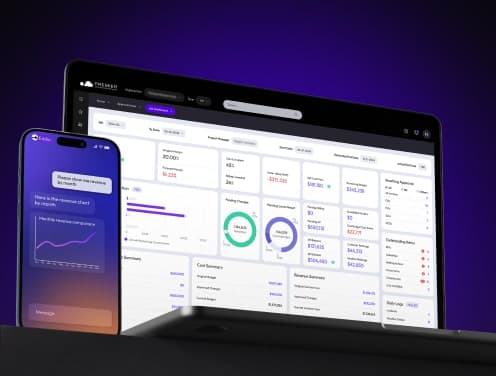
Premier gives both construction managers and project managers real-time visibility into job costs, budgets, WIP, and field operations from one system. The job dashboard drills down to the transaction level, so PMs can track budget variance without chasing spreadsheets. WIP reports generate in two clicks. CMs use mobile field tools to log daily reports, track time, and manage punch lists from the trailer or the scaffold.
The subcontractor portal lets subs submit invoices in 45 seconds, cutting AP processing time and keeping payment data in front of both roles. AI-powered predictive intelligence flags cost overruns and schedule risks before they become problems. For general contractors running multiple jobs, Premier is the single platform where field execution and financial management converge.
"The job dashboard is a standout feature, everything we need in one place." — Zachary Kittle, Buildify General Contractors
See how Premier supports both construction managers and project managers, book a demo at premiercs.com.
Latest articles



Trusted by global leaders
Join those who have put their trust in us