
8 Best CMiC Alternatives for Construction (2026)
Last updated: April 2026
Quick Answer: Best CMiC Alternatives in 2026
The top CMiC alternatives for 2026 are Premier Construction Software, Procore, Fieldwire, Buildertrend, ConstructionOnline, Contractor Foreman, Viewpoint Vista, and InEight. Premier Construction Software is the only option that combines real-time job costing, automated billing, WIP reporting, field tools, and a subcontractor portal in a single cloud ERP — with implementation in as few as 60 days.
If you are looking to move off CMiC, you have no shortage of options. The challenge is knowing which ones are actually built for construction and which ones will leave you stitching together spreadsheets six months after go-live.
CMiC is an enterprise-grade platform with strong financial tools, but it comes with a price: lengthy implementations, a steep learning curve, and an interface that many field teams resist. For growing general contractors, developers, and home builders, the trade-off often stops making sense.
This guide covers eight alternatives worth serious consideration in 2026. We have evaluated each on features, pricing, ease of implementation, and fit for mid-market construction companies. Premier Construction Software leads the list because it is the only option that replaces CMiC's financial depth without the enterprise complexity.
Quick Comparison: CMiC Alternatives at a Glance
Software | Type | Starting Price | Best For |
|---|---|---|---|
Premier Construction Software | Cloud ERP (construction-native) | $125/user/mo | Mid-market GCs, developers, home builders wanting one system for accounting, PM, and field ops |
Procore | Project management platform | ~$375/mo (ACV-based) | Large GCs needing field-to-office collaboration and unlimited users |
Fieldwire | Field management tool | Free – $89/user/mo | Field-heavy teams that need mobile plan management and task tracking |
Buildertrend | Residential PM platform | Contact for pricing | Home builders and remodellers managing client communication |
ConstructionOnline | Project management platform | From $475/mo (team) | Residential and commercial GCs wanting end-to-end tools in one place |
Contractor Foreman | Project management platform | From $49/mo (company) | Small contractors watching budget without sacrificing core features |
Viewpoint Vista | Construction ERP (legacy) | Custom (contact Trimble) | Large firms with IT resources running complex multi-division projects |
InEight | Capital project controls | Custom (per user or revenue) | Enterprise contractors managing high-value capital programs |
What Is CMiC and Why Are Contractors Looking for Alternatives?
CMiC is a construction ERP built primarily for large general contractors and owners managing complex, high-value portfolios. It covers financials, project management, HR, and field operations in a single platform. For enterprise contractors with the budget and IT resources to support a long implementation, it works.
The problem: most growing construction companies do not fit that profile. Common complaints from teams leaving CMiC include:
• Implementation timelines that stretch 12 to 18 months or longer
• A UI that frustrates field teams and drives low adoption
• High total cost of ownership once implementation, training, and support fees are factored in
• Limited flexibility when business processes do not map cleanly to CMiC defaults
• Slow product updates compared to modern cloud-native platforms
Forbes Advisor rated CMiC 3.8 out of 5 in their 2026 construction ERP rankings, citing its outdated interface and lengthy setup as consistent drawbacks. (Forbes Advisor, 2026)
If any of those pain points sound familiar, one of the eight alternatives below will serve you better.
1. Premier Construction Software
The Modern Construction ERP Built for Growth
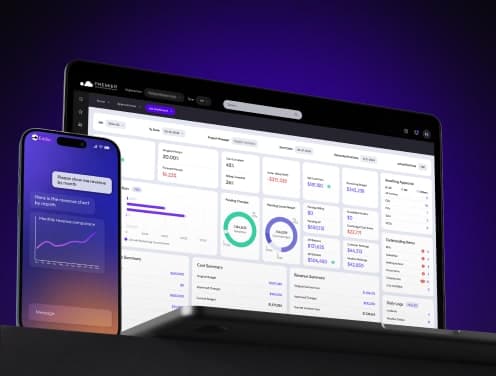
Premier Construction Software is a cloud ERP purpose-built for general contractors, land developers, and home builders in North America. It combines real-time job costing, automated billing, WIP reporting, field management, drawing management, a subcontractor portal, and AI-powered forecasting in a single platform.
Forbes Advisor named Premier Construction Software the Best Cloud ERP for Construction in 2026, giving it a 4.5-star rating. (Forbes Advisor, 2026) It has held a top position on that list for three consecutive years.
"Premier Construction Software solved all of our business problems. It was an obvious choice." — Streamline General Contractors
Key Features
• Real-time job dashboard: Drill down from summary to transaction level in seconds. WIP reports generate in two clicks, not two weeks.
• Automated billing: Change orders, pay apps, and approval workflows run inside the platform. Billing time drops from a full week to a single day.
• Subcontractor portal: Subs submit invoices in 45 seconds. (Brian Wessels, Intent Built) Those invoices queue directly into accounts payable.
• Eddie AI assistant: Flags red flags, answers financial questions, and surfaces predictive insights without manual digging.
• Multi-entity financials: Manage multiple companies, intercompany transactions, and consolidated reporting from one dashboard.
• Field tools: Mobile time entry, daily logs, expense receipts, and drawing management (Cortex) accessible from any device.
• OData integration: Real-time modelling and analysis using your own BI tools.
What Sets Premier Construction Software Apart from CMiC
CMiC and Premier Construction Software both handle construction financials. The difference is implementation speed, usability, and cost of ownership.
• Premier Construction Software goes live in as few as 60 days. CMiC implementations regularly run 12 to 18 months.
• Implementation is led by construction-specific CPAs and project managers, not generic IT consultants.
• Field teams adopt Premier Construction Software without resistance. One customer reported an 80% reduction in task clicks after switching from a server-based system. (Cherise Quimby, Ovation Property Management)
• Backed by Constellation Software ($68B USD), Premier Construction Software has the financial stability to keep investing in the platform long term.
Pros
• Implementation in as few as 60 days, with a 30-day money-back guarantee
• All-in-one: accounting, PM, field tools, subcontractor portal, AI, and document management
• Construction-native — built for GCs, developers, and home builders from the ground up
• 800+ customers, 15,000+ users, 1,000+ verified reviews across G2, Capterra, and GetApp
• 540 product enhancements per year across 26 releases
Cons
• Starting price is higher than lightweight alternatives like Fieldwire or Contractor Foreman
• Best fit for companies with $5M+ revenue; smaller contractors may not need the full ERP
Pricing
Plan | Monthly Cost Per User | Implementation Fee |
|---|---|---|
Starter | $249/user/mo | From $15,000 |
Premium | $149/user/mo | From $25,000 |
Enterprise | $125/user/mo | From $50,000 |
Implementation fees cover system setup, data migration, configuration, and hands-on training. The investment reflects a white-glove process led by construction-specific professionals, not a generic onboarding call.
Best For
1. General contractors managing multiple complex projects who need financial visibility at the job level
2. Land developers and home builders who want automated billing and approval workflows
3. Companies tired of maintaining separate systems for accounting, project management, and field ops
4. Mid-to-large contractors ($5M to $500M+ revenue) ready to scale without adding headcount
"In a span of 4 years we doubled our size with Premier Construction Software. The projects are starting to have a couple of extra zeros behind them. We would not have been able to do it without it." — Streamline General Contractors
2. Procore
Best for Field-to-Office Collaboration
Procore is the dominant project management platform in construction. It serves over 3 million projects across 150+ countries with strong tools for collaboration, document management, and field communication. It is not a construction ERP — it has no native accounting — but it excels at connecting office teams with field crews.
If your main pain with CMiC is field adoption and communication, Procore addresses that well. If you also need to replace CMiC's financial management, you will need to pair Procore with a separate accounting system, which recreates the data fragmentation you likely wanted to avoid.
Key Features
• Unlimited users: Every team member, subcontractor, and owner gets access at no extra per-seat cost.
• 500+ integrations: Connect with accounting tools, ERP systems, and specialty apps through the Procore App Marketplace.
• Construction BI: AI-enhanced analytics acquired through INDUS.AI provide predictive project insights.
• Field tools: Mobile RFI management, submittals, daily logs, and punch lists with offline access.
• Financial management (add-on): Budget tracking, pay apps, and forecasting available in higher-tier plans.
Pros
• Unlimited users encourages full project team participation
• Strong mobile tools with consistent field adoption
• Largest integration marketplace in the industry (500+ apps)
• Processes RFIs and submittals 8 days faster on average
Cons
• No native accounting; requires a separate financial system
• Pricing based on Annual Construction Volume (ACV); costs escalate significantly as revenue grows
• Many mid-size contractors report $20,000 to $80,000 per year, with annual increases of 10%+ (ProcorePricing.com, 2026)
• Implementation and training are often handled by third-party consultants at additional cost
Pricing
Procore does not publish pricing. Costs depend on your Annual Construction Volume and which modules you select. Typical ranges reported in 2026 (ProcorePricing.com):
• Small GCs ($5–50M revenue): $10,000–$30,000/year
• Mid-size GCs ($50–200M): $30,000–$80,000/year
• Large GCs ($200M+): $80,000–$150,000+/year
Best For
1. Large general contractors prioritising field-office collaboration and unlimited user access
2. Multi-project teams that already use a separate accounting system and want best-in-class PM tools
Technology-forward companies ready to invest in a comprehensive integration ecosystem
3. Fieldwire
Best for Field Operations and Plan Management
Fieldwire is a mobile-first field management tool used on over 1 million projects worldwide. It does one thing very well: connecting field crews to the latest drawings, tasks, and project data — even without an internet connection.
It is not a construction ERP and has no accounting capability. For companies leaving CMiC primarily because of field adoption issues, Fieldwire solves that part of the problem cleanly. Financials still need to live somewhere else.
Key Features
• Offline mobile access: Field crews access drawings and tasks without connectivity. The app syncs automatically when reconnected.
• Plan management: Upload, annotate, and share blueprints from any device. Automatic version control keeps everyone on the latest revision.
• Task management: Create, assign, and track tasks with priorities, due dates, and photo documentation. Field professionals save an average of one hour per day.
• Scheduled reporting: Generate and distribute reports automatically — open electrical tasks to subs every Monday, for example.
• RFIs and submittals: Available on Business Plus plans.
Pros
• Exceptionally accessible — minimal training required for field crews
• Offline capability is reliable and fast to sync
• One customer saved $35,000 in printing costs alone
• Free Basic plan available for small teams
Cons
• No accounting, job costing, or financial reporting
• Advanced features (RFIs, submittals, change orders) require the highest-tier plan
• Not a replacement for a construction ERP
Pricing
Plan | Annual Price | Monthly Price | Key Additions |
|---|---|---|---|
Basic | Free | Free | Core task and plan tools |
Pro | $39/user/mo | $54/user/mo | Reports, sheet compare, custom statuses |
Business | $59/user/mo | $74/user/mo | Custom forms, integrations, BIM viewer |
Business Plus | $89/user/mo | $104/user/mo | RFIs, submittals, change orders |
Best For
1. Field-heavy teams that need mobile plan access and task management
2. Specialty contractors who want simple documentation without complex setup
3. Companies transitioning off paper-based processes
4. Buildertrend
Best for Residential Builders and Remodellers
Buildertrend is a project management platform built specifically for home builders, remodelling contractors, and specialty trades. Over 1 million users worldwide rely on it to manage residential project delivery, client communication, and financial tracking.
It is not a CMiC replacement for commercial GCs. However, residential builders who found CMiC overkill for their workflow will find Buildertrend a considerably better fit.
Key Features
• Client portal: Homeowners log in to check progress, view documents, approve selections, and make payments directly.
• QuickBooks and Xero integration: Two-way sync pushes job-specific costs between systems without double entry.
• Financial management: Budgeting, invoicing, purchase orders, and subcontractor payments. Higher-tier plans include more advanced tools.
• Mobile document scanning: Field teams scan and upload documents with unlimited cloud storage.
• Unlimited users on all plans: Every team member gets access regardless of plan tier.
Pros
• Client portal is genuinely useful — homeowners engage without constant back-and-forth
• Mobile app matches the desktop experience for core tasks
• Strong for residential project workflows from start to punch list
Cons
• Steeper learning curve than its residential focus might suggest
• Trade partners sometimes resist adopting the platform
• No native accounting — QuickBooks/Xero dependency is required for financial management
• Not suited for commercial or multi-entity operations
Best For
1. Custom home builders managing client relationships alongside construction workflows
2. Remodelling contractors who need client portal features and clean document management
Small to mid-size residential companies outgrowing spreadsheets
5. ConstructionOnline
Best for End-to-End Project Visibility
ConstructionOnline by UDA Technologies manages $85 billion worth of construction projects daily. It earned Forbes Advisor's "Best for End-to-End Business Management" designation and has picked up over 40 product awards. Customer service scores 4.8 out of 5 across 573 reviews.
It strikes a useful balance between power and accessibility, making it a realistic alternative for growing firms that want more than basic PM tools but are not ready for a full ERP implementation.
Key Features
• TrueVision Business Intelligence: Project Scorecards and Employee Scorecards built from live project data.
• OnCost estimating: Detailed cost breakdowns tied directly to budgets and change orders.
• Gantt scheduling: Baseline tracking compares planned versus actual timelines across projects.
• Document management: RFI tracking, submittals, transmittals, and plan markup through Redline Planroom.
• QuickBooks integration: Financial data syncs between ConstructionOnline and QuickBooks for job costing.
Pros
• Excellent customer support (4.8/5 from 573 reviews)
• Good value relative to feature depth
• Free "Core Tools" plan available for small teams
• All tools available in one central platform
Cons
• Some users find the interface complex in places
• Google Calendar sync is one-way only
• Relies on QuickBooks for accounting, which limits financial depth for larger operations
• Full functionality requires two separate programs in some configurations
Pricing
Industry | Pro Plan | Team Plan | Business Plan | Enterprise Plan |
|---|---|---|---|---|
Residential | $475/mo | $792/mo | $1,187/mo | $3,104/mo |
Specialty/Subs | $575/mo | $750/mo | $1,229/mo | $3,350/mo |
Commercial | $650/mo | $1,050/mo | $1,575/mo | $3,450/mo |
Multi-Family | $950/mo | $1,625/mo | $2,292/mo | $3,625/mo |
All plans include unlimited users. Prices apply when billed annually.
Best For
1. Residential and commercial GCs who want project intelligence without full ERP complexity
2. Growing companies managing multiple projects and needing accountability tools across teams
3. Specialty contractors looking for a capable platform at a transparent price point
6. Contractor Foreman
Best Budget Alternative
Contractor Foreman is a cloud-based platform for small to medium construction firms that need core project management tools without enterprise-level costs. Teams in over 75 countries use it. At $49/month for the whole company, it is one of the most affordable construction management platforms available.
It does not replace a construction ERP. For smaller teams leaving CMiC because it was never the right size fit, Contractor Foreman addresses core needs at a fraction of the cost.
Key Features
• 35+ modules: Project management, document handling, safety oversight, job costing, and financial tracking in one platform.
• QuickBooks integration: Reduces double entry and keeps financial data consistent.
• Mobile field app: Time tracking, daily logs, and expense capture from the field. Users rate it above many competitors' mobile tools.
• Unlimited projects on all plans: No per-project fees.
• 50+ software integrations: Works with common platforms beyond QuickBooks.
Pros
• Starts at $49/month for the entire company, including onboarding
• 30-day free trial; 100-day money-back guarantee on Plus plans and higher
• Rated 4.5/5 stars across 652 user reviews
• Uses plain industry language rather than generic software terminology
Cons
• Customisation is limited compared to higher-end platforms
• Performance can slow on large, complex projects
• Support response times lag during peak periods
• Not a full ERP — no native accounting or WIP reporting
Pricing
Plan | Monthly Cost | Users | Key Features |
|---|---|---|---|
Standard | $49/mo | Up to 3 | Estimates, invoices, scheduling |
Plus | $87/mo | Up to 7 | Adds bid management, time tracking |
Pro | $123/mo | Up to 15 | Adds client portals, advanced integrations |
Unlimited | $148/mo | Unlimited | All 50+ features, priority support |
Best For
1. Small to medium contractors who need core project management at a low monthly cost
2. Budget-focused teams stepping up from spreadsheets for the first time
3. Trade contractors who want QuickBooks integration and field time tracking
7. Viewpoint Vista
Best for Large Multi-Division Contractors
Trimble's Viewpoint Vista is one of the legacy construction ERPs competing directly with CMiC. It has strong job costing capabilities and integrates with other Viewpoint products for a unified enterprise suite. Large contractors managing multiple business units in complex environments have relied on it for years.
The caveats are real: Vista is primarily deployed on-premises, requires significant IT resources to maintain, and carries a steep learning curve. For companies moving off CMiC specifically because of complexity, Vista trades one set of challenges for another.
Key Features
• Deep job costing: Tracks costs at every project stage with construction-specific GL, AP/AR, and financial reporting.
• HR and payroll: Employee data management, payroll processing, and benefits administration with built-in compliance features.
• Equipment management: Track usage, maintenance schedules, and associated costs.
• Customisable workflows and dashboards: Extensive options for larger organisations with specific process requirements.
• Viewpoint ecosystem integration: Works with Viewpoint Team and Spectrum for a broader project management footprint.
Pros
• Job costing capabilities are among the strongest in the industry
• Scalable for large, multi-division construction firms
• Deeply customisable for organisations with specific workflow needs
Cons
• Primarily on-premises — cloud deployment is available but less mature
• Implementation requires consultant assistance and significant IT involvement
• Steep learning curve; field adoption is historically challenging
• Pricing is not published; implementation starts around $10,000
Best For
1. Large construction firms managing multiple business units simultaneously
2. Organisations with dedicated IT resources that can support on-premises infrastructure
Companies that need deep payroll, HR, and equipment management alongside financials
8. InEight
Best for Capital Program Management
InEight serves over 850 companies worldwide managing capital projects valued at more than $1 trillion. It is built for the high end of the market: large owners, engineering firms, and enterprise contractors running complex, multi-year capital programs across construction, infrastructure, energy, and mining.
For typical general contractors looking for a CMiC alternative, InEight is likely more platform than you need. Its strength is in cost-schedule integration and historical benchmarking on massive programs, not day-to-day construction accounting for mid-market GCs.
Key Features
• Cost and schedule integration: Links financial planning directly to scheduling for more accurate EAC forecasting.
• Historical benchmarking: Builds a knowledge library from every estimate to validate future bids against real performance data.
• Quote management: Automatic vendor quote comparison integrated into cost estimates.
• AI analytics: Built-in machine learning surfaces actionable insights from project data.
• Multi-industry support: Construction, engineering, transportation, mining, water, power, and energy.
Pros
• Unmatched depth for capital program controls and benchmarking
• AI-driven analytics are genuinely sophisticated at scale
• End-to-end visibility across large, complex programs
Cons
• Priced and scaled for enterprise — not practical for most mid-market GCs
• Customer support response times can be slow
• Customisation options can overwhelm teams without dedicated administrators
• No standard pricing; all contracts are custom
Pricing
InEight uses a combination of per-user, revenue-based, and project-based pricing depending on the contract structure. Contact InEight directly for a quote.
Best For
1. Large-scale capital projects in construction, energy, infrastructure, and mining
2. Enterprise owners and engineers managing sophisticated multi-year programs
3. Data-driven organisations that need deep benchmarking and historical analytics
Full Comparison: All 8 CMiC Alternatives
Software | Best For | Starting Price | Key Features | Rating | Verdict |
|---|---|---|---|---|---|
Premier Construction Software | Mid-market GCs, developers, home builders | $125/user/mo | • Real-time job dashboard • WIP in 2 clicks • Automated billing • Subcontractor portal (45-sec invoice submission) • Eddie AI assistant • Mobile field tools • Drawing management (Cortex) • Multi-entity financials | 4.5/5 Forbes 2026 | Best all-in-one construction ERP. Fastest implementation (60 days). Forbes #1 Cloud ERP 2026. |
Procore | Large GCs, multi-project teams | ~$375/mo (ACV model) | • Unlimited users • Field-to-office collaboration • 500+ integrations • Construction BI analytics • RFIs and submittals • Subcontractor management | Strong — 4.6 G2 avg. | Best for collaboration. No native accounting; financials need a separate system. |
Fieldwire | Field-heavy teams, specialty trades | Free – $89/user/mo | • Offline mobile access • Plan markup and versioning • Task management • RFIs and submittals (higher tiers) • Scheduled reporting | 4.5/5 G2 | Top field tool. Not an ERP; no accounting or job costing. |
Buildertrend | Residential builders, remodellers | Contact for pricing | • Homeowner client portal • QuickBooks/Xero sync • Mobile document scanning • Budget tracking • Unlimited users | 4.2/5 Capterra | Strong for residential. Limited for commercial or multi-entity operations. |
ConstructionOnline | Residential and commercial GCs | From $475/mo (team) | • TrueVision BI dashboards • Gantt scheduling • OnCost estimating • QuickBooks integration • RFI and submittal tracking | 4.4/5 G2 | Good balance of power and ease. QuickBooks dependency limits financial depth. |
Contractor Foreman | Small contractors, budget-focused teams | $49/mo (company) | • 35+ modules • QuickBooks integration • Job costing • Mobile time tracking • 100-day money-back guarantee | 4.5/5 Capterra | Best budget option. Performance can lag on large, complex projects. |
Viewpoint Vista | Large, multi-division contractors | Custom (from ~$10K impl.) | • Deep job costing • Construction-specific GL/AP/AR • HR and payroll • Equipment management • Customisable workflows | 3.8/5 G2 | Enterprise-grade financials. Steep learning curve; primarily on-premises. |
InEight | Capital program managers, enterprise owners | Custom (per user / revenue) | • Advanced cost-schedule integration • Historical benchmarking • Quote management • AI-powered analytics • Multi-industry support | 4.1/5 G2 | Purpose-built for capital programs. Too complex and costly for typical GCs. |
How to Choose the Right CMiC Alternative
The right platform depends on three things: what you need to replace, what you need to add, and how quickly you need to be up and running.
If you need a full CMiC replacement (accounting + PM + field):
• Premier Construction Software is the only mid-market option that replaces all three in a single platform — without a 12-month implementation.
If accounting stays in your current system and you need better project management:
• Procore covers collaboration and field-to-office communication at scale. Add a financial integration and you have most of what CMiC offers, at lower complexity.
If field adoption was the biggest problem with CMiC:
• Fieldwire is purpose-built for field crews and requires almost no training. It does not touch financials, but it solves field coordination cleanly.
If you are in residential construction:
• Buildertrend or ConstructionOnline both serve residential workflows better than CMiC ever did.
If budget is the primary constraint:
• Contractor Foreman at $49/month is the most affordable option with genuine construction functionality.
If you run a large, multi-division enterprise:
• Viewpoint Vista or InEight carry the enterprise depth that complex operations require — but come with the implementation burden to match.
The Bottom Line
CMiC works for the contractors it was designed for: large enterprises with long runways, big IT teams, and the patience for a multi-year implementation. Most growing construction companies are not that.
For general contractors, developers, and home builders who need real-time financial visibility, field management, and a faster path to go-live, Premier Construction Software replaces CMiC's financial depth without the enterprise overhead. Implementation takes as few as 60 days. The platform comes with a 30-day money-back guarantee. And it is backed by construction-specific CPAs who have done this 800+ times.
"Premier Construction Software's real-time access to current costs has allowed our Project Managers to track Estimate at Completions (EAC) 20% more accurately." — David Schauer, VP of Operations, Gillam Group
Ready to see Premier Construction Software in action? Book a demo at premiercs.com.
Sources
1. Forbes Advisor — Best Construction ERP 2026: forbes.com/advisor
2. Procore Pricing 2026: procorepricing.com
3. Premier Construction Software — Customer Testimonials: premiercs.com
4. Fieldwire Pricing: fieldwire.com/pricing
5. Contractor Foreman Pricing: contractorforeman.com/pricing
6. G2 CMiC Alternatives 2026: g2.com
Latest articles




Trusted by global leaders
Join those who have put their trust in us