8 Best Sage 300 Construction Alternatives for 2026
Last updated: April 2026
Quick Answer: Best Sage 300 Alternatives in 2026
The top alternatives to Sage 300 Construction Edition in 2026 are Premier Construction Software, Acumatica Construction Edition, CMiC, Vista by Viewpoint, Procore, NetSuite, Microsoft Dynamics 365 Business Central, and Buildium. Premier Construction Software ranks first for mid-market general contractors who need real-time job cost visibility, fast implementation (as few as 60 days), and an all-in-one platform without the complexity of legacy ERPs.
If your team is hitting the ceiling with Sage 300 Construction Edition (formerly Timberline), you're not alone. Clunky navigation, expensive IT-dependent customisations, and a cloud experience that feels bolted on rather than built in: these are the complaints we hear most from contractors who've outgrown it.
The construction ERP market has moved fast. In 2026, there are purpose-built platforms that go live in weeks, not months, connect field and office in real time, and cost a fraction of what a legacy ERP overhaul runs. This guide compares eight of them, with current pricing, honest pros and cons, and a clear verdict on who each tool is actually best for.
Quick Comparison: Top Sage 300 Alternatives (2026)
Software | Type | Starting Price | Best For |
|---|---|---|---|
Premier Construction Software | Construction ERP | $125–$249/user/mo | Mid-market general contractors, developers, homebuilders |
Acumatica Construction | General ERP (Construction Ed.) | $7K–$40K+/yr | Growing contractors avoiding per-user fees |
CMiC | Enterprise Construction ERP | Custom quote | Large general contractors, ENR 400 firms |
Vista by Viewpoint | Construction ERP | $2K–$10K+/mo | Mid-to-enterprise multi-entity contractors |
Procore | Project Management Platform | From ~$375/mo | Large project teams needing collaboration tools |
NetSuite (Oracle) | General ERP | $1K–$1.5K/mo base | Multi-entity companies with complex financials |
MS Dynamics 365 BC | General ERP | $70–$100/user/mo | Firms already in the Microsoft ecosystem |
Buildium | Property Management Software | From $58/mo | Firms managing residential properties and construction |
Why Construction Companies Are Moving Away from Sage 300
Sage 300 built its reputation in an era of server-based software and annual update cycles. That era is over. Here's what's pushing contractors to look elsewhere:
• Fragmented cloud experience: Sage 300 was designed for on-premises deployments. Cloud access exists but often feels like an afterthought, creating friction for remote teams and field crews.
• Customisation requires IT: Modifying workflows, reports, or approval structures typically means engaging consultants. That costs time and money.
• Steep learning curve: User reviews consistently cite difficult navigation, especially for field staff who need simplicity on mobile.
• Limited scalability: The platform's architecture can struggle to keep pace as companies add entities, projects, and headcount.
• Slow innovation: Compared to modern construction ERPs that ship 20+ software releases per year, Sage 300's update cadence is noticeably slower.
Ready to find a better fit? Below are the eight alternatives construction leaders are evaluating in 2026.
The 8 Best Sage 300 Alternatives for 2026
1. Premier Construction Software
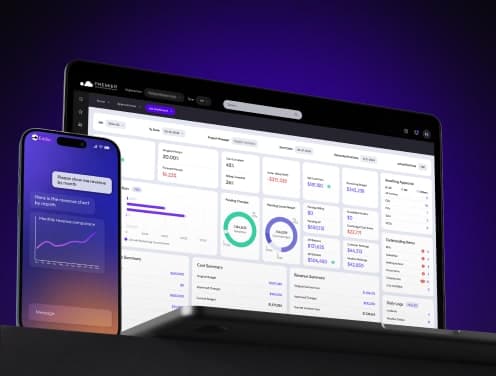
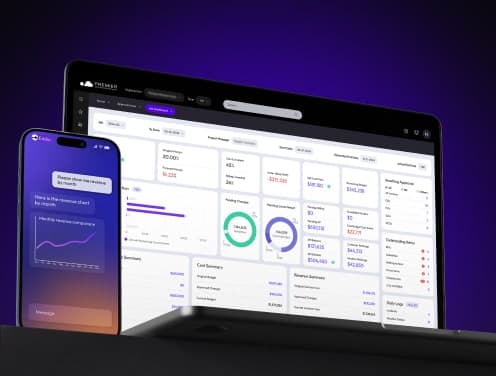
Premier Construction Software is a modern construction ERP built specifically for general contractors, land developers, and homebuilders. Every module — accounting, job costing, project management, field tools, document management, subcontractor portal — runs on a single cloud platform. There are no disconnected add-ons to reconcile.
Forbes Advisor named Premier Construction Software the #1 Construction Cloud ERP in 2026 and has recognised it three consecutive years. With over 800 customers and 15,000+ users, Premier Construction Software has become the go-to choice for mid-market contractors who've outgrown generic accounting tools and don't want the complexity of a legacy enterprise ERP.
"Premier Construction Software saves us probably upwards of 25% of our daily schedule because of how it's tracking things, entering things, and the approval process has been greatly expedited."
— Scott Largley, Senior PM, Ally Construction Services
Key features:
• Real-time job dashboard: Drill from a summary number down to the transaction behind it in two clicks. WIP reports generate instantly, not after a week of spreadsheet work.
• Eddie AI assistant: Flags cost overruns and cash flow risks before they become problems.
• Subcontractor portal: Subs submit invoices in 45 seconds. Those go straight into your AP queue.
• Field-to-office sync: Mobile time entry, daily logs, expenses, and receipts feed directly into the system. No re-entry.
• Drawing management (Cortex): Manage and distribute construction drawings without leaving the platform.
• Implementation in as few as 60 days: Led by construction-specific CPAs and PMs who build your Operational Playbook — not generic IT consultants.
Pricing (annual billing):
Plan | Monthly / User | Implementation | Best For |
|---|---|---|---|
Starter | $249 | From $15,000 | Smaller teams getting started |
Premium | $149 | From $25,000 | Growing mid-market contractors |
Enterprise | $125 | From $50,000 | Large, multi-entity operations |
Mobile app access: $50/user/month. 30-day full money-back guarantee.
Best for: Mid-market general contractors, land developers, and homebuilders with $5M–$500M+ in annual revenue who need a single platform for financials, project management, and field operations.
Pros:
• All-in-one platform: accounting, job costing, project management, field tools, and document management
• Fastest implementation in the category: as few as 60 days
• Backed by Constellation Software ($68B USD), ensuring long-term product stability
• 540 yearly enhancements driven by customer feedback
• 1,000+ verified reviews; rated #1 by Forbes Advisor for three consecutive years
Cons:
• Implementation fees may be a stretch for very small contractors under $5M revenue
• No built-in scheduling module (construction scheduling is handled through integrations)
Learn more: Premier Construction Software
2. Acumatica Construction Edition
Acumatica takes a different commercial model: you pay based on resource consumption, not per user. That makes it attractive for contractors who want to give their whole team access without watching the per-seat bill climb. The Construction Edition adds project job costing, subcontract management, and compliance tracking on top of Acumatica's general ERP foundation.
Key features:
• Resource-based pricing: Add unlimited users without additional licensing costs.
• Multi-company financials: Multicurrency and multi-entity support built in.
• AI-powered AP automation: Reduces manual data entry on change orders and invoices.
• Mobile field tools: Photo logs, time entry, and expense tracking for site crews.
Pricing (annual subscription, approximate):
Edition | Users | Annual Cost | Best For |
|
|---|---|---|---|---|
Essentials | Up to 10 | ~$7,000/yr | Small contractors |
|
Select | Unlimited | ~$25,000/yr | Growing SMBs |
|
Prime | Unlimited | ~$40,000/yr | Mid-market firms |
|
Enterprise | Unlimited | Custom quote | Large organizations |
|
Implementation typically adds $30,000–$100,000+ through a Value Added Reseller (VAR).
Best for: Growing contractors who want to avoid per-user fees and need strong integration between field and office.
Pros:
• Unlimited users on most editions
• Flexible, customisable for unique workflows
• Modern, intuitive interface
Cons:
• Construction-specific functionality often requires third-party ISV integrations
• Implementation through a VAR can take 3–12 months
• Pricing is not fully transparent without a discovery session
Learn more: Acumatica Construction Edition
3. CMiC
CMiC is enterprise construction ERP built for large general contractors and heavy civil firms. It runs on a single-database architecture, which means project data, financials, HR, and payroll all live in one place. The platform is trusted by a quarter of ENR's top 400 contractors.
That power comes at a price. Implementation costs typically run $150,000–$500,000 or more, and timelines of 6–18 months are common. CMiC is not designed for mid-market contractors who need speed and simplicity.
Key features:
• Unified database: All project, financial, and HR data in one system.
• Advanced forecasting: AI-powered analytics and project controls.
• Integrated payroll and HCM: Human capital management built in.
• Document management: Centralised drawing and document control.
Pricing: Custom enterprise quotes only. Implementation costs typically start at $150,000 (Software Advice).
Best for: Large general contractors and ENR 400 firms with dedicated IT teams and complex multi-entity operations.
Pros:
• Deep construction-specific functionality
• Strong integration and data migration capabilities
Cons:
• Pricing is not publicly disclosed; high implementation cost
• Complex interface with a steep learning curve
• Requires dedicated IT resources for ongoing management
Learn more: CMiC Construction ERP
4. Vista by Viewpoint (Trimble)
Vista by Viewpoint, now part of the Trimble Construction One suite, has long been a staple for mid-sized to enterprise contractors. It covers job costing, payroll, equipment management, document control, and multi-entity financials in a single platform.
The tradeoffs are familiar to anyone who's spent time with legacy ERPs: powerful but complex, with a setup process that can stretch for months and customer support that users occasionally flag as slow.
Key features:
• Detailed job costing: Project and financial management across multiple companies and regions.
• Version-controlled document storage: Central repository with full revision history.
• HR and payroll: Integrated workforce management.
• Cloud or on-premises: Flexible deployment options.
Pricing: $2,000–$10,000+/month based on users, modules, and configuration (RedHammer, 2026).
Best for: Mid-to-enterprise contractors with multi-entity operations and the internal resources to manage a complex ERP.
Pros:
• Highly customisable fields and workflows
• Powerful accounting and operations integration
Cons:
• Steep learning curve and long setup timelines
• Customer support response times can be slow
• Pricing is contact-only; no transparent tiers
Learn more: Vista by Viewpoint
5. Procore
Procore is the dominant project management platform in construction. It connects field and office teams, manages subcontractor documents, and tracks budgets and change orders in real time. What it is not, despite its size, is an accounting system.
Many contractors use Procore alongside a financial platform — either Premier Construction Software, Sage, or Viewpoint. If you want a single system that handles both project management and construction accounting in one place, Procore will not get you there on its own.
Key features:
• Project and document management: RFIs, submittals, drawing management, and field reports.
• Preconstruction tools: Bidding, design collaboration, and budget templates.
• Unlimited users: Pricing is based on annual construction volume, not headcount.
• AI-powered analytics: Construction intelligence and predictive risk scoring.
Pricing: Starts around $375/month for basic plans. Annual fees for large projects can exceed $20,000, based on construction volume (Procore, 2026).
Best for: Large project teams needing strong document and collaboration tools. Often paired with a separate accounting or ERP platform.
Pros:
• Industry-leading document management and collaboration
• Unlimited users at no extra cost
• 24/7 customer support
Cons:
• No accounting or full financial management — requires integration with a separate ERP
• Premium pricing for smaller contractors
• Some complex features have a steep learning curve
Learn more: Procore
6. NetSuite (Oracle)
NetSuite is Oracle's cloud ERP. It handles financials, CRM, inventory, and revenue recognition across industries. For construction, it offers project-based accounting, WIP reporting, and job costing — but through a general-purpose lens rather than a construction-native one.
Companies with complex multi-entity structures or mixed revenue models (construction plus real estate, for example) sometimes find NetSuite's financial architecture a better fit than a pure-play construction ERP.
Key features:
• Project accounting: Job costing and automated revenue recognition.
• Construction CRM: B2B and B2C client relationship management.
• WIP reporting: Automated work-in-progress tracking.
• Multi-entity financials: Consolidated reporting across subsidiaries.
Pricing: Monthly base ranges from $1,000–$1,500 for up to 10 users (starter), with per-user fees of $99–$129/month. Implementation costs from $25,000–$60,000+.
Best for: Companies managing complex multi-entity financials or mixed construction and real estate portfolios.
Pros:
• Strong multi-entity and multi-currency support
• Scales across industries and business models
• Real-time dashboards and reporting
Cons:
• Not purpose-built for construction; field tools require customisation or third-party integrations
• Higher costs as users and modules are added
• Implementation can be complex without a certified NetSuite partner
Learn more: NetSuite for Construction
7. Microsoft Dynamics 365 Business Central
Business Central is Microsoft's cloud ERP for small and mid-sized businesses. Over 30,000 SMBs use it globally for integrated finance, sales, and operations. For construction, its appeal is mostly around deep Microsoft 365 integration and its extensibility through the partner ecosystem.
Out of the box, Business Central is not a construction ERP. You'll need construction-specific extensions from Microsoft partners to get job costing and project management that match what purpose-built platforms offer natively.
Key features:
• Finance and operations: Core accounting, project management, and resource management.
• Microsoft 365 integration: Works natively with Outlook, Excel, Teams, and SharePoint.
• AI analytics: Business intelligence built in through Microsoft Copilot.
• Extensible: Wide partner ecosystem for construction-specific add-ons.
Pricing: Essentials licence at $70/user/month (core finance and operations). Premium at $100/user/month (adds manufacturing and service management). Implementation and customisation costs vary widely.
Best for: Contractors already operating in the Microsoft ecosystem who want native Office 365 integration and are comfortable adding construction-specific extensions.
Pros:
• Low per-user entry price
• Deep Microsoft 365 and Azure integration
• Strong business automation and workflow tools
Cons:
• Requires construction extensions for job costing and field management
• Implementation and customisation costs can add up quickly
• Learning curve for users unfamiliar with Microsoft Dynamics
Learn more: Microsoft Dynamics 365 Business Central
8. Buildium
Buildium is property management software. Its core strengths are tenant portals, digital leasing, maintenance work order tracking, and bank reconciliation — none of which are construction ERP features.
It appears on some alternative lists because certain construction companies also manage residential properties. If that describes your business, Buildium covers the property side. For construction accounting and job costing, you'll still need a separate platform.
Key features:
• Property accounting: Purpose-built bank reconciliation for property managers.
• Maintenance work orders: Track and assign maintenance requests.
• Tenant and owner portals: Digital leasing, online payments, and communications.
• Mobile-friendly: Field-accessible for site managers.
Pricing:
Plan | Monthly Cost | Best For |
|---|---|---|
Essential | $58 | Simple residential property management |
Growth | $183 | Expanding property portfolios |
Premium | $375 | Advanced integrations and reporting |
Best for: Companies managing residential property portfolios alongside construction projects.
Pros:
• Intuitive interface built for property management
• Automated rent collection and lease management
Cons:
• No construction job costing, change order management, or WIP reporting
• Not a replacement for a construction ERP
Learn more: Buildium
How to Choose the Right Sage 300 Alternative
No single platform is the right fit for every contractor. Here's what to weigh when evaluating your options:
• Company size and revenue: CMiC and Vista are built for large contractors with IT departments. Premier Construction Software and Acumatica are better suited for mid-market companies that want fast time to value.
• Construction type: General contractors, specialty subcontractors, land developers, and homebuilders have different workflow needs. Look for a platform with native support for your trade.
• Budget and total cost of ownership: Implementation fees can easily exceed the first year of licensing. Always calculate the three-year total cost, including setup, training, support, and customisation. (The Software Path reports average ERP implementation budgets of $7,200 per user.)
• Implementation timeline: If you can't afford to be in a multi-month setup cycle, this narrows your options quickly. Premier Construction Software goes live in as few as 60 days; CMiC and Vista typically take 6–18 months.
• Field and office connectivity: Your field crews need mobile tools that work. Confirm that the platform has a native mobile app, not just a web browser optimised for desktop.
• Accounting vs. project management: Some platforms (Procore) are project management only. Others (CMiC, Premier Construction Software, Vista) are full ERPs. Know which gap you are actually trying to close.
Action Steps Before You Decide
1. Book demos with your top two or three platforms.
2. Ask each vendor for customer references from contractors who are similar in size, trade, and revenue to your company.
3. Request a detailed implementation timeline and total cost estimate — including setup, data migration, training, and ongoing support.
4. Run a parallel test: have your controller and a field supervisor each try the platform for a week before committing.
5. Calculate year-one ROI. The switch should pay for itself through reduced close time, caught billing gaps, and fewer manual workarounds.
Final Comparison: All 8 Platforms at a Glance
Software | Best For | Starting Price | Key Features | Rating | Verdict |
|---|---|---|---|---|---|
Premier Construction Software | Mid-market GCs, developers, homebuilders | $125/user/mo | Real-time job dashboard WIP in 2 clicks Eddie AI assistant Sub portal (45-sec invoicing) Implementation in 60 days | 4.8/5 | Best overall for mid-market construction ERP |
Acumatica Construction | Contractors avoiding per-user fees | $7K/yr | Unlimited users Resource-based pricing AI-powered AP Multi-company financials | 4.4/5 | Strong value for teams prioritising unlimited-user access |
CMiC | Large GCs and ENR 400 firms | Custom quote | Single-database ERP Integrated payroll/HCM Advanced analytics Document management | 3.9/5 | Powerful but complex; overkill for most mid-market firms |
Vista by Viewpoint | Mid-to-enterprise multi-entity contractors | $2K–$10K+/mo | Detailed job costing Version-controlled documents HR and payroll Cloud or on-premises | 3.8/5 | Legacy leader with high customisability; slower to implement |
Procore | Large project teams needing collaboration | ~$375/mo | Document and RFI management Unlimited users AI risk analytics Preconstruction tools | 4.5/5 | Best-in-class for project management; not a full ERP |
NetSuite | Multi-entity or mixed-industry companies | $1K–$1.5K/mo base | Multi-entity financials Revenue recognition Construction CRM WIP reporting | 4.0/5 | Good for complex financials; requires customisation for construction |
MS Dynamics 365 BC | Microsoft-first businesses | $70/user/mo | Microsoft 365 integration AI analytics (Copilot) Extensible via partners Project management | 4.0/5 | Best for Microsoft shops; needs add-ons for construction |
Buildium | Property managers with construction projects | $58/mo | Tenant and owner portals Maintenance tracking Bank reconciliation Digital leasing | 4.4/5 | Property management, not construction ERP; niche use case |
What to Do Next
Outdated software is a real cost. Manual reconciliations, late WIP reports, disconnected field data, and approval bottlenecks add up to hours every week and dollars every month.
The right construction ERP won't just replace Sage 300. It will give your team visibility they've never had before. Job costs in real time, cash flow that's always current, and a field-to-office connection that doesn't require a phone call to check a number.
If you're a general contractor or developer looking for the fastest path from evaluation to go-live, Premier Construction Software is worth a close look. Implementation in as few as 60 days. A 30-day full money-back guarantee. And a team of construction-specific CPAs and PMs who treat your go-live like it's their own.
Book a demo at premiercs.com to see the platform in action.
Sources
• Forbes Advisor — #1 Construction Cloud ERP 2026
• Software Advice — Most Recommended 2026
• The Software Path — ERP Implementation Cost Data
• RedHammer — Viewpoint Vista Pricing (2026)
• Milestone Information Solutions — Acumatica Pricing (2026)
• Cargas — 2026 Acumatica Pricing Guide
• Premier Construction Software — CMiC vs Acumatica Comparison (March 2026)
Latest articles




Trusted by global leaders
Join those who have put their trust in us