How to Set Up Job Costing for Construction Projects: Ultimate Guide
Last updated: March 2026
A shocking statistic reveals that 25% of construction companies face insolvency after just two or three unprofitable projects.
Running a construction business with this reality can be daunting. The industry's razor-thin margins make financial clarity not just an option, but a necessity for survival.
Job costing for construction projects serves as the heartbeat of your financial management. These vital signs keep your projects and your company financially healthy. Your project's financial health depends on breaking down every expense, which helps you identify exactly where you're making or losing money.
Your project's largest variable expense typically comes from labour costs. These costs can quickly spiral out of control without proper job costing systems. Construction job costing helps you improve estimate accuracy, create more competitive bids, and ultimately increase your profitability.
Job costing's importance is well-known among construction professionals, yet many feel overwhelmed about getting started. This piece offers a detailed guide to help you succeed. You'll learn everything from the simple principles of job cost accounting to creating a quick system that delivers clarity and precision throughout your projects.
Are you ready to strengthen your financial management and protect your bottom line? Let's take a closer look at construction job costing and find out how it can revolutionize your business.
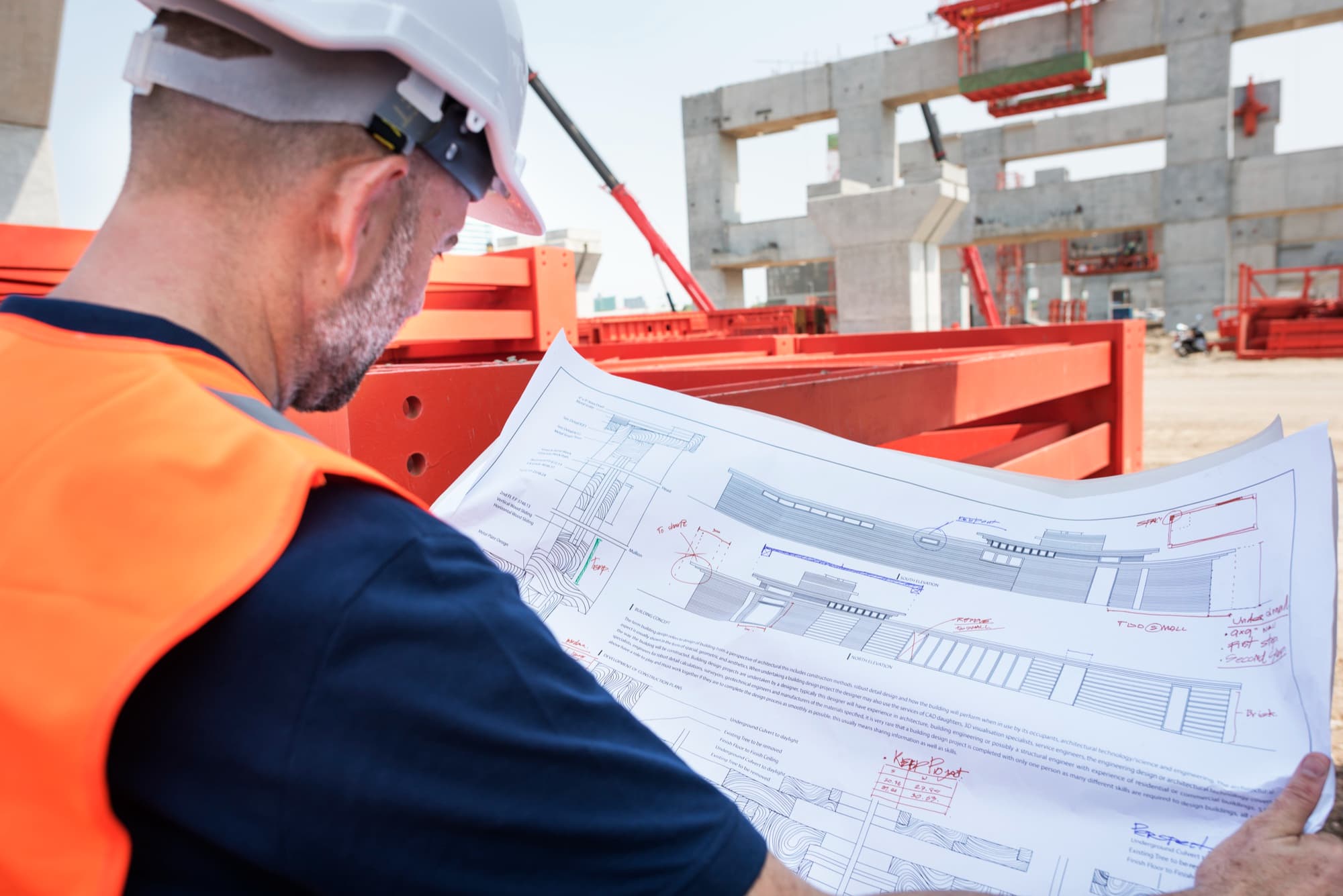
What is Job Costing in Construction?
Construction job costing is a detailed accounting method that tracks every dollar spent on individual projects. This approach assigns all expenses and revenues to specific jobs instead of combining them in general business accounts.
Job costing works like a financial microscope for each project you manage. Traditional accounting looks at overall business health. Job costing zooms in on individual projects and shows exactly where money flows within each specific job.
The job cost calculation is straightforward: Total job cost = Materials + Labour + Overhead. This simple equation builds the foundations of a complex system that gives both micro-level details and macro-level insights.
Materials in this framework include all raw project components like lumber, steel, and concrete, along with their delivery costs to the job site. Labour costs come from multiplying each worker's rate by their project time. Overhead includes all business expenses that don't directly connect to a single project - things like insurance, administrative fees, and equipment depreciation.
Job costing serves as a financial GPS for your construction business. You can monitor actual expenses against your original estimates throughout the project lifecycle. Live visibility helps you spot problems early before they get out of hand.
This level of detail becomes vital for construction companies that run multiple projects at once. Each project has its own timelines, phases, and budgets. You can't understand your true financial position without separating costs by job.
This detailed accounting approach offers several key benefits. It helps catch budget problems early so you can fix them quickly. You'll learn which projects make the most profit to guide future decisions. The information also helps create more accurate bids for similar projects later.
Most construction firms only use general ledgers for financial tracking. General ledgers show your business's overall financial health, but don't easily separate individual project costs. Job costing adds this vital layer of tracking while fitting into your general ledger.
Construction companies operate blindly without proper job costing. They might not notice cost overruns until it's too late to fix them. On top of that, it becomes impossible to know which types of projects give the best returns on investment.
Job costing needs buy-in across your organization. Everyone, from leaders to project managers, must understand its value and follow the right cost tracking procedures. Setting up job costing takes time and resources, but construction businesses that welcome it gain a big competitive edge through better financial clarity and control.
Job Costing vs Other Costing Methods
Your construction business's bottom line depends on picking the right financial tracking method. Smart decisions about which costing approach works best come from learning about the differences between them.
Job costing vs process costing
Job costing and process costing are two completely different ways to track project expenses. Job costing tracks every element of a specific project down to the last nail, screw, labour hour, and overhead cost. Process costing adds up costs for large production runs of similar items.
These methods are different in how specific they get. Job costing gives you detailed tracking for unique projects. Process costing takes the average of expenses across everything produced. A contractor who builds commercial projects would use job costing. A factory that makes similar concrete blocks would use process costing instead.
Process costing works better in manufacturing when:
- Products are the same and made in large quantities
- Production runs continuously and follows standards
- There are too many units to track individually
- You can average costs across all units reasonably
Construction companies get better results with job costing because most work has custom elements that change between projects. This method leads to more accurate estimates and shows where you can improve.
Job costing vs general accounting
General accounting looks at your company's total finances, but job costing zeros in on individual projects. This difference changes how you track and analyze financial data.
Job costing puts revenue and expenses into separate profit centers for each project. Manufacturing companies work differently - they look at profitability based on broader sales and production costs.
Your general ledger might show your construction company making money overall, yet job costing could reveal losses on recent projects. Both methods matter - general accounting shows how your whole business is doing while job costing tells you about specific projects.
Regular accounting software often fails construction businesses because it:
- Puts expenses in categories that are too broad
- Can't connect expenses to specific jobs
- Struggles with Work-in-Progress (WIP) tracking
- Can't calculate overbilling or underbilling right
- Lacks tools to forecast cash flow for specific jobs
These gaps can hide serious problems - you might look profitable on paper while losing money on individual projects.
When to use job costing
Job costing becomes crucial as construction companies get bigger. It shows you critical cash flow information and which projects bring the best returns.
Job costing is right for your construction business if:
- You build custom structures with unique specs
- Projects have different plans and requirements
- You need to know the profitability of individual projects
- You bid on projects and need accurate historical costs
- Your contracts need detailed cost reports
Process costing works best if you make standardized building products or components in large amounts with little variation.
Some construction businesses use both methods well. Take a company that builds custom homes - it might use job costing for construction but process costing for its truss plant.
Job costing becomes more valuable as construction projects get more complex. You can compare direct costs against your original budget anytime during construction. This helps catch problems early and bill accurately for completed work.
Good records from job costing also meet the needs of lenders and bonding companies who want financial statements that follow accepted accounting principles.
Understanding the Types of Costs
Budget breakdowns can make or break your construction project's profitability. You need to understand three major cost categories that affect your bottom line to work out job costing properly.
Direct costs: labour, materials, subcontractors
Your construction expenses' foundations are direct costs that link to specific projects. These costs cover the actual building process, and you can assign them to specific activities in your project.
Labour takes up much of your direct costs. Your labour expenses go beyond simple wages to include:
- Payroll taxes (6.2% for Social Security and 1.45% for Medicare)
- Benefits like health insurance and 401(k) plans
- Overtime pay for extended hours or weekend work
- Training and onboarding expenses
Labour costs typically make up 20% of total project expenses. This number can jump to 40% of the total budget when you add indirect labour costs, a 50% difference that can hurt profitability if you don't track it well.
Materials make up another big chunk of direct costs. These include everything from lumber and concrete to electrical parts needed to finish your project. Market conditions, quality needs, and supply chain issues can make material costs go up or down.
Subcontractor expenses complete the main direct cost categories. The producer price index (PPI) shows some worrying trends here. Between June 2022 and June 2023, prices went up a lot in different trades: roofing contractors (17.2%), plumbing contractors (9.5%), and electrical contractors (9.0%).
Indirect costs: admin, utilities, supervision
Indirect costs help run your projects without direct ties to specific construction work. You can't easily pin these costs to particular jobs, but they're vital to keep things running.
Administrative costs fit here, including office rent, utilities, and non-project staff's salaries, like accounting and HR teams. These expenses stay pretty steady whatever number of projects you manage.
Supervision costs tell an interesting story. Construction supervisors charge between $100 $175 per hour based on location. They bill differently; some want a percentage of total project cost (5%-15%), others charge by the hour, and some prefer flat rates.
Other typical indirect costs include:
- Equipment depreciation and maintenance
- Insurance and bonding
- Marketing expenses
- Legal fees and permits
Getting these expenses wrong creates dangerous financial blind spots. Your books might show profits while individual projects lose money.
Committed costs: purchase orders, unbilled labour
Committed costs are what you've promised to pay, even if you haven't paid yet. These costs help predict finances by showing how much of your budget you've already allocated.
Purchase orders are your best tools for tracking committed costs. Good PO systems connect material deliveries to your project budget and prove someone approved the purchase before bills show up. Without them, you can't reliably check if delivered materials were approved or priced right.
Unbilled labour is another high-cost cost. Employee hours in the field become committed expenses once logged, even before processing payroll. With biweekly pay periods, you must track labour hours during those two weeks before paying out the money.
Construction industry standards now include early cost commitments to secure prices and keep everyone accountable. You might want to get legal contracts for any expense over $5,000, especially materials that take a long time to arrive.
Key Terms in Job Cost Accounting
Financial transparency can determine the success or failure of your construction projects. You need to understand job cost accounting terms to track financial progress accurately.
Work in progress (WIP)
Work-in-progress (WIP) reporting is a vital tool to monitor your ongoing projects' financial health. It compares actual costs against recognized revenue and helps you identify potential financial problems before they grow.
WIP reports need five data points:
- Contract price for the job
- Total cost estimate
- Cost-to-date
- Billed-to-date
- Projected completion cost
These numbers let you calculate your project's percentage of completion by dividing costs-to-date by estimated total costs. The calculation shows how much contracted work you've finished.
"Think of WIP as your project's financial GPS," says a construction finance expert. "Without it, you're essentially flying blind on whether you're ahead or behind on billing."
WIP reports shape your balance sheet and financial statements. They help you recognize revenue based on completed work rather than just invoiced amounts. To name just one example, see what happens if you've completed 50% of a project but only billed 30% - WIP reports highlight this 20% gap that could change your revenue recognition.
Regular monthly WIP updates give you the clearest view of project status and help avoid financial surprises. These reports guide your decisions about resource allocation and cash flow management.
Equipment costing
Equipment costs represent a major investment for construction companies. The right equipment costing tracks expenses beyond the original purchase price.
Equipment costing includes three main categories:
- Revenue factors: Usage rates, transportation costs, and idle time expenses
- Ownership costs: Depreciation, insurance, and interest
- Operation expenses: Maintenance, repairs, and fuel
Setting hourly rates for each piece of equipment creates consistency across projects. You can allocate equipment costs accurately, even for equipment you already own.
Industry best practices suggest charging a standard rental-equivalent rate for equipment you own instead of calculating exact costs for each use. This method makes budgeting more predictable.
Equipment costing influences both immediate project profits and future financial planning. A regular review of equipment inventories reveals true ownership costs and whether keeping certain equipment makes financial sense.
Overbilling and underbilling
Overbilling happens when you charge more than you've earned for completed work. Underbilling occurs when you charge less than what you've earned. Both situations affect your financial statements and cash flow.
Overbilling creates short-term cash advantages but comes with risks:
- Your clients might lose trust if they find out
- You'll face financial pressure when work must be completed without matching payments
- You could have compliance issues if it happens often
Underbilling puts immediate pressure on cash resources:
- You might struggle to pay suppliers, subcontractors, and employees
- It could indicate poor project management or financial problems
- Your credit rating and ability to get financing could suffer
Construction firms should use proper project management practices and accurate cost tracking systems to prevent these issues. Weekly WIP report reviews catch billing problems faster than monthly reviews.
Job costing software improves billing accuracy by assigning costs to correct codes and spotting cost overruns early. This automation reduces mistakes while providing better financial data for decisions.
These accounting terms help you run healthier financial operations and make smarter decisions throughout your construction projects.
How to Calculate Job Costs Accurately
The quickest way to separate profitable construction businesses from those struggling to survive is accurate job costing. A systematic approach that captures every expense and provides analytical insights throughout your project lifecycle makes precise job costing possible.
Step 1: Estimate labour and burden
Labour calculations must include both direct wages and burden costs. The labour burden, those "hidden" costs beyond base pay, typically adds 30-40% to your labour expenses.
You can calculate a fully burdened labour rate by:
- Starting with base hourly wages
- Adding employer payroll taxes (6.2% for Social Security and 1.45% for Medicare)
- Including workers' compensation insurance
- Factoring in benefits (health, retirement, paid time off)
- Calculating training and development costs
A construction superintendent earning $80,000 annually might have additional burden costs of $25,020. This creates a fully burdened rate of approximately $50.49 per hour, a 31.3% increase over base salary.
Productivity plays a major role in accurate labour costing. A worker paid for 2,080 hours annually might only provide 1,878 productive hours after accounting for holidays, training, and administrative time. Your calculations must reflect this difference.
Step 2: Add material and equipment costs
Material costs are another major component of your job costing equation. These steps lead to precise calculations:
- Identify all required materials with exact quantities
- Contact suppliers for current pricing
- Document all purchase orders as committed costs
- Account for potential waste (5-10% depending on material type)
- Factor in bulk pricing opportunities where applicable
Equipment costs vary based on ownership status. Owned equipment requires hourly rates that account for:
- Depreciation
- Insurance
- Maintenance
- Fuel
- Storage
Rented equipment simplifies calculations since you can directly apply the rental fee to your job cost. Notwithstanding that, remember to factor in transportation costs, fuel, and potential idle time charges.
Step 3: Include subcontractor and overhead costs
Subcontractor expenses need careful documentation. Recent industry data reveals concerning price increases: roofing contractors (17.2%), plumbing (9.5%), and electrical contractors (9.0%). Detailed quotes and thorough documentation of scope changes are essential.
Overhead allocation follows two main approaches:
Percentage Method: Calculate your total monthly overhead ($50,000), divide by total direct costs ($200,000), and multiply by 100 to get your overhead rate (25%). Apply this rate to individual project direct costs.
Eichleay Formula: Larger projects require calculating allocable Home Office Overhead by dividing contract billings by total company billings, then multiplying by total overhead during the contract period. Consider this example: with $300,000 in contract billings out of $600,000 total company billings and $90,000 in overhead, you'd allocate $45,000 to that project.
Step 4: Compare actual vs estimated
Regular comparison between estimated and actual costs gives you significant insights:
- Track costs through up-to-the-minute data analysis using job costing software
- Review expenses by category (labour, materials, equipment)
- Calculate percent complete based on costs-to-date versus estimated total cost.s
- Identify variances that need immediate attention.
This ongoing analysis prevents small issues from becoming major financial problems. Break down variances right away when they occur. Was the estimate flawed, or did execution problems cause overruns?
Monthly work-in-progress (WIP) reports help maintain this comparison discipline. Weekly reviews provide even better protection against unexpected financial surprises.
Setting Up a Job Costing System
You just need thoughtful structure and disciplined execution to create an effective job costing system. A well-laid-out system tracks every dollar spent and gives you practical financial intelligence for your construction business.
Create cost codes and categories.
Cost codes are the lifeblood of your job costing system. These unique identifiers help you track, organize, and categorize expenses in your projects. The right structure strikes a balance between detail and simplicity. Too much detail creates errors, while too little fails to provide enough transparency.
Your cost coding structure should match your business goals. Think over how you manage projects, track profitability, and control costs. Construction companies of all sizes typically organize cost codes in a hierarchical structure:
- Labour costs: Wages, taxes, benefits, and training
- Material costs: Raw materials and components
- Equipment costs: Usage rates, maintenance, and fuel
- Subcontractor costs: Trade-specific expenses
- Administrative/Overhead: Insurance, office expenses
Most construction businesses use standard coding systems like MasterFormat that provide recognized industry codes. Your chosen system should stay consistent across projects to enable meaningful comparisons.
Assign costs to jobs in real time
Immediate cost assignment is essential to make job costing work. You should create processes that capture expenses as they happen instead of piecing them together later.
Your systems should combine smoothly so labour hours, material purchases, and equipment usage flow automatically into your accounting system with correct job allocation. Companies that skip this integration end up doing manual transfers between systems, which causes delays and errors.
Job costing software optimizes this process by automatically logging materials, labour, and subcontractor expenses. This shows you project costs clearly at any moment, so you can spot cost overruns right away.
Digital tools remove manual errors and update project expenses instantly. Technology integration lets you track costs with precision that paper-based systems could never achieve.
Track change orders and scope creep
Scope creep happens when work grows beyond the original contract without proper documentation, which can cause disputes and financial losses. Change orders formally document these modifications and adjust the scope, timeline, or cost.
Each change order should describe modifications clearly, update the project schedule, outline cost implications, and include appropriate signatures. You should establish a defined procedure to document and approve changes before work begins.
Your job costing system must account for these changes. You can track change orders under original job codes or assign new ones. Either way, keep complete documentation that shows how each change affects the budget.
Use consistent documentation
Standardized documentation creates accountability in your organization. You should create clear procedures for all job costing activities that anyone can follow. New employees should find these repeatable workflows easy to understand.
Your documentation should include:
- Purchase orders for all material deliveries
- Timesheets with proper job and phase codes
- Equipment usage logs
- Approved change orders
- Vendor invoices coded to specific jobs
Train your team on cost coding practices. Regular training sessions ensure everyone understands and applies codes correctly. This investment improves your financial data accuracy and decision-making.
Consistent documentation helps you track costs, identify profitable work types, and improve future bids. Without it, you're just guessing at your true project costs, a dangerous way to operate in construction's thin-margin environment.
Using Software to Streamline Job Costing
Construction companies see dramatic improvements in their job costing accuracy when they switch from spreadsheets to specialized construction management software. Complex projects make manual tracking impractical.
Benefits of automation
Companies that move to automated job costing see results right away. Construction firms with integrated systems have 15-25% better margin control compared to those using manual methods. Better margins mean protected profits on every project.
Automated systems cut data entry time by 70-80% and eliminate errors that can skew profitability reports. Teams can focus on managing construction work instead of pushing papers.
Job costing automation helps construction companies in several practical ways:
- Catches cost overruns early
- Cuts down labour tracking errors
- Makes purchasing and material allocation easier
- Saves time on financial record keeping
Real-time reporting and dashboards
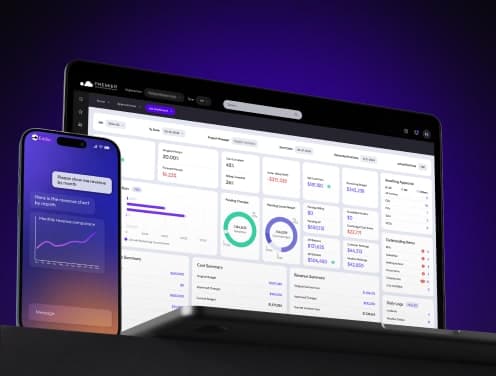
Project managers can spot problems at a glance with the job costing software's dashboard, without digging through spreadsheets. These visual snapshots make issue identification quick and simple.
Daily cost reports, progress photos, and budget alerts work as an early warning system. You can check each project's financial status daily instead of waiting for month-end reports.
Automated alerts help prevent cost overruns. These notifications act as guardrails that keep projects financially stable throughout their lifecycle.
Integration with accounting systems
Construction-specific software combines your field operations, payroll, and accounting systems smoothly to eliminate manual data entry. This setup changes how information moves through your organization.
Good systems create detailed job costing reports with metrics that matter to different team members. Project managers see production data, executives track profitability, and owners monitor overall financial health.
Small contractors can now access sophisticated automation through cloud-based solutions with minimal IT costs. Teams can check cost data from anywhere, whether they're in the office or on the jobsite.
Job costing software lets you focus on building instead of bookkeeping.
Benefits of Job Costing for Construction Projects
Job costing does much more than track costs accurately; it changes how construction companies operate and compete. Let's get into the major benefits that make job costing vital to construction businesses.
Improved budget control
Project managers can catch problems early through up-to-the-minute budget monitoring. Construction teams keep tight financial control by comparing actual costs to budgeted amounts.
Companies using job cost tracking spot cost overruns right away instead of waiting for month-end reports. This watchfulness helps keep financial guardrails in place throughout the project.
Better cash flow forecasting
Almost 90% of treasurers at large companies say their cash flow forecasting isn't good enough. Job costing helps solve this by giving detailed financial insights for each project.
Construction projects need lots of upfront payments before clients pay. Cash forecasting becomes vital to stay afloat. Job costing splits expenses over time and shows when major costs will hit, lining them up with progress billing.
Good job, cost tracking lets companies predict their cash needs better. They can manage client billing cycles more smoothly and avoid cash emergencies.
More accurate bidding and estimating
Job costing builds a valuable cost history that turns future bidding from guesswork into analytical decisions. Companies with complete job costing win more profitable projects and stay away from money-losing contracts.
Past project data helps companies:
- Know which projects bring better profit margins
- See the true costs of construction activities
- Target business growth in profitable markets
- Avoid low bids from not knowing all costs
Increased client trust and transparency
Trust is the lifeblood of good client relationships in construction. Research shows 80% of business customers value transparency more than brand reputation when choosing vendors.
Job costing breaks down expenses clearly, showing clients where their money goes. Clients feel more confident about the project management and see that their project's finances are handled carefully.
This transparency becomes essential in cost-plus contracts. Detailed cost reports with organized expenses help clients understand spending and build stronger partnerships throughout the project.
Conclusion
Job costing is the financial backbone of successful construction businesses. This piece shows how proper cost tracking revolutionizes project management from guesswork to evidence-based decision-making. Companies that implement these systems gain a competitive edge in an industry where profit margins stay razor-thin.
Project success depends on tracking every dollar spent. A complete job costing system helps you spot budget problems immediately instead of finding issues when it's too late. It also helps forecast cash needs accurately and prevents those dreaded financial emergencies that plague many construction operations.
Job costing creates a valuable financial history that improves each new bid. Historical data shows which project types deliver better profits and which ones drain your resources. This knowledge helps you target business development efforts toward your market's most profitable segments.
Client relationships thrive with the transparency job costing provides. Detailed expense breakdowns demonstrate your steadfast dedication to financial accountability and build trust throughout the project lifecycle.
Job costing may seem daunting at first, but the long-term benefits make it worthwhile. Construction professionals who switch from spreadsheets to specialized software see dramatic improvements in tracking accuracy while reducing paperwork time. Software automation changes how information flows through your organization and connects field operations directly to your accounting systems.
Note that 25% of construction companies risk failure after just a few unprofitable projects. Job costing acts as your financial safety net and provides the clarity needed to protect your bottom line. Start implementing these principles today, and watch how precise financial tracking creates healthier profits tomorrow.
Latest articles



Trusted by global leaders
Join those who have put their trust in us