
6 Best Procore Alternatives in 2026 (Actually Tested & Reviewed)
Last updated: April 2026
Quick Answer: Best Procore Alternatives in 2026
Premier Construction Software ranks as the top full-ERP alternative to Procore, combining real-time job costing, AI-powered AP automation, and multi-entity accounting in one platform. Depending on your trade and project type, ServiceTitan, Fieldwire, Buildertrend, ClickUp, or Fluix may also fit your needs.
Why Contractors Look for Procore Alternatives
Procore prices on Annual Construction Volume, which means your bill grows as your projects do, not as your headcount does. Small contractors under $50M ACV typically pay $10,000 to $80,000 per year, while mid-size contractors can face bills of $50,000 to $150,000 annually (Projul pricing analysis). Annual increases of 10% or more are common. When your volume doubles, your software cost can double too.
Procore is strong on project management and field collaboration. It is not an accounting system. Contractors who need true job costing, WIP reporting, or multi-entity financials must bolt on QuickBooks, Sage, or Viewpoint, creating sync issues and double data entry. That adds cost and complexity most mid-size general contractors cannot afford to absorb.
A full construction ERP handles project management, job costing, accounting, AP automation, and field operations in one system. Procore covers the project and field side well. It leaves the financial side to other vendors. If you're managing 20+ projects and need the numbers to close fast every month, you need more than what Procore provides out of the box.
Quick Comparison: Procore Alternatives at a Glance
Software | Type | Starting Price | Best For |
|---|---|---|---|
Premier Construction Software | Construction ERP | $349/user/month (Starter) | Mid-size to large GCs needing full ERP + accounting |
ServiceTitan | Field Service Management | $245/tech/month (est.) | HVAC, plumbing, electrical service contractors |
ClickUp | Project Management | Free – $12/user/month | Teams needing task/document management only |
Fieldwire | Field Management | Free – $89/user/month | Field teams needing plan access and punch lists |
Buildertrend | Construction Management | $399–$499/month (co.) | Residential builders and remodelers |
Fluix | Document Workflow | $20/user/month | Field teams managing digital forms and signatures |
Detailed Reviews
1. Premier Construction Software
Forbes Advisor ranked Premier Construction Software the #1 Construction Cloud ERP for 2026 and the #1 Construction Accounting Software three years running. G2 users rate it 4.7 out of 5 across 56 reviews, with a Winter 2026 Mid-Market "Most Likely to Recommend" badge. Capterra awarded it Best Value and placed it on the Shortlist for 2026, while GetApp recognized its functionality and Software Advice named it Most Recommended.
Premier Construction Software serves 800+ customers with 15,000+ active users across North America. The platform is backed by Constellation Software, a $68B USD publicly traded technology company, which means development resources and financial stability most niche construction apps cannot match.
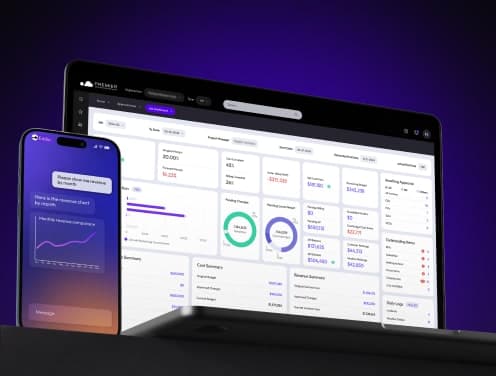
Best described as a modern construction ERP, Premier Construction Software replaces Procore, QuickBooks, and Excel in a single system. Here is what that looks like in practice:
Key features:
- Eddie AI: AI-powered AP automation that reads invoices, codes line items, and routes approvals without manual entry
- Real-time job costing: costs hit the job the moment a transaction is posted, no batch syncs
- WIP in 2 clicks: work-in-progress schedules that would otherwise take a controller hours to assemble
- Multi-entity management: consolidate financials across companies, divisions, or project types
- Subcontractor portal: subs submit invoices in 45 seconds without phone calls or paper
- Drawing management via Cortex: plan viewing and markup in the field
- Mobile field app: time entry, daily logs, and approvals from any device
- OData real-time modeling: pull live data into Power BI or Excel without exports
- 26 releases per year and 540 yearly enhancements, keeping the platform current
Implementation and pricing:
Starter: $349/user/month plus a $15,000 implementation fee. Premium: $249/user/month plus $25,000. Enterprise: $125/user/month plus $50,000. Go-live in as few as 60 days, with white-glove setup led by construction CPAs. Premier Construction Software backs the onboarding with a 30-day money-back guarantee, which no other construction ERP on this list offers.
"WIP reports are instantaneously created out of Premier Construction Software. You click a button, that report comes out." — Mike Van Orman, Nomad Infrastructure
"Premier Construction Software saves us probably upwards of 25% of our daily schedule because of how it's tracking things, entering things, and the approval process has been greatly expedited." — Scott Largley, Ally Construction Services
Limitations:
Per-user pricing with implementation fees means a smaller crew of three or four people will find the starting cost higher than a flat-rate tool like Buildertrend. This platform targets contractors who need full ERP capability, not those looking for basic project tracking.
Ratings: G2 4.7/5 | Capterra Best Value 2026 | Forbes Advisor #1 Construction Cloud ERP 2026
2. ServiceTitan
ServiceTitan targets field service contractors: HVAC, plumbing, electrical, and similar trades. It handles scheduling, dispatch, mobile invoicing, and customer history tracking in a single system purpose-built for service calls rather than construction projects.
Pricing is not publicly listed. Based on user reports, plans run $245 to $398 per technician per month (Starter through The Works tier), with implementation costs of $5,000 to $50,000 (ServiceTitan pricing analysis). That makes it one of the pricier field service platforms available, though it carries a strong feature set.
Key features:
- Scheduling and dispatch with real-time technician tracking
- Mobile invoicing: techs close jobs and collect payment on-site
- Customer history and service agreements
- Reporting on revenue per tech, call conversion rates, and job profitability
- Integration with QuickBooks and some accounting systems
Limitations:
ServiceTitan is built for service, not construction projects. It does not handle WIP, multi-phase job costing, subcontractor management, or general contractor workflows. If your work spans both service calls and construction projects, you will need a second platform.
"In a span of 4 years we've doubled our size with Premier Construction Software." — Streamline General Contractors
Ratings: G2 4.5/5 (351 reviews) | Capterra 4.4/5
Best for: HVAC, plumbing, and electrical service contractors
3. ClickUp
ClickUp is a general-purpose project management tool, not a construction platform. It handles tasks, documents, time tracking, and team dashboards at a price point that is hard to argue with.
Plans run from free to $12 per user per month on the Business plan. G2 rates it 4.7 out of 5 across 11,284 reviews, making it one of the most-reviewed project management tools available. Capterra scores it 4.6 out of 5.
Key features:
- Task management with multiple views: list, board, Gantt, calendar
- Document collaboration and wikis
- Time tracking and workload views
- Dashboards and reporting
- 1,000+ integrations
Limitations:
ClickUp has no job costing, no construction accounting, no AIA billing, no subcontractor management, and no WIP reporting. It is a task tracker. General contractors who need financial control alongside field and project management will outgrow it quickly.
Ratings: G2 4.7/5 (11,284 reviews) | Capterra 4.6/5
Best for: Teams that need task and document management with no financial requirements
4. Fieldwire
Fieldwire focuses on field teams: plan viewing, punch lists, and task management directly from a mobile device. Its offline capability sets it apart, which is valuable on job sites with poor connectivity.
Plans run from free to $89 per user per month for Business Plus, which is $1,068 per user annually. G2 rates it 4.5 out of 5 across 411 reviews. The platform has reached over 2 million job sites globally.
Key features:
- Offline plan access and markup from iOS and Android
- Punch list and task management tied to specific plan locations
- RFI and submittal tracking
- Daily reports and photo documentation
- Integration with Procore, Autodesk, and other platforms
Limitations:
Fieldwire handles the field well. It does not handle the office side: no accounting, no job costing, no AP, no payroll, no multi-entity financials. Contractors often run Fieldwire alongside an accounting system, which reintroduces the dual-system problem.
Ratings: G2 4.5/5 (411 reviews) | Capterra 4.6/5
Best for: Field crews needing mobile plan access and offline capability
5. Buildertrend
Buildertrend targets residential builders and remodelers. Its flat monthly rate covers unlimited users, which appeals to companies with larger crews. Pricing runs $399 to $499 per month on the Essential tier, $699 to $799 on Advanced, and $999 to $1,099 on Complete (Buildertrend pricing analysis).
G2 rates Buildertrend 4.3 out of 5 across 175 reviews. Capterra scores it higher at 4.5 out of 5 across 2,509 reviews, one of the largest review sets among construction platforms.
Key features:
- Project scheduling with Gantt views
- Client-facing portal for selections, approvals, and communication
- Budget tracking and change order management
- Photo documentation and daily logs
- Lead tracking and basic CRM
Limitations:
Buildertrend is built for the residential market. Commercial GCs managing subcontractor compliance, certified payroll, lien waivers, or multi-phase project financials will find it limited. Its accounting tools are basic compared to a full ERP.
Ratings: G2 4.3/5 (175 reviews) | Capterra 4.5/5 (2,509 reviews)
Best for: Residential builders, remodelers, and home improvement contractors
6. Fluix
Fluix is a document workflow tool built for field-heavy industries. It handles digital forms, e-signatures, inspection checklists, and document routing. At $20 per user per month on the Starter plan, it is the most affordable option on this list.
G2 rates it 4.8 out of 5 across 21 reviews. Capterra scores it 4.8 out of 5 across 69 reviews. Small sample sizes, but uniformly positive.
Key features:
- Digital forms with offline capture
- E-signatures and document routing
- Workflow automation for approvals
- PDF annotation and markup
- Integration with Dropbox, Box, OneDrive, and SharePoint
Limitations:
Fluix does one thing well: document workflow. It is not a project management tool, not an accounting system, and not a construction ERP. Contractors using it will need separate systems for everything else.
"It takes our subs 45 seconds to submit an invoice now." — Brian Wessels, President, Intent Built
Ratings: G2 4.8/5 (21 reviews) | Capterra 4.8/5 (69 reviews)
Best for: Field teams managing digital forms, checklists, and e-signatures
How to Choose the Right Procore Alternative
Your choice comes down to what is missing from your current stack and what you are actually willing to pay to fix it.
If you run commercial construction and need real accounting: Premier Construction Software replaces your project management and your financial system in one go. The per-user model means cost scales with your team, not your volume, which is the opposite of Procore's ACV pricing. The 30-day money-back guarantee and 60-day go-live make the switch lower risk than it looks.
If you run HVAC, plumbing, or electrical service work: ServiceTitan is purpose-built for your workflow. Scheduling, dispatch, and mobile invoicing are its core strengths. It is expensive, but it handles the full service-call lifecycle better than any general-purpose tool.
If you need field teams to access plans offline: Fieldwire is the clearest answer. It works on sites with poor connectivity and keeps punch lists tied directly to plan locations. Pair it with an accounting system to cover the financial side.
If you build homes or handle remodels: Buildertrend's flat monthly rate and client-facing portal make it practical for residential work. Its unlimited-user pricing is attractive for crews where headcount fluctuates. Do not expect it to replace a full accounting system.
Full Comparison: All 6 Procore Alternatives
Software | Best For | Starting Price | Key Features | Rating | Verdict |
|---|---|---|---|---|---|
Premier Construction Software | Mid-size to large GCs needing full ERP | $349/user/month (Starter) | AI-powered AP, real-time job costing, WIP in 2 clicks, multi-entity, drawing mgmt | 4.7/5 (G2) | Best all-in-one ERP alternative to Procore |
ServiceTitan | HVAC, plumbing, electrical | $245/tech/month (est.) | Scheduling, dispatch, mobile invoicing, customer history | 4.5/5 (G2) | Best for specialty service contractors |
ClickUp | Task and doc management | Free – $12/user/month | Tasks, docs, time tracking, dashboards | 4.7/5 (G2) | Best budget option; no financial tools |
Fieldwire | Field plan access | Free – $89/user/month | Offline plans, punch lists, task management | 4.5/5 (G2) | Best mobile-first field tool |
Buildertrend | Residential builders | $399–$499/month flat | Scheduling, client portal, selections, budgets | 4.3/5 (G2) | Best for home builders and remodelers |
Fluix | Digital forms, e-signatures | $20/user/month | Document workflows, digital forms, offline capture | 4.8/5 (G2) | Best lightweight document workflow tool |
Frequently Asked Questions
What is the best alternative to Procore for mid-size general contractors?
Premier Construction Software is the strongest full-system alternative. It combines project management, real-time job costing, AP automation, and multi-entity accounting in one ERP. Forbes Advisor ranked it the #1 Construction Cloud ERP for 2026 (About Premier Construction Software). The 60-day go-live and 30-day money-back guarantee reduce the switching risk.
How much does Procore cost per year?
Procore prices on Annual Construction Volume rather than users. Small contractors under $50M ACV typically pay $10,000 to $80,000 per year. Mid-size contractors between $50M and $250M ACV pay $50,000 to $150,000 per year. Large contractors above $250M ACV can pay $80,000 to $600,000 or more. Annual increases of 10% or more are common (Projul pricing analysis).
Does any Procore alternative include construction accounting?
Premier Construction Software is the only option on this list with native construction accounting built in. The others, including Buildertrend and Fieldwire, either integrate with QuickBooks or lack accounting features entirely. ServiceTitan has basic financial reporting but is not a general ledger system.
What is the cheapest Procore alternative?
ClickUp starts at free and runs $12 per user per month on the Business plan. Fluix starts at $20 per user per month. Both are affordable but cover only a narrow slice of what construction companies need. If total cost of ownership matters, a full ERP like Premier Construction Software avoids the cost of maintaining three or four separate systems.
How long does it take to switch from Procore to Premier Construction Software?
Premier Construction Software implementation team, staffed by construction CPAs, can get most mid-size contractors live in 60 days. That includes data migration, configuration, and staff training. The 30-day money-back guarantee applies if the go-live does not meet expectations.
Ready to Compare?
Ready to see how Premier stacks up against your current setup? Book a demo and see real-time job costing, WIP in 2 clicks, and AI-powered AP automation in action.
Latest articles




Trusted by global leaders
Join those who have put their trust in us