
Why QuickBooks Won't Grow Your Construction Business in 2026: The Best Alternatives
Last updated: April 2026
Quick Answer: Why QuickBooks Falls Short for Construction
QuickBooks lacks native job costing, WIP reporting, and construction billing workflows. Growing contractors typically outgrow it by $5M in revenue. The best alternative is a purpose-built construction ERP like Premier, which handles accounting, project management, field tools, and subcontractor management in one system.
Why This Question Comes Up More in 2026
QuickBooks is everywhere. It's affordable, familiar, and fine for a general business. But construction is not a general business.
Your jobs have unique cost structures. Your billing involves retainage, progress draws, and change orders. Your field team needs mobile tools. Your accountant needs WIP reports on demand, not at month-end.
The global construction market is projected to exceed $14 trillion by 2030 (Mordor Intelligence), yet many contractors still run critical financial decisions through software never designed for them. The cost of that mismatch shows up in margin erosion, billing delays, and late financial closes.
This post breaks down the specific limitations of QuickBooks for construction companies, compares it to purpose-built alternatives, and shows what to look for in a modern construction ERP.
Quick Comparison: QuickBooks vs. Construction ERP
Software | Type | Starting Price | Best For |
|---|---|---|---|
Premier Construction Software | Construction ERP | $125/user/mo (Enterprise) | General contractors $5M-$500M+ |
QuickBooks Online | General accounting | From $35/mo | Small businesses under $2M |
Sage 300 CRE | Legacy construction ERP | Custom quote | Enterprise contractors with IT teams |
Acumatica | General ERP (construction module) | Custom quote | Mid-market with customization budget |
Procore | Project management only | Custom quote (ACV-based) | PM-only; no accounting |
The Specific Limitations of QuickBooks in Construction
1. No Real Job Costing
Job costing is not optional in construction. It's how you know whether a project is profitable before it's too late to act.
QuickBooks has a basic "Projects" feature, but it's only available on select plans, and it doesn't support construction cost codes, phase-level tracking, or real-time EAC (Estimate at Completion) calculations. Most contractors end up exporting to Excel every time they need a real cost report (ProcureDesk).
Research from ProcureDesk found that most contractors using QuickBooks for job costing have 15-25% of actual project costs not properly reflected in their reports (ProcureDesk). That gap compounds over time and distorts every bid you make.
"I did not believe I was capturing all my costs. I felt like there were items that we were paying for that we were not billing the client for." - Mark Marshall, Owner, JM Construction
2. No WIP Reporting
Work-in-progress (WIP) reporting is required for most construction companies for bonding, lender compliance, and accurate revenue recognition. QuickBooks cannot produce a WIP report natively.
Contractors running QuickBooks typically spend hours assembling WIP schedules in Excel each month. That process introduces errors, delays your close, and gives leadership stale numbers when they need live data.
3. Weak Revenue Recognition
Construction contracts span months or years. Revenue needs to be recognized over the contract lifecycle using percentage of completion or other accrual methods. QuickBooks doesn't handle this well.
The result: financial statements that don't reflect actual project performance, which creates problems during audits, bonding applications, and lender reviews.
4. No Change Order or Progress Billing Workflows
Change orders are a constant in construction. QuickBooks has no structured workflow to track, approve, or bill change orders. Progress billing (AIA-style pay applications) requires workarounds or third-party tools.
Every integration between QuickBooks and a separate billing tool adds a potential sync failure, duplicate entry risk, and staff hours spent reconciling two systems that don't talk to each other cleanly.
5. Payroll Complexity
Construction payroll is not standard payroll. You're dealing with certified payroll for prevailing wage jobs, union requirements, multi-state compliance, and labor burden allocation to specific cost codes.
QuickBooks payroll supports basic multi-state processing but lacks certified payroll reporting, EEO compliance reports, and construction-specific labor burden tools.
6. User Limits and Scalability
QuickBooks Online has strict user limits. As your team grows, the per-user costs climb fast and features remain capped. Companies scaling past $5M in revenue consistently report outgrowing QuickBooks within 12-18 months of that threshold (Adaptive Build).
What Construction Accounting Actually Requires
General accounting tracks income and expenses for a business. Construction accounting tracks costs and revenue by job, phase, cost code, and contract type. Those are fundamentally different problems.
A purpose-built construction ERP handles the following that QuickBooks cannot:
- Job costing: Track labor, materials, subcontractors, and equipment against individual project budgets in real time.
- WIP reports: Automated over/under billing schedules updated continuously, not assembled from spreadsheets each month.
- Change order management: Formal approval workflows that tie scope changes to contract adjustments and billing automatically.
- Progress billing: AIA-style pay applications and schedule of values billing built into the system.
- Retainage tracking: Holdback amounts tracked per contract, released with proper documentation.
- Subcontractor management: Contract compliance, insurance tracking, lien waivers, and pay app submissions in one place.
- Multi-entity financials: Consolidated reporting across multiple companies or divisions without manual aggregation.
- Field tools: Mobile time entry, daily logs, and drawing access for field teams without a separate subscription.
Premier Construction Software: The Modern Construction ERP
Premier is a modern construction ERP built for general contractors, land developers, home builders, and design-build companies with $5M-$500M+ in annual revenue. It replaces the disconnected combination of QuickBooks, Procore, and Excel with a single platform that covers accounting, project management, field tools, subcontractor management, and AI-powered forecasting.
Premier was named Forbes Advisor #1 Construction Cloud ERP in 2026 and has over 1,000 reviews across G2, Capterra, GetApp, and Software Advice. It's backed by Constellation Software, a $68B publicly traded enterprise software company.
"Premier saves us probably upwards of 25% of our daily schedule because of how it's tracking things, entering things, and the approval process has been greatly expedited." - Scott Largley, Senior PM, Ally Construction Services
Key Features
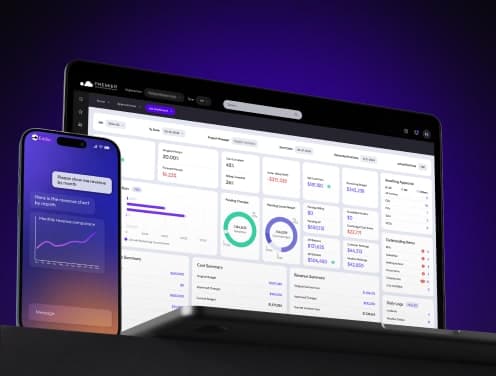
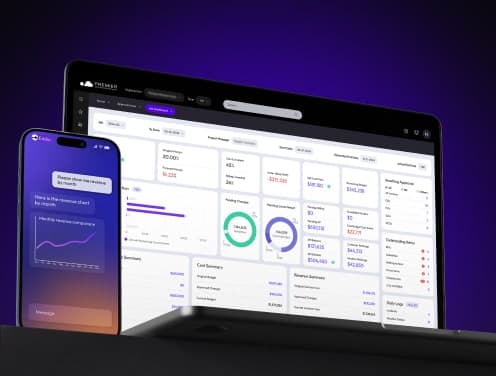
• Real-time job dashboard: Every project's costs, billing, cash flow, and forecast in one view. Drilldown to individual transactions in seconds.
• WIP in 2 clicks: Automated WIP reports generated on demand, not assembled manually each month.
• Eddie AI assistant: AI-powered predictive intelligence flags red flags, forecasts overruns, and surfaces insights from your own data.
• Cortex (drawing management): Drawing version control, submittals, and RFIs managed directly inside Premier.
• Subcontractor portal: Subs submit invoices in 45 seconds. Lien waivers, insurance, and pay apps managed in one place.
• Smart UI (AP automation): Accounts payable processing streamlined to one day per week.
• OData integration: Real-time modeling and analysis in Power BI or Excel directly from Premier data.
• Mobile app: Field teams track time, expenses, and receipts from their phones. Data flows directly into the system.
• Multi-entity financials: Manage multiple companies within one platform with intercompany transactions and consolidated reporting.
• 60-day implementation: Go live in as few as 60 days with a construction-specific CPA-led implementation team.
Premier Pricing (2026)
Plan | Per User/Month | Implementation Fee | Includes |
|---|---|---|---|
Starter | $349/user/mo* | From $15,000 | Financials and basic job costing |
Premium (Most Popular) | $249/user/mo* | From $25,000 | Financials and Project Management modules |
Enterprise | $125/user/mo* | From $50,000 | Financials, Project Management, full module suite |
*Based on tiered named user model. Final price varies by user count. Source: premiercs.com/pricing.
"Since adopting Premier over a decade ago, we have grown our revenue by 30x." - Eric Engelke, Engelke Construction Solutions
"I went from billing for an entire week, 40 hours, to billing in 8 hours on a Saturday. And I'm capturing more costs. I've gone from probably about 3% profit up to about 8% by using Premier because I'm very confident that the numbers are right." - Mark Marshall, Owner, JM Construction
Other QuickBooks Alternatives for Construction
Sage 300 CRE
Sage 300 CRE (formerly Timberline) is a long-standing legacy ERP for construction. It handles job costing, payroll, and project management, but it runs on a server-based architecture with an older interface that many users describe as difficult to learn.
Implementation typically takes 6-18 months and requires significant IT resources. It's best suited for enterprise contractors with dedicated IT staff and existing Sage infrastructure.
• Best for: Large enterprise contractors already in the Sage ecosystem
• Limitation: Outdated UI, slow innovation cycle, long implementation timelines
Acumatica
Acumatica is a general ERP platform with a construction module. It offers cloud deployment and a consumption-based pricing model, meaning cost scales with transaction volume rather than user count.
The construction module requires customization to match industry-specific workflows. It's a capable platform for mid-market companies that have the budget and internal resources to configure it for construction.
• Best for: Mid-market companies with customization capacity
• Limitation: Not construction-native; requires significant configuration
Procore
Procore is a leading construction project management platform, but it is not a financial system. It handles drawings, submittals, RFIs, and field management well, but it has no accounting module.
Many contractors run Procore alongside QuickBooks or another accounting system, which recreates the exact data fragmentation problem they were trying to solve. Premier includes most of what Procore offers in its project management modules, plus full accounting.
• Best for: PM-only workflows where accounting lives elsewhere
• Limitation: No accounting, no financials; always requires a second system
Viewpoint Vista / Spectrum
Viewpoint (now part of Trimble) offers Vista and Spectrum, both established construction ERP platforms. Like Sage 300, they carry the weight of legacy architecture: steep learning curves, slow implementation, and interfaces that were built for a pre-cloud era.
• Best for: Enterprise contractors with established Viewpoint implementations
• Limitation: Complex to implement and maintain; limited mobile-first functionality
How to Transition Away from QuickBooks
Switching software is not a small decision. Here are the steps that reduce risk and shorten your path to live data:
1. Audit your current gaps. List the reports you can't produce, the workarounds your team relies on, and the integrations that break regularly. This becomes your evaluation checklist.
2. Define your must-haves. Job costing depth, WIP reporting, progress billing, payroll, field tools, subcontractor portal. Rank these by priority for your business.
3. Evaluate implementation approach. A purpose-built construction ERP with a CPA-led implementation team cuts risk significantly. Generic IT consultants who configure construction software without industry knowledge are a common failure point.
4. Check data migration scope. Historical job data, chart of accounts, open contracts, and vendor records all need to transfer. Confirm the provider handles this as part of implementation.
5. Plan for parallel operation. Run old and new systems simultaneously for a defined period during go-live. Premier's 60-day implementation is designed to include this parallel phase.
6. Validate with a pilot job. Before full cutover, run a live project through the new system and verify that costs, billing, and reporting match expectations.
What to Look For in a QuickBooks Alternative
Construction-Native Architecture
Generic accounting software adapted for construction and construction software built from the ground up are very different products. Look for systems where job costing, WIP, retainage, and change orders are first-class features, not bolt-ons.
Implementation Backed by Industry Experience
The software is only part of the equation. Ask who leads implementation. Premier uses construction-focused CPAs and project managers who build a customized Operational Playbook for every customer. That's different from a generic software consultant working from a checklist.
Real-Time Visibility
Month-end reporting is too slow for construction. You need live job cost data, live WIP, and live cash flow. If the platform can't give you a dashboard with drilldown access today, it's the wrong tool.
Scalability
The software should grow with your business. Premier customers have scaled from $5M to $500M+ in revenue on the same platform. Choose a system that can handle your business in five years, not only today.
Verified Customer Outcomes
Look for specific, attributed results from real customers. Not "saves time" or "improves efficiency." Actual numbers: "We saved $50,000/year" or "our close cycle dropped by 30%." Premier has over 1,000 verified reviews across major platforms (GetApp, G2, Capterra).
Final Comparison: Premier vs. QuickBooks Alternatives (2026)
Software | Best For | Starting Price | Key Features | Rating | Verdict |
|---|---|---|---|---|---|
Premier Construction Software | GCs $5M-$500M+ | $125/user/mo (Enterprise) | • Real-time job dashboard • WIP in 2 clicks • Eddie AI assistant • Subcontractor portal • 60-day implementation | 4.7/5 (GetApp) | Best all-in-one construction ERP for growing contractors |
QuickBooks Online | Businesses under $2M | From $35/mo | • Basic income/expense tracking • Limited project tracking • No WIP reports • No retainage tools | 4.3/5 (Capterra) | Fine for small non-construction businesses; insufficient past $2-5M |
Sage 300 CRE | Enterprise contractors | Custom quote | • Job costing and payroll • Project management • Legacy server-based • Complex to implement | 4.0/5 (Capterra) | Capable but slow to implement; outdated UI; better suited for enterprises with IT teams |
Acumatica | Mid-market with config budget | Custom quote | • Cloud ERP platform • Construction module available • Consumption-based pricing • Requires customization | 4.4/5 (G2) | Flexible but not construction-native; expect significant setup time and cost |
Procore | PM-only workflows | Custom (ACV-based) | • Drawings and submittals • Field management • No accounting module • Requires a second financial system | 4.5/5 (G2) | Strong PM platform but always requires a separate accounting system; creates the fragmentation problem |
Viewpoint Vista/Spectrum | Established enterprise contractors | Custom quote | • Job costing and payroll • Project financials • Legacy architecture • Steep learning curve | 3.9/5 (Capterra) | Deep functionality for large contractors already invested in Viewpoint; difficult for new implementations |
Ratings sourced from GetApp, G2, and Capterra (2026). Pricing reflects published rates and user-reported data.
Frequently Asked Questions
Can QuickBooks handle construction job costing?
QuickBooks has a basic Projects feature on select plans, but it lacks construction-specific cost codes, phase-level tracking, and real-time EAC calculations. Most contractors using QuickBooks for job costing end up supplementing it heavily with Excel and still find 15-25% of costs missing from reports (ProcureDesk).
What is the best QuickBooks alternative for construction in 2026?
For growing general contractors ($5M-$500M+ in revenue), Premier is the leading option. It handles job costing, WIP, progress billing, change orders, field tools, and subcontractor management in one platform, and goes live in as few as 60 days.
How much does Premier Construction Software cost?
Premier pricing starts at $125/user/month for the Enterprise plan (with a $50,000 implementation fee), $249/user/month for Premium (from $25,000 implementation), and $349/user/month for Starter (from $15,000 implementation). Final pricing varies by user count and configuration. See premiercs.com/pricing for current rates.
Can I migrate data from QuickBooks to Premier?
Yes. Data migration from QuickBooks to Premier is included as part of the implementation engagement. Premier's implementation team handles chart of accounts, historical job data, open contracts, and vendor records as part of the onboarding process.
How long does it take to implement a construction ERP?
Legacy systems like Sage 300 or Viewpoint typically take 6-18 months to implement. Premier's structured implementation process gets contractors live in as few as 60 days using construction-focused CPAs and PMs, not generic IT consultants.
Key Takeaways
• QuickBooks lacks native job costing, WIP reporting, and construction billing workflows. These are not minor gaps. They affect every financial decision your business makes.
• Growing construction companies typically outgrow QuickBooks between $2M and $5M in revenue. The transition is harder the longer you wait.
• Purpose-built construction ERPs handle accounting, project management, field tools, and subcontractor management in one system, eliminating the data fragmentation that comes from stitching together multiple platforms.
• Premier is the fastest to implement in the category (as few as 60 days), has 1,000+ verified reviews, and is backed by Constellation Software. There is a 30-day full money-back guarantee.
See Premier in Action
If your construction business is running on QuickBooks and feeling the friction, the next step is straightforward: see what real-time job cost visibility looks like in a system built for your industry.
Book a demo at premiercs.com. There is no obligation. The 30-day money-back guarantee means there is no risk after you commit.
Latest articles




Trusted by global leaders
Join those who have put their trust in us