Advantages of Cloud-Based Construction ERP Systems
Last updated: March 2026
Construction projects blow their budgets 65% of the time. The construction sector is a cornerstone of the U.S. economy, yet it continues to face challenges despite steady growth. Your business might find the perfect solution in a cloud-based construction ERP.
Cloud ERP advantages extend well beyond standard software improvements. Your business data resides in a central hub within a cloud-based ERP system, making information sharing quick and straightforward across your organization. Contractors are moving to cloud technology, and with good reason too - they want up-to-the-minute data access and the ability to check vital information away from the office. These cloud ERP advantages tackle the exact issues that keep construction leaders tossing and turning at night.
Profitable growth demands integrated systems that link office staff with field teams. This piece shows how cloud construction ERP systems can reshape your operations, reduce expenses through automation, and deliver the single source of truth your business needs to excel in today's competitive market.
Real-time access to project data
The construction industry runs on information, and project success depends on accessing it. Construction leaders are shopping for new ERP solutions, with 55% confirming this trend. This shows how crucial better data management has become. Up-to-the-minute project data through cloud construction ERP gives you the visibility to keep projects on budget and on schedule.
Access from office, field, or mobile
Outdated spreadsheets, endless phone calls, and slow email chains are a thing of the past. Cloud-based construction ERP has revolutionized information access for teams. Project managers, site engineers, and contractors view and update data instantly from headquarters, jobsites, or remote locations.
This flexibility has boosted productivity remarkably. Studies show that mobile accessibility is the primary reason contractors switch to cloud solutions. Team members log in through browsers or mobile apps without complex VPN setups or remote configurations. The benefits include:
- Digital safety checks completed on mobile devices
- Blueprint and project drawing access on tablets
- Quick timesheet and job data capture
- Project information access from any device
"With cloud technology, project managers can access files directly from their tablets or smartphones, make necessary changes, and instantly share updates with the team," notes one construction executive. Projects move forward smoothly as approvals, budget changes, and resource allocation happen without office delays.
Cloud platforms deliver consistent experiences across Microsoft, iOS, Android, and macOS devices. Team members get powerful features on smartphones in the field or on office desktops.
Faster decision-making with live updates
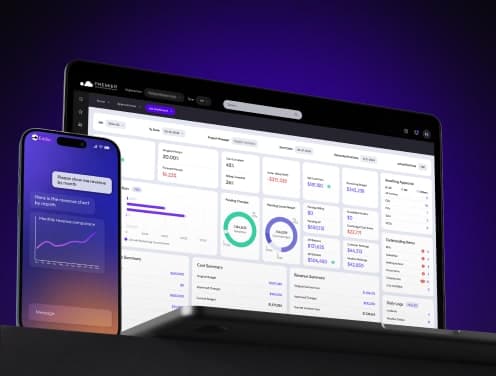
Delays cost money in construction. Cloud ERP systems feature dashboards with up-to-the-minute data on job costing, cash flow, and project profitability. Teams respond quickly to changing conditions with this immediate visibility.
Project updates are delivered instantly to all stakeholders when estimators adjust budgets. Teams no longer face confusion from outdated information. The advantages include:
- Early problem detection before escalation
- Data-driven decision-making
- Quick responses to site challenges
- Automatic notifications keep teams aligned
Productivity gains are substantial. Architects modify designs while contractors see changes immediately. Site engineers report issues that office teams address within minutes. Research shows that this synchronized environment eliminates bottlenecks that cause 65% of project delays, saving the industry billions annually.
Cloud technology's processing power significantly improves team performance. Customers report boosted productivity as a top unexpected benefit of switching to cloud-based construction software. Cloud ERP systems enable faster, more confident decisions across operations by providing up-to-date data and real-time insights.
Cloud-based systems effectively connect field teams with office staff. Construction companies struggling with information delays now have a practical solution that provides the visibility needed in today's ever-changing environment.
Centralized data and a single source of truth
Data chaos plagues construction projects when data is scattered across multiple systems. Construction managers often manage information spread across systems, spreadsheets, and paper files. Projects fall behind schedule, and costs spiral out of control due to this fragmentation. Cloud construction ERP systems fix this fundamental problem by creating a centralized data hub, your company's single source of truth.
No more duplicate entries
Duplicating data wastes time and leads to expensive errors. The most significant advantage of cloud-based construction ERP is eliminating duplicate data entry. Cloud ERP automates data flows between connected platforms, eliminating the need to manually enter the same information multiple times across different systems.
The sort of thing I love is what happens when you hire a new subcontractor. Teams without centralized systems might enter their information separately in:
- Project management software
- Accounting systems
- Document storage
- Equipment tracking tools
This redundancy isn't just a waste; it's risky. Each new entry creates opportunities for mistakes that can snowball throughout your project. Many construction companies end up running payroll twice, once in their HR system and again in their ERP system. These inefficiencies affect the whole organization.
Cloud-based construction ERP fixes this through standardized APIs and secure data mapping that arranges each system's schema into a unified model. This integration removes manual handoffs, data loss, and inconsistency, the leading causes of operational friction.
Everyone works from the same data.
Teams work with the same information when data resides in a single secure cloud location. Your estimators, project managers, field supervisors, and accounting staff can see the latest updates simultaneously.
"Design, procurement, and construction crews no longer operate in isolation. With cloud-based tools, everyone works from the same playbook," explains one construction technology expert.
This shared visibility brings real benefits:
Building material updates or price changes appear across your entire system immediately. When a supplier raises steel prices, everyone from estimators to project managers knows immediately.
Field-to-office communication gets much better. Cloud platforms enable multiple users to work on the same document simultaneously. They can provide feedback and make edits as things happen. Teams communicate better and make decisions faster in this collaborative space.
Managers can make informed choices based on up-to-the-minute data analysis rather than guesswork. They don't have to wait for weekly reports to check project metrics.
Improved version control
Cloud ERP systems automatically handle version control to prevent confusion when multiple people edit the same document. This helps avoid situations in which teams work from outdated plans or specifications.
"Version control and audit trails let you revert to earlier document versions or see who made edits and when. Transparency like this boosts accountability," notes one industry source.
The system tracks changes with a detailed history of modifications. Teams can easily review changes and avoid using outdated designs or plans. The system notifies affected team members and saves previous versions when an architect uploads revised drawings.
Cloud platforms include features that track document changes to ensure everyone uses current information. This helps teams communicate more effectively and avoid errors caused by outdated or missing documents.
The benefits go beyond just convenience. Contractors talk about improved data accuracy and productivity when asked about cloud ERP integration. Teams spend less time searching for information and more time using it well.
Cloud construction ERP creates what innovators call a "single source of truth", a unified information ecosystem where accuracy, transparency, and collaboration thrive. This foundation helps teams make better decisions, reduce costly mistakes, and keep projects on track.
Improved collaboration across teams
Communication breakdowns cost the construction industry billions annually. Your projects lose thousands of dollars due to the disconnect between field and office teams, even on good days. Cloud-based construction ERP systems create a digital bridge between office staff and field crews, changing how teams work together and communicate.
Field-to-office communication
Office teams need updates about delays, additional materials, and schedule changes. Field teams struggle to share this information quickly. This disconnect leads to expensive problems:
- The average cost of a jobsite conflict is $10,948
- All but one of these project failures comes from poor communication
- Poor communication costs the construction industry over a billion dollars yearly
Cloud-based construction ERP addresses this challenge by enabling seamless, real-time communication between field and office teams. Your superintendents can document site issues or daily activities and notify project managers immediately via mobile-enabled platforms. Teams can tackle problems early because information flows instantly, which saves time and money.
"Digital daily reports, complete with photos and documentation, provide office teams with an up-to-the-minute view of project progress, safety, and resource needs," notes one industry expert. These updates help teams stay in sync and support proactive management throughout your organization.
Shared dashboards and notifications
Teams work better with clear visibility. Cloud construction ERP systems have configurable dashboards that change how your teams share information. Project managers create custom dashboards for specific team members to provide relevant information for their roles. Everyone stays informed without getting swamped by unnecessary details.
These shared dashboards show up-to-the-minute data that helps teams make more intelligent decisions in the office or on the jobsite. Teams get what they need through role-based access to data and reports while sensitive information stays protected.
Notifications and alerts remove response delays. Teams receive instant alerts about approvals, task updates, procurement needs, and compliance deadlines. Manual follow-ups become unnecessary,y and critical information reaches the right person quickly.
Teams can spot bottlenecks early and speed up processes thanks to better visibility. Clear visualizations help your team make analytical decisions instead of relying on gut feeling or outdated information.
Fewer delays from miscommunication
Poor field-to-office communication hits hard financially. Miscommunication creates stress that hurts team morale, reduces productivity, and can lead to workplace accidents.
Common expensive problems include:
- Late or missed change orders that lead to missed billing
- Duplicate material orders due to outdated inventory information
- Schedule mix-ups that send subcontractors to sites on the wrong days
- Delayed time tracking that forces reactive job costing
Cloud-based construction ERP significantly reduces delays. Deloitte's research shows firms using up-to-the-minute data systems have reduced project delays by 25% and improved budget adherence by 15%.
Companies that switched to centralized systems with mobile access saw RFIs drop by 40%. Their time-to-invoice was shortened by five days, and project meetings were shorter because everyone had the same data.
Subcontractor management improves, too. Cloud ERP connects everyone by providing subcontractors with limited but necessary access to schedules, job assignments, and progress reports. This openness prevents overlap while tasks stay on schedule and within budget.
Cloud-based construction ERP removes communication barriers that slow projects by standardizing processes and workflows. Information moves smoothly between teams when everyone follows the same protocols for reporting, documentation, and data entry.
Enhanced security and disaster recovery
Security breaches cost construction companies an average of $4 million per incident. Many firms still put their data at risk by using outdated systems. Cloud-based construction ERP systems protect against cyber threats and data loss. These threats can shut down operations faster than a failed inspection.
Cloud encryption and access control
Your construction data needs military-grade protection because it contains sensitive information about clients, contracts, and financial details. Cloud-based ERP systems protect your information with advanced encryption during transfer and storage. The best providers use end-to-end encryption (AES-256) that turns data into unreadable code.
Role-based access control acts as your digital security guard:
- Admins define exactly who sees what information
- Users access only data relevant to their specific job functions
- Permissions adjust automatically when roles change
- System logs track who viewed or modified files
This security approach follows the principle of least privilege. Your team members get access to precisely what they need and nothing more. A construction technology specialist explains, "Access control is the foundation of construction ERP security. You stop many threats before they start by defining who can see and do what in the system.
Multi-factor authentication adds a crucial layer of protection. Users need something they know (a password) and something they have (a mobile verification code). 65% of businesses still don't use MFA, even though it reduces the risk of a breach by 99%.
Cloud providers continuously monitor their systems. They scan for unusual activities and possible security incidents. This watchfulness helps catch and stop threats before any damage occurs. Many construction-specific cloud ERP solutions hold compliance certifications such as ISO 27001. These certifications show they follow strict security best practices.
Automatic backups and recovery plans
Server crashes, ransomware attacks, or accidental deletion of critical project data can occur at any time. You might lose weeks of work or pay huge ransoms without proper backup systems.
Cloud construction ERP systems include automated backup processes that work without human input. These systems:
- Create daily snapshots of your entire database
- Store backups in geographically separate locations
- Retain multiple versions for easy rollback
- Encrypt backup files for extra protection
Your backups remain secure because data is stored across multiple secure facilities. This geographic redundancy significantly supports disaster recovery.
Recovery testing lets you practice restoration before real emergencies. Your team will know exactly what to do if systems fail, reducing downtime significantly. Cloud backup solutions help construction companies restore data in minutes instead of days.
Construction businesses can keep projects moving even after unexpected issues, enabling rapid restoration. An IT recovery expert notes, "Cloud DR plans are affordable because they reduce the need for maintaining physical infrastructure just for disaster recovery."
Another benefit? Backup archives help meet compliance and audit requirements. Cloud systems automatically keep the required documentation. This makes it easier to demonstrate compliance with industry regulations such as OSHA.
Strong encryption, access controls, and automated backups create a security foundation that protects your most valuable asset, your business data. Cloud construction ERP platforms are built with comprehensive security by design, unlike traditional systems that often require separate security solutions.
Better compliance and documentation
Construction companies pay thousands in fines and lose countless work hours due to compliance failures. OSHA regulations, labor laws, and certification requirements are constantly evolving. Meeting compliance standards feels like chasing a moving target. Cloud construction ERP systems have changed how companies handle documentation. What was once a headache has become a strategic edge.
Track certifications and safety logs
Worker safety depends on proper training. Cloud ERP systems store all certification details in a single, secure location. These include expiration dates for credentials like fall protection, safety support, and electrical work certifications. This digital system prevents dangerous situations where untrained workers handle specialized tasks.
The results are precise. Companies that use dedicated safety tracking show a 96% lower reportable incident rate than industry averages. This vast improvement comes from features that let you:
- Search by skill or employee to check current certifications before task assignments
- Get automatic alerts before certifications expire to eliminate compliance gaps
- Store training documents with timestamp verification
- Check worker qualifications in the field using mobile devices
"Digital certification tracking eliminates the scramble to produce documentation when requested," says one industry specialist. This well-laid-out system keeps schedules on track by preventing uncertified workers from being removed from job sites.
Simplify audits and reporting.
Teams usually panic during audit preparation. They dig through filing cabinets and scattered digital folders. Cloud ERP systems make this experience better by putting all compliance documents in one available location.
The system's reporting tools create compliance metrics for I-9 verification, safety training completion, and time records. Each step creates detailed audit trails that show who changed documents and when. These records are a great way to get through inspections.
Cloud platforms help construction firms handle multiple regulations by organizing compliance needs by project, vendor, or document type. The system spots potential issues before they become violations. This moves your approach from fixing problems to preventing them.
"Construction firms find that ERP-based compliance tracking addresses their pain points by reducing spreadsheet dependence and providing immediate alerts for expiring certifications," explains one compliance expert.
Stay updated with labor laws.
Labor laws often change without much notice. Cloud construction ERP systems come with built-in templates and workflows that adjust to new regulations. These tools track proper labor rates for certified and union projects while documenting compliance.
The software creates a clear path to labor law compliance through:
First, alerts about upcoming changes that could affect your projects.
Second, standard forms that ensure proper documentation at all job sites,s no matter which supervisor runs the work.
Third, one central place for updated safety manuals, policies, and employee handbooks. Teams always have the latest versions.
Cloud systems make it easy to tell field teams about compliance requirements. Clear communication prevents confusion about duties and responsibilities. This builds a workplace where compliance becomes natural.
Cloud construction ERP turns compliance management into a competitive advantage. Companies reduce risk and run more efficiently throughout their organization.
Scalability and future-proofing
Construction companies face unique challenges when they grow. Your software needs to match your business's pace without creating operational bottlenecks. Cloud construction ERP systems come with expandable solutions that traditional on-premises options can't provide. These systems are perfect partners for companies with big growth plans.
Add users or projects easily
Traditional construction software restricts user access based on purchased licenses. Cloud-based ERP systems let you add team members without complex administrative barriers. Project managers and superintendents can join your digital world within minutes.
This flexibility becomes particularly useful when you need to:
- Bring subcontractors into specific projects for a short time
- Expand your office team as you grow
- Add field supervisors at new construction sites
The technical process is simple - account administrators can add members through user management tools. Some platforms let you import team members from connected systems in groups of up to 100 at once. This optimized onboarding removes productivity gaps that usually come with software expansion.
Support for business growth
Cloud ERP systems adapt to your company's needs without system overhauls. Construction businesses can start with simple features and add more as their operations grow more complex.
The benefits of expandable solutions become clear in these scenarios:
Small residential contractors can begin with core features for single-family projects. The same platform handles increased complexity when they move to multi-unit developments.
Mid-size construction companies pursuing large commercial contracts won't face tech limitations that could hold back their growth. Your digital foundation supports multi-million-dollar projects without needing system replacements.
Companies going international get special advantages. Cloud ERP removes the need for new software setups in each location. Teams in different regions log in and work right away on the same platform.
These expandable solutions reshape how construction companies approach growth. Technology becomes a growth driver instead of a bottleneck. Cloud systems help new ventures without putting artificial limits on your business potential.
No need for new hardware
Traditional systems create hardware barriers for growing construction companies. Cloud ERP takes a different approach to computing resources that removes these limits.
Cloud solutions process everything on remote servers. Users need only standard internet connections and browsers. This setup creates real benefits:
You won't need capital expenses typically linked to growth. Instead of buying new servers when expanding, you adjust your subscription based on usage.
The system works with almost any modern computer or mobile device that has enough processing power and internet connectivity. This device freedom removes another common growth barrier.
The economics of growth look different with cloud systems. A subscription model turns tech expansion from unpredictable capital investments into budget-friendly operational expenses that match your business activity. Construction companies can plan their growth better with this financial clarity.
Easy user addition, support for complex operations, and hardware independence create a foundation that grows with your construction business. Technology barriers no longer limit your company's potential.
Cost savings and reduced IT load
Traditional IT infrastructure eats away at construction budgets. Hardware costs and maintenance expenses take up to 80% of technology spending for many companies. Cloud construction ERP systems turn this around and create significant savings while taking technical headaches away from your daily operations.
Lower upfront costs
Cloud-based construction ERP gives you financial advantages right away. You won't need expensive servers and hardware infrastructure like traditional systems do. This change revolutionizes how you budget for technology.
Many construction companies find they can put their money into projects that make revenue instead of spending it on physical infrastructure. The numbers tell a great story - studies show cloud ERP cuts total ownership costs by 30-60% over 5-10 years.
You'll see even more savings during implementation. Cloud platforms let you start with the basics and grow as needed. This eliminates thehight upfront costs you typically see with on-premise solutions.
No server maintenance
Server maintenance ranks as the top headache for construction IT managers. Cloud-based ERP takes this burden away completely.
On-premise servers usually need:
- Regular security patching and updates
- Hardware replacement cycles
- Backup system management
- Cooling and power infrastructure
Your cloud ERP provider handles all maintenance tasks. They take care of patches, backups, and disaster recovery. Your IT team can work on growth projects instead of routine maintenance.
The money you save goes beyond hardware. Companies pay $150-$300 monthly for basic upkeep with third-party maintenance services. They still need internal staff to manage everything. Cloud solutions include these services in their subscription with no hidden costs.
Subscription-based pricing
Construction companies can budget better with predictable technology spending. Cloud ERP subscriptions use transparent pricing based on users, modules, or resources used.
Small teams might pay $64-$129 monthly for basic setups. Larger operations typically spend $500-$2,500 monthly for complete platforms. Prices change with complexity, but the subscription model makes costs predictable in ways traditional systems can't match.
This model gives you fantastic flexibility. Your costs grow with your business activity, so technology expenses match actual usage. You also avoid surprise upgrade fees since cloud providers add new features automatically at no extra charge.
The financial benefits add up fast. Most organizations see ROI above 200% and recover their investment within 12-18 months. These numbers show both direct savings and better operations that help your bottom line.
Cloud ERP wipes out many hidden costs that come with traditional systems. You won't see hardware replacements, upgrade fees, or considerable IT labor costs on your balance sheet anymore.
Accurate forecasting and reporting
Cloud construction ERP systems have transformed impossible construction predictions into reality. Your project data becomes a powerful forecasting tool that helps you remain competitive and maintain profitability throughout each project.
Use up-to-the-minute data for predictions.
Live data makes construction forecasting remarkably accurate. Cloud-based systems pull information directly from your active projects to create realistic predictions. Analytical insights from this integrated forecasting approach bring clear advantages:
- View all relevant project data from a single dashboard
- Generate high-level summaries of progress toward revenue targets
- Make faster, more informed decisions that improve cash flow
"Access to live data helps contractors establish the right bonding capacity, personnel, and other resources," notes one industry expert. Solid financial insights now replace gut feelings and assumptions.
Track project profitability
Cloud construction ERP provides powerful tools that monitor financial health. The system automatically calculates effects on forecasts and related KPIs whenever you add a new project. This continuous analysis helps you:
Teams can compare actual versus projected performance to check if they're on track.
Project details like revised contract amounts, earned revenue, and job costs flow directly from your ERP for detailed analysis.
Each code's projected final costs can be calculated using methods such as percent complete or cost to complete.
Spot issues before they grow
Cloud ERP's most valuable benefit might be detecting problems early. These systems highlight potential cost overruns well before they become critical. Automated cash-flow forecasting tools help you identify and fix potential shortages in advance.
Project managers see red flags and profit margin fade immediately and can intervene when needed. The system identifies trends across projects to spot systemic problems that need attention. This proactive approach reshapes project financial management by turning potential problems into manageable adjustments.
Conclusion
Cloud construction ERP systems reshape how businesses work by providing continuous connection and better team collaboration. These platforms break down information barriers and create a space where teams make faster, more accurate decisions. Field teams can access vital project details wherever they are, which cuts down delays and mixed messages.
Money-wise, the results speak for themselves. Construction companies see a great return on investment within 12-18 months after they start using these systems. They save money on hardware, don't need server upkeep, and run smoother operations. The subscription model lets you match your tech spending with how much you use it, instead of putting down big money upfront.
Your business can grow much more easily now. You can add more users, take on different projects, or expand into new markets without the usual tech hurdles slowing you down. This flexibility helps especially when you have rapid growth, and your systems need to keep up with what your business just needs.
Security benefits are the best reason to consider cloud solutions. Your valuable data stays safe from cyber threats and accidents through end-to-end encryption, custom access controls, and automatic backups. Most construction companies can't match these protections on their own, so you get top-tier security without the massive cost.
Cloud ERP excels at reporting and forecasting, too. Immediate data analysis helps you spot issues before they hurt your profits. This forward-thinking approach keeps projects profitable and gives your management team good insights to plan ahead.
Cloud construction ERP tackles the most significant problems construction companies face today - budget issues, poor communication, compliance troubles, and limited growth. Setting it up takes careful planning, but the long-term benefits are nowhere near the short-term adjustment time.
Construction businesses already face enough challenges without old tech holding them back. Construction project management solutions pave the way forward. They connect teams, improve processes, and help companies grow strong in this competitive industry.
Latest articles



Trusted by global leaders
Join those who have put their trust in us