Construction Financial Analysis: The Practical Guide to Better Profitability
Last updated: April 2026
Construction financial analysis isn't optional when your industry has one of the highest business failure rates of any sector. You manage unconventional cash flow and pay for materials and labor before clients pay you. You operate with most important working capital demands and long receivable cycles. You just need financial discipline that lines up with value engineering and procurement controls. A current ratio of at least 1.0 matters in construction project financial analysis. Understanding your WIP position can mean the difference between profitability and crisis. This piece shows you how construction company financial analysis translates raw numbers into profit improvements you can implement right away.
Understanding Construction Financial Analysis Fundamentals
What Makes Construction Finance Unique
Your manufacturing clients book revenue when products ship. Retail businesses recognize income at the point of sale. Construction doesn't work that way. Each project functions as its own profit center with its own budget, timeline, and financial performance that you must track separately from every other job running at the same time.
Long-term contracts complicate this picture further. A commercial build might span eighteen months or more and cross multiple fiscal reporting periods. Revenue recognition follows percentage of completion methods rather than simple cash accounting. You're booking income based on work performed, not checks received. This creates a gap between your financial statements and your bank balance that can wreck your planning if you don't understand it well.
Production happens at decentralized job sites instead of a single factory floor. Your accounting team sits at the corporate office while costs accumulate at a dozen different locations. Materials get delivered to Site A. Labor clocks in at Site B. Equipment moves between Site C and Site D. Standard accounting software can't handle the construction-specific processes required to coordinate billing, payroll, and procurement in this scattered environment.
Retainage adds another wrinkle. Clients routinely hold back 5-10% of each payment until final completion, often for twelve months after you finish work. That money represents much of your gross margin and sits locked up while you've already paid your subcontractors and suppliers. Retainage distorts your cash position on paper versus reality and affects your working capital.
Progress billing introduces its own complications. You invoice based on milestones achieved or work completed. But what happens when the client disputes whether you've actually hit that milestone? Payment delays ripple through your cash flow. The work is done. Your costs are real. Your crews expect paychecks. Yet the revenue remains unbilled and uncollected.
Unbilled work sits on your books as an asset that hasn't generated invoices yet. You've incurred costs before reaching specific billing triggers. This gap between work performed and work billed makes cash flow management extraordinarily difficult compared to industries with immediate payment cycles.
Material and labor costs fluctuate constantly. The steel you quoted at $800 per ton might cost $950 by the time you actually order it six months into the project. Labor rates shift. Subcontractor availability changes. These variables don't just affect your budget, they alter your profit margin live if you're not tracking them properly.
Change orders modify project scopes mid-execution. The owner wants an upgraded HVAC system. The architect revises the electrical layout. Each change order cascades through your financial projections and affects costs, timeline, and profitability. Construction project financial analysis best practices say you need systems that capture these changes right away and recalculate their effect on all related line items.
Premier Construction Software addresses these construction-specific challenges through purpose-built financial management tools. Standard accounting platforms weren't designed for percentage of completion revenue recognition, job-level profit tracking, or the coordination required between field operations and back-office finance.
The Connection Between Analysis and Profitability
About 20% of new construction companies fail in their first year. The biggest reason isn't lack of work or poor craftsmanship. It's insufficient attention to job-level profitability. You can't fix financial problems you haven't identified yet.
Financial performance monitoring provides early warning signals before small issues become catastrophic losses. Gross profit margin analysis by project reveals which job types actually make money. Cost performance index comparisons show where you're bleeding budget. Work in progress reporting catches overbilling and underbilling situations that distort your financial position. Regular review of these numbers lets you take corrective action while you still have options.
The top 25% of construction company performers achieved a gross profit margin of 21.8% of total revenue. The bottom quartile operates nowhere near that level. The difference isn't luck or market conditions. It's disciplined financial analysis that identifies margin erosion before it's too late.
Return on equity declined in almost every construction sector, as did net income as a percentage of revenue. Economic pressures affect everyone. But companies that monitor construction financial analysis numbers closely can adjust bidding strategies, optimize resource allocation, and implement cost controls that protect profitability even in difficult markets.
Cost overruns stem from scope changes, supply volatility, and coordination gaps. Financial analysis doesn't prevent these challenges. It catches them early. Live tracking of committed costs versus budget shows exactly where overruns occur. You can negotiate better supplier terms, apply value engineering to reduce expenses without sacrificing quality, or revise your approach on future similar projects.
Cash flow problems often appear suddenly but develop over time. Construction company financial analysis reveals the pattern before the crisis hits. Receivables aging beyond contractual payment terms signals collection issues. Working capital ratios falling below safe thresholds indicate liquidity trouble ahead. These numbers give you time to adjust billing practices, restructure payment terms, or secure additional financing before you miss payroll.
Financial insights only create value when they drive action. Analysis without implementation wastes time. The next sections show you exactly which numbers to monitor and how to turn those figures into profit improvements.
Key Financial Indicators Construction Companies Must Monitor
Five financial ratios separate construction companies that scale profitably from those that struggle to secure their next bond. Track these metrics monthly at minimum. Track them weekly if you manage multiple concurrent projects.
Current Ratio and Quick Ratio
Your current ratio divides current assets by current liabilities. The industry measure sits at 1.9 for construction companies in 2025. Sureties typically want to see at least 1.5. Some accept 1.3 for contractors with years of track record. A ratio of 2.0 or higher signals excellent financial health and maximum bonding capacity.
What counts as current assets? Cash, accounts receivable, work in progress inventory, materials on hand, and prepaid expenses. Retainage receivable also counts. Current liabilities include accounts payable, accrued payroll and taxes, and billings in excess of costs. The current portion of long-term debt falls here too.
Quick ratio strips out slower-converting assets to show immediate liquidity. The 2025 construction industry average is 1.6. This metric excludes WIP inventory, retainage receivable, and prepaid expenses because you can't convert them to cash quickly. Construction firms naturally run lower quick ratios than other industries due to WIP-heavy balance sheets. Sureties don't panic at 0.9 if your current ratio is strong. Anything below 0.7 raises flags.
The gap between these two ratios reveals how much of your liquidity depends on completing and billing projects versus readily available cash. A current ratio of 2.0 with a quick ratio of 0.7 means you're asset-rich but cash-poor.
Gross Profit Margin and Net Profit Margin
Gross profit margin shows what percentage of revenue remains after direct project costs. The measure range is 12-16% for general contractors, with an industry average around 14.8%. Specialty contractors typically achieve 15-25%. Best-in-class performers exceed 25%.
Calculate it as revenue minus cost of goods sold, divided by revenue. Direct costs include materials, labor, and subcontractors. Equipment rentals and permits tied to specific jobs also count.
Net profit margin tells the complete story by factoring in overhead, interest, and taxes. The construction industry operates on thin margins here. The measure range is 5-8% for well-managed companies. Some sources show ranges from 3-8% with occasional performers reaching 10%. The industry averages just over 8% according to recent data.
Even a small cost overrun or underestimated expense erodes these margins rapidly. This is why reviewing net profit margin monthly becomes non-negotiable. Review it biweekly if possible.
Debt-to-Equity Ratio
This metric divides total liabilities by total shareholders' equity. Healthy construction companies maintain ratios between 0.5-1.5 for 2025. Anything above 2.0 signals overleveraging.
Sureties prefer ratios below 1.0. Banks examine this number when evaluating creditworthiness and setting terms for lines of credit. A ratio of 2.0 or lower is acceptable in construction. Higher numbers make bonding difficult and credit expensive.
Financial debt isn't inherently bad. Debt funds equipment purchases and expansion. But excessive debt makes you vulnerable during economic downturns or project delays. Debt service obligations remain constant while revenue fluctuates.
Working Capital Turnover
This ratio measures how efficiently you convert working capital into sales revenue. Calculate it by dividing net annual sales by net working capital. The construction industry average is 6.6.
A higher ratio shows stronger operational efficiency and better cash flow management. But a ratio above 30.0 could signal insufficient working capital to support continued growth. Ratios below 2.0 suggest overcapitalization or inefficient resource use.
Surety companies examine this metric closely when underwriting performance bonds. A strong turnover ratio proves you can manage cash flow across multiple simultaneous projects efficiently.
Return on Assets and Return on Equity
ROA measures how effectively you convert total assets into profit. Divide net income by total assets. Construction companies in 2025 want ROA between 10-25%, with 15% showing solid performance. Generally, 5-10% is good ROA.
ROE compares net income to shareholders' equity. Many industries think 15-20% is strong ROE. Construction measures line up similarly, with 15-20% being the typical target.
The gap between ROE and ROA reveals financial debt usage. ROE that substantially exceeds ROA means you're using debt to magnify returns. A large spread shows heavy debt usage rather than pure operational efficiency.
Breaking Down Critical Financial Reports
Four financial reports work together to tell your company's complete financial story. Each one reveals different dimensions of performance. Reading them in isolation leaves blind spots that can cost you millions.
Profit & Loss Statement Analysis
Revenue recognition separates construction P&L statements from every other industry. You don't record income when the client signs the contract or when the invoice goes out. Revenue gets recognized using the percentage of completion method, where you book income proportional to costs incurred against total estimated costs. Spend 25% of your estimated budget and record 25% of the revenue and gross profit at that point.
Cost of Goods Sold captures every dollar tied to project delivery. This includes materials, labor, subcontractor payments and equipment rentals. These direct costs consume 70-80% of total revenue. What remains after subtracting COGS from revenue gives you gross profit. The construction industry averages approximately 26% gross profit margin.
Operating expenses live separately. Office rent, administrative salaries and insurance make up the bulk of overhead. Overhead eats 15-20% of revenue for most contractors. Net profit margin shows what's left after both direct and indirect costs. Construction companies operate on razor-thin margins here. The range spans 3-7%, though well-managed firms can reach that upper boundary.
Compare your income statements month over month. Are direct costs creeping up as a percentage of revenue? Is overhead growing faster than your top line? These patterns reveal operational drift before it destroys profitability.
Balance Sheet Review
Your balance sheet answers one question: if you liquidated everything tomorrow and paid all debts, what would remain? Assets minus liabilities equals equity. That's the fundamental equation.
Current assets include cash and accounts receivable. Retainage presents a special case. That money might not arrive within twelve months on long-term contracts, but contractors still classify it as current because it liquidates during normal contract completion cycles. Fixed assets cover real estate and heavy equipment.
Liabilities split the same way. Current liabilities come due within twelve months. This includes accounts payable, accrued payroll and billings in excess of costs. Long-term liabilities include the remaining 29 years of that 30-year mortgage.
Sureties and lenders inspect your balance sheet before issuing bonds or approving credit lines. They're checking working capital and debt-to-equity ratios. A single balance sheet snapshot can be manipulated. Creditors want multiple years of statements to spot trends.
WIP Schedule Interpretation
Work in progress schedules calculate revenue earned through a specific date on every active project. This report catches problems before they metastasize.
Underbilling means you've performed work that isn't billable yet. Either certain criteria haven't been met, or change orders got approved for scope but not cost. Overbilling happens when you bill beyond what you've earned through percentage of completion. You're shifting project financing to the owner instead of carrying it yourself.
Gain/fade analysis compares original gross profit from your estimate against expected gross profit at completion as work progresses. Higher than estimated? That's a gain. Lower? That's a fade. Run this analysis monthly at minimum. Contractors who fade raise red flags with sureties and lenders.
Cash Flow Statement Evaluation
Nearly 60% of construction firms face cash flow challenges that trigger payment delays and project disruptions. The cash flow statement shows why.
Operating activities compare client payments against labor and materials costs. Positive operating cash flow means your projects generate more than they consume. Investing activities track equipment purchases and sales. Financing activities cover loans and debt repayment.
Construction companies prefer the indirect method for cash flow statements because it shows how earnings convert to available cash. This method accounts for money tied up in unpaid invoices and adjusts for non-cash items. You can be profitable on paper yet run out of cash when payroll hits.
Read all three sections together. Strong operating cash flow can mask dangerous financing decisions. Review your cash flow statement against what's happening at job sites to spot disconnects before they create crises.
Analyzing Individual Project Performance
Company-wide financial health matters, but profitability lives or dies at the project level. A study found that 25% of construction companies risk insolvency after just two or three unprofitable projects. Job-level tracking catches those losing projects before they sink your business.
Setting Up Proper Job Costing
Job costing starts with standardized cost codes. Define separate categories for labor, materials, equipment and overhead. Arrange these codes with your chart of accounts so data flows consistently across projects and departments. Your project manager needs to track actual costs under that same code when your estimator uses code 03-100 for concrete work. Mismatched coding creates variance analysis nightmares.
Automated time tracking beats manual spreadsheets every time. Digital systems capture labor hours, vendor billing and expense reporting as events happen. Immediate dashboards show job performance right away instead of two weeks later when invoices reach accounting. Automated systems eliminate costly errors that manual data entry introduces.
Work-in-progress schedules settle actual costs to billing and progress reports. This keeps your financials audit-ready and revenue predictable. Standard business software can't handle GAAP requirements that construction accounting follows.
Tracking Committed Costs in Real Time
Committed costs represent expenses guaranteed through formal agreements before payment occurs. Subcontractor contracts, purchase orders and vendor agreements lock in future spending even though cash hasn't left your account yet.
Tracking committed costs fills a dangerous gap in job costing. You might spend cash you don't have without visibility into what you've promised to pay. Immediate committed cost tracking shows exactly how much budget remains available for additional expenses.
Any expense over $5,000 should be formalized in writing. Items requiring long lead times need contracts early to avoid project delays.
Measuring Progress Against Budget
Compare estimated versus actual costs continuously. Review job cost reports monthly at minimum, weekly for larger or riskier projects. You have a problem requiring immediate attention when labor runs 15% over budget at the 40% completion mark.
Cost-to-complete tracking answers where the project will end up based on current performance. Simple doubling suggests a $530,000 total cost and $50,000 overrun if you've spent $265,000 at the 50% completion point on a project with an original $480,000 budget. But you get more accurate projections when you factor in remaining work specifics.
Understanding Percent Complete Methods
The cost-to-cost method calculates percentage complete by dividing costs incurred to date by total estimated costs. The project is 50% complete when you spend $400,000 of an estimated $800,000 total. This percentage multiplied by total contract price determines revenue recognized.
Overbilling occurs when amounts billed exceed revenue recognized through percentage of completion. Underbilling means you've earned more revenue than you've billed. Both situations distort your balance sheet and create cash flow complications.
Schedule Performance Index divides earned value by planned value. Cost Performance Index compares earned value to actual costs. Performance below 1.0 signals trouble requiring corrective action. CPI performance matters more because the project can't recover cost overruns.
Spotting Financial Problems Before They Escalate
Financial problems announce themselves quietly before they scream. The difference between catching issues early versus finding them too late often determines whether you survive the next market downturn.
Cash Flow Warning Signs
Days sales outstanding climbing past 30 days shows collection problems developing. You're facing a cash flow crisis waiting to happen when receivables age beyond 60 or 90 days. The longer invoices sit unpaid, the more pressure builds on payroll and materials.
Watch your days of cash on hand metric. This KPI shows how many days of revenue you have available in cash. An unusually low number shows you've experienced or are about to experience cash flow problems. Contractors need more cash available in difficult circumstances and should think about drawing down on their line of credit before it's too late.
Delayed payments to subcontractors and suppliers create a dangerous pattern. You're burning relationship capital that's difficult to rebuild when sub calls become more frequent and suppliers pull early pay discounts. Companies that underbill develop reputations as difficult to work with.
Negative net cash flow means your collections on accounts receivable are lagging. Approved pay applications sitting uncollected while aging creeps into the next month show billing inefficiencies destroying your working capital.
Margin Erosion Indicators
Harvard Business Review found that the average cost overrun per project was 27%. That number should alarm you. Margin erosion is the gradual reduction in gross profits over time.
Sales growing while profits tighten points to inconsistent job costing or unaccounted field overruns. Material prices increasing mid-project or labor inefficiencies creeping in unnoticed create this pattern. A shrinking margin with increasing volume is the silent killer of construction businesses.
Profit fade comparing original gross profit estimates against expected gross profit at completion shows problems. Sureties and banks question your real profitability and management competence when contractors fade. Underbillings tend to turn into margin fade and potential job losses.
Overbilling and Underbilling Issues
Underbilling occurs when invoiced amounts for completed work fall below earned amounts based on project progress. This creates revenue shortfalls that impact cash flow and your ability to fund ongoing initiatives.
Persistent underbilling shows poor project management or financial instability, impacting creditworthiness and bonding capacity. Chronic underbilling makes obtaining surety bonds difficult. Sureties and banks will question how well you run your company if underbilling percentages climb too high relative to your equity.
Large underbillings may show slow billing practices, unapproved change orders included in contract price, or profit fades not yet recognized in estimated costs to complete.
Turning Financial Insights Into Profit Improvements
Financial data becomes profitable when you act on it. Analysis without implementation changes nothing. These four strategies convert insights into margin improvements.
Adjusting Bidding Strategies
Accurate cost estimation separates profitable contractors from those working for free. Track material and labor costs using historical data and current pricing. Factor in subcontractor costs early with firm estimates, not guesswork. Market fluctuations require constant updates. Construction budgeting software keeps estimates current as conditions move.
Set a baseline profit margin you won't compromise. Include standard markup that covers fixed costs and keeps your business solvent. Walking away from unprofitable work protects your company better than winning jobs that bleed cash. Retainage holds back 5-10% of payments, so factor this into your margin calculations. Build funding costs into project expenses rather than letting them eat your profit.
Optimizing Resource Allocation
Resource allocation assigns labor, equipment and financial resources to tasks within projects. Up-to-the-minute tracking prevents cost overruns and reduces idle time. Construction teams face challenges from changing scopes and skilled labor shortages.
Advanced scheduling tools provide current data for swift resource decisions. Cross-train employees to perform multiple tasks and create flexibility in labor allocation. Regular equipment maintenance prevents breakdowns that disrupt timelines and spike costs.
Negotiating Better Payment Terms
Cash flow stability requires negotiating upfront deposits that cover expenses and demonstrate client commitment. Structure progress payments around project milestones and link payments to completed work phases. This supports ongoing financing while giving clients proof of completion before releasing funds.
Define final payment terms with conditions and timelines. You want payment within 45-60 days of completion. Written contracts eliminate ambiguity around timing, amounts and methods.
Implementing Value Engineering Practices
Value engineering improves project value while reducing costs. This function-oriented team approach involves architects, designers, estimators and engineers. The process analyzes materials and systems to find alternatives delivering similar results at lower cost.
Value engineering happens during planning or preconstruction when changes won't delay projects. Analyze component functions, develop creative alternatives and evaluate feasibility. Then calculate lifecycle costs. This increases value by reducing costs or improving quality at the same price.
Best Practices for Effective Financial Analysis
Separating Duties in Your Accounting Team
Frauds happen when one person records transactions and approves payments. Split these responsibilities across different team members. The person entering invoices shouldn't be the same person cutting checks. Small companies with limited staff can ask project managers or owners to review reports for secondary oversight.
Maintaining Clean Documentation
You must retain financial records for at least seven years to meet IRS requirements and support potential audits. Document everything. You can't reconstruct from memory the change order that added three weeks and $60,000 to scope during an audit. Digital storage improves accessibility and reduces physical space requirements.
Setting Up Automated Alerts
Configure your accounting software to notify you when specific conditions trigger. Set up alerts when projects consume 80% of budget at only 70% completion or when accounts receivable age past 60 days.
Creating Scannable Yet Detailed Reports
Display defining metrics upfront and maintain specific data to back them up. Stakeholders shouldn't hunt for profitability information. Reports that only you understand create confusion and errors down the road.
Forecasting Future Cash Needs
Update forecasts weekly for active projects and monthly for medium-term planning. Compare forecasted figures against actuals on a regular basis. Investigate discrepancies to improve future projections and surface problems earlier.
The Role of Technology in Modern Construction Financial Analysis
Moving Beyond Spreadsheets
Eighty-eight percent of spreadsheets contain errors. That's not a minor inconvenience. Manual data entry creates financial reporting mistakes that cost you real money. Construction teams lose more than 11 hours every week just tracking down updates. Hours go to searching instead of building.
Seventy-one percent of construction professionals say using multiple project management tools makes information sharing difficult. A superintendent updates schedules in the field, project engineers change numbers at the office, and finance works from another version entirely. The data is outdated by the time anyone compares notes.
Construction ERP Systems
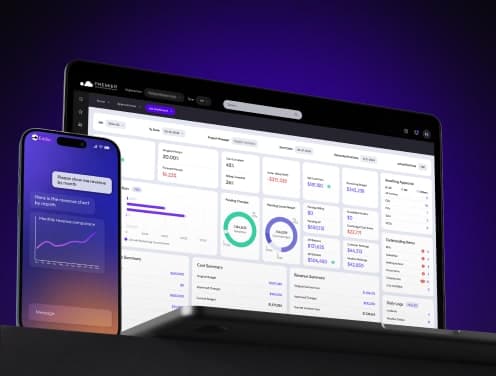
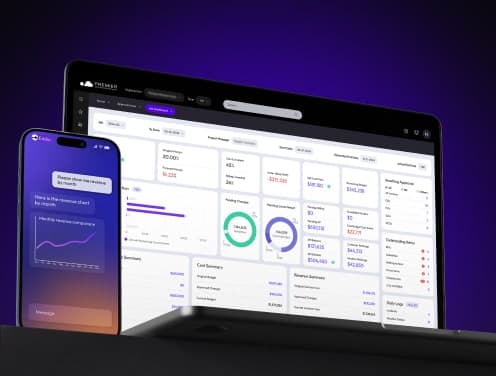
Over 90% of large businesses use ERP systems today. Construction-specific ERPs centralize project data, accounting, procurement, and resource management under one transactional framework. Premier Construction Software's construction ERP solution provides up-to-the-minute job dashboards, automated WIP reporting, and Eddie AI assistant built for contractors generating $5M to $500M+ in annual revenue.
Building Custom Reporting Dashboards
Eighty-nine percent of CFOs still lack accurate or complete data to base decisions on. Custom dashboards fix this by pulling information from all departments into a single view. Up-to-the-minute updates replace month-end reports. Executives intervene early on underperforming projects instead of finding problems after they've destroyed margins.
Conclusion
Financial analysis separates construction companies that scale profitably from those barely surviving the next downturn. Your current ratio and gross margin need monthly tracking at minimum. WIP schedules require review to catch overbilling before sureties notice. Committed costs demand immediate monitoring so you know what budget remains available.
The numbers tell you something important. You need to act on it. Bidding strategies need adjustment when margins fade. Better payment terms become necessary when cash flow tightens. Projects that won't hit your baseline profit requirements deserve a pass.
Premier Construction Software centralizes these metrics into dashboards that show you exactly where problems develop. Implementation matters more than analysis alone.
Latest articles



Trusted by global leaders
Join those who have put their trust in us