
5 Best Construction ERP Software in 2026
Last updated: April 2026
Quick Answer: 5 Best Construction ERP Software in 2026
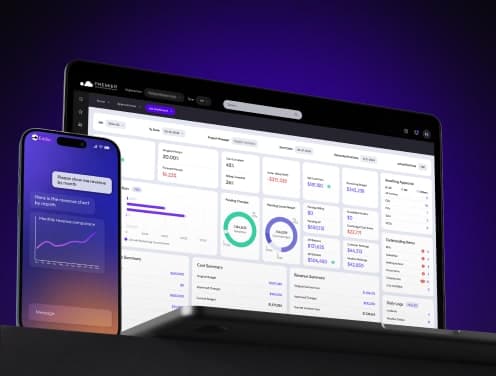
Premier Construction Software tops this list as the Forbes Advisor #1 Construction Cloud ERP for 2026. It gives general contractors real-time job costing, automated WIP reporting, AI-powered forecasting, and field management in one cloud-based platform, with implementation in as few as 60 days.
Running multiple construction projects means tracking job costs, managing subcontractors, controlling cash flow, and keeping a tight lid on margins, often all at once. When those tasks are scattered across disconnected tools, something always slips.
The construction ERP software market reached USD 4.31 billion in 2026 and is on track to hit USD 9.05 billion by 2036 at a 7.7% CAGR (Future Market Insights), driven by contractors consolidating project accounting, procurement, and scheduling into single platforms.
This guide reviews five construction ERP platforms worth considering in 2026: what they do well, where they fall short, and which type of company each one suits best.
Quick Comparison
Software | Type | Starting Price | Best For |
|---|---|---|---|
Premier Construction Software | Construction ERP | $125/user/mo | Mid-market GCs needing full ERP with AI, field tools, and fast implementation |
Viewpoint Vista | Construction ERP | $2,000+/mo | Large contractors needing deep financial customization |
Foundation Software | Construction Accounting | Custom quote | Trade contractors focused on job costing and payroll |
ComputerEase | Construction Accounting | $200–$500/user/mo | Small to mid-sized contractors needing field payroll integration |
Procore | Project Management | Custom quote | Companies prioritizing field collaboration and PM over accounting |
What is construction ERP software?
Construction ERP software ties accounting, project management, job costing, and field operations into one system. Instead of pulling numbers from QuickBooks, Procore, and a handful of Excel spreadsheets, everyone works from the same data in real time.
A well-implemented construction ERP gives contractors:
- Real-time job costing: See where every dollar is going on every project, without waiting for month-end.
- WIP reporting: Generate Work In Progress reports on demand rather than assembling them manually.
- Cash flow visibility: Track billing, collections, and commitments so surprises are rare.
- Field-to-office sync: Time entries, daily logs, and cost data flow in automatically from the jobsite.
- Automated billing and change orders: Reduce the manual steps that cost time and create billing gaps.
The 5 best construction ERP platforms in 2026
1. Premier Construction Software
Best for: General contractors and design-build firms ($5M–$500M+ revenue) that need a modern, all-in-one ERP without a year-long implementation.
Premier is a modern construction ERP built for general contractors, land developers, home builders, and design-build firms across North America. It brings accounting, project management, field tools, subcontractor management, and AI-powered intelligence into one cloud-based platform.
Forbes Advisor named Premier the #1 Construction Cloud ERP for 2026 and the #1 Construction Accounting Software for three consecutive years (Forbes Advisor). Over 800 customers and 15,000 users rely on it daily (Premier Construction Software). The platform holds 1,000+ reviews across G2, Capterra, GetApp, and Software Advice.
Key features
• Job dashboard with drilldown: Open any job and see costs, billings, change orders, and forecasts in one view. Drill down to the transaction level in two clicks.
• WIP reporting: WIP reports generate on demand. No manual assembly, no waiting for month-end.
• AI-powered forecasting: Eddie, Premier's AI assistant, surfaces red flags and tracks Estimate at Completion (EAC) trends before they hit the bottom line.
• Subcontractor portal: Subcontractors submit invoices and pay apps in 45 seconds. Those submissions queue directly into accounts payable.
• Field management: Mobile time entry, daily logs, drawing management, and receipt capture. Cost data flows in automatically.
• Multi-entity financials: Manage multiple companies from one platform, with consolidated reporting across entities.
• Workflow and approval automation: Approvers see the documents they are approving, unlike legacy systems where reviewers sign blind.
• OData integration: Real-time modeling and analysis directly from Premier data, without manual exports.
Implementation and support
Premier goes live in as few as 60 days, the fastest implementation timeline in this category. The implementation team is staffed by CPAs and construction-focused project managers, not generic IT consultants. They build a customized Operational Playbook for every customer.
Ongoing support includes a dedicated account manager, unlimited training, monthly webinars, and a Learning Management System. Premier backs the investment with a 30-day full money-back guarantee.
Pricing
Premier offers three tiers: Starter at $349/user/month (minimum $15,000 implementation fee), Premium at $249/user/month (minimum $25,000), and Enterprise at $125/user/month (minimum $50,000), all billed annually (Premier pricing). All modules and future releases are included.
What customers say
"I went from billing for an entire week, 40 hours, to billing in 8 hours on a Saturday. And I'm capturing more costs. I've gone from about 3% profit up to about 8% because I'm very confident the numbers are right." — Mark Marshall, Owner, JM Construction
"In a span of 4 years we've doubled our size with Premier. The projects are starting to have a couple of extra zeros behind them. We would not have been able to do it without it." — Streamline General Contractors
"Since adopting Premier over a decade ago, we have grown our revenue by 30x." — Eric Engelke, Engelke Construction Solutions
Verdict
Premier is the strongest all-in-one option for growing mid-market contractors who need real-time financials, field tools, and AI-powered forecasting in a single system. The 60-day implementation and money-back guarantee lower the risk of switching.
2. Viewpoint Vista
Best for: Large general contractors and specialty firms that need deep financial customization and multi-state payroll support.
Viewpoint Vista is part of Trimble's construction technology portfolio and serves more than 8,000 clients globally. It runs on a SQL database foundation that gives experienced users powerful options for custom reporting and financial control.
Vista's job costing module supports both units and percentage-of-completion tracking. Multi-state payroll with union support is a standout capability for companies with complex labor agreements.
Key features
• Advanced job costing: Extensive reporting libraries with multiple completion methods.
• Multi-state payroll: Union payroll processing and government compliance built in.
• Service management: Integrated service management module for companies with recurring maintenance work.
• Equipment tracking: Maintenance scheduling and equipment cost allocation.
• Custom reporting: Full SQL database access for building custom reports from stored data.
Implementation and support
Implementation methodology has been refined through thousands of deployments. A project manager runs weekly steering committee meetings throughout. Support is available Monday through Friday, 5 AM to 5 PM PST. Monthly subscriptions range from $2,000 to $10,000+ depending on user count, modules, and customization.
Verdict
Viewpoint Vista works well for large contractors with complex financial needs and in-house IT resources. The learning curve is steep and implementation timelines are longer than modern alternatives.
3. Foundation Software
Best for: Trade contractors ($1M–$250M revenue) that prioritize job costing and payroll over project management features.
Foundation Software has nearly 40 years in construction software development. About 80% of their users are trade contractors. The platform runs on Microsoft SQL Server and offers strong job cost accounting with date sensitivity, meaning users can pull reports from any historical period without hard-close restrictions.
Key features
• Job cost accounting: General ledger and job costing work together for clean financial visibility.
• Multi-company support: Separate accounting entities within one system.
• Government and union payroll: Certified payroll and union reporting built in.
• Date-sensitive reporting: Pull accurate historical data from any time period, not just open periods.
• FOUNDATION Hosted: Cloud-based access with automatic backups every 15 minutes.
• Mobile field access: Remote timecard entry and job data capture that syncs with the main system.
Implementation and support
Implementation runs 8 to 16 weeks with a dedicated trainer. Support teams respond in under 45 minutes on average, by phone Monday through Friday, 8 AM to 8 PM EST.
Verdict
Foundation is a reliable choice for trade contractors who need strong payroll compliance and job costing. It is less suited to general contractors looking for project management, field tools, or AI-powered forecasting.
4. ComputerEase (Deltek)
Best for: Small to mid-sized contractors needing straightforward job costing, payroll, and field time entry.
Deltek ComputerEase has over 50 years in construction software. The platform integrates job costing, payroll, and field management with an accessible interface that helps smaller teams avoid the complexity of enterprise-grade ERPs.
The software integrates with Procore and Viewpoint, which suits companies already embedded in those ecosystems. Mobile features support offline operations, which matters on jobsites with limited connectivity.
Key features
• Integrated job costing and payroll: Financial and field data in one system, with smooth payroll processing.
• Document management: RFIs, submittals, and project documents tracked within the platform.
• Mobile field access: Offline-capable mobile tools for remote timecard entry and job data.
• Service dispatch: Dispatch tools for service contractors managing recurring work.
• Equipment management: Equipment cost tracking tied to jobs.
Implementation and support
Implementation is designed to maintain productivity during transition. Support accompanies users through first payroll processing and initial month-end close. The team stays engaged for four to six months post-go-live. Monthly costs range from $200 to $500 per user, plus implementation and customization fees.
Verdict
ComputerEase works for smaller contractors that need solid fundamentals without a complex implementation. It lacks the modern UI, AI capabilities, and full ERP depth of Premier. Companies expecting significant growth may outgrow it.
5. Procore
Best for: Teams prioritizing field collaboration, document management, and project execution over financial management.
Procore is the market leader in construction project management software. The platform connects project teams through the full project lifecycle and integrates with over 500 construction apps. Companies using Procore manage 48% more construction volume per person compared to older methods, according to Procore's internal data.
Procore does not include native accounting. It is often used alongside a financial system, which means companies still need to manage two platforms. Many contractors pair Procore with Premier or QuickBooks, though that can recreate the data fragmentation they were trying to solve.
Key features
• Project management: Comprehensive tools for scheduling, RFIs, submittals, and document control.
• Field collaboration: Mobile-first tools keep field teams connected in real time.
• BIM integration: Design coordination with building information modeling tools.
• Quality and safety: Inspection and safety observation tools built into the platform.
• 500+ integrations: Connects with accounting systems, scheduling tools, and specialty apps.
Implementation and support
Implementation typically runs four to six months. The platform offers 24/7 customer support, role-based online certification, and community access. Training and certification are included at no extra cost.
Verdict
Procore is the right choice if project management and field collaboration are the primary priorities. If accounting, job costing, and financial reporting are equally important, a full construction ERP like Premier is a better fit. Running both means managing two systems and two bills.
How to choose the right construction ERP
The right platform depends on what your business actually needs today and where it is headed. A few questions worth answering before you start evaluating:
1. What is your primary pain point? Disconnected data, slow close cycles, billing gaps, and poor job visibility each point to different solutions.
2. Do you need accounting built in, or are you open to connecting separate tools? If you want one system, a full construction ERP is the answer. If project management is the only gap, Procore may be sufficient.
3. How fast do you need to go live? Implementation timelines range from 60 days to 18 months across this list. Time-to-value matters, especially mid-project-cycle.
4. Will your field crews actually use it? Modern UI and mobile-first design drive adoption. Legacy platforms with complex interfaces often see low field adoption.
5. Is your current tool a growth ceiling? Some platforms work well at $5M but struggle at $50M. Picking one that scales avoids a painful switch later.
Full comparison
The table on the following page compares all five platforms side-by-side.
Full comparison table
Software | Best For | Starting Price | Key Features | Rating | Verdict |
|---|---|---|---|---|---|
Premier Construction Software | Mid-market GCs, design-build, land developers | $125–$349/user/mo + impl. fee | • Real-time job dashboard with drilldown • WIP reports on demand • AI forecasting + Eddie AI assistant • Subcontractor portal (45-sec invoice) • Field management and mobile app • Multi-entity financials • Workflow and approval automation • 60-day implementation • 30-day money-back guarantee | 4.5/5 (Forbes) | Best all-in-one for mid-market contractors. Fastest implementation, modern AI, strong support. |
Viewpoint Vista | Large GCs with complex payroll and reporting needs | $2,000–$10,000+/mo | • Advanced job costing • Multi-state/union payroll • Service management • Equipment tracking • Custom SQL reporting | N/A | Powerful but heavy. Long implementation. Best for large teams with IT resources. |
Foundation Software | Trade contractors focused on payroll and job costing | Custom quote | • Construction-native job costing • Government/union payroll • Date-sensitive reporting • Cloud hosted option • Mobile field timecard | N/A | Solid for specialty trade contractors. Limited project management and field tools. |
ComputerEase | Small to mid-sized contractors | $200–$500/user/mo | • Integrated job costing and payroll • Document management (RFIs, submittals) • Offline-capable mobile • Service dispatch • Procore and Viewpoint integrations | N/A | Accessible for smaller teams. May not scale well as revenue grows. |
Procore | Teams prioritizing field and project management | Custom quote | • Project management and scheduling • BIM integration • Quality and safety tools • 500+ app integrations • 24/7 support | N/A | Best-in-class for project management. No native accounting, so pairs with a separate financial system. |
The bottom line
Each platform in this list serves a different kind of company at a different stage of growth.
• If you need a full construction ERP with real-time job costing, field tools, and AI-powered forecasting, Premier is the strongest option. The 60-day implementation, 30-day guarantee, and modern UI lower the risk of switching.
• If financial customization and complex payroll are the priority, Viewpoint Vista has depth, but expect a longer ramp and more IT involvement.
• If you are a trade contractor focused on payroll compliance, Foundation Software covers the basics well.
• If your team is small and needs straightforward accounting and payroll, ComputerEase is accessible without the overhead of a full ERP.
• If field collaboration and project management are the gaps, not accounting, Procore is purpose-built for that.
The construction ERP market is expected to nearly double by 2036 (Future Market Insights). Companies that invest in the right platform now, one that grows with them, will be better positioned to control margins, scale operations, and make faster decisions when it counts.
See how Premier compares in a live demo premiercs.com
Sources: Future Market Insights (Construction ERP Software Market, 2026); Forbes Advisor (10 Best Construction ERPs, 2026); Premier Construction Software (premiercs.com, April 2026). Pricing sourced from vendor websites as of April 2026 and may vary based on configuration and contract terms.
Latest articles




Trusted by global leaders
Join those who have put their trust in us