
8 Best Construction Financial Software Compared (2026)
Last updated: April 2026
Quick Answer: Best Construction Financial Software (2026)
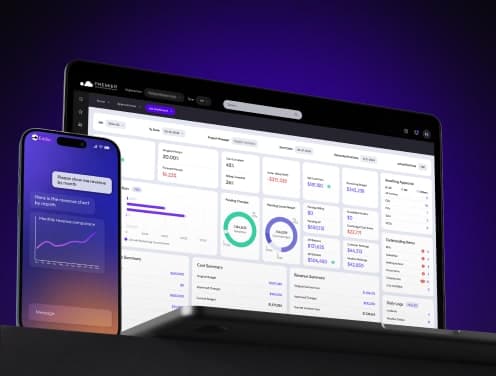
Premier Construction Software is the top-rated construction ERP for mid-market general contractors in 2026, offering real-time job costing, automated WIP reporting, and a full ERP platform in a single cloud-based system. For teams running disconnected tools (QuickBooks, Procore, and Excel in three separate tabs), Premier Construction Software consolidates everything into one source of truth.
Introduction
The average subcontractor waits 96 days to get paid (Levelset Construction Payment Report). That is three months of cash locked up while your crews are out working.
With over 90 construction accounting platforms on the market, picking the right one feels overwhelming. But the wrong choice is expensive. Companies without purpose-built financial software face payment delays, margin erosion, and compliance risk. The right software can cut accounts receivable aging by up to 30% (Software Advice).
The construction market hit $1.42 trillion in 2023 and is projected to reach $1.74 trillion by 2027, growing at 5.2% annually (Statista). The construction accounting software market topped $1.5 billion in 2022 and is expected to grow 5% per year through 2032 (Grand View Research).
We reviewed eight platforms across pricing, functionality, ease of use, and fit for different contractor types. Here is what we found.
Quick Comparison
Software | Type | Starting Price | Best For |
|---|---|---|---|
Premier Construction Software | Construction ERP | $125/user/month | Mid-market GCs & developers |
Sage Intacct Construction | Financial management | ~$400/user/month | Multi-entity financials |
Acumatica Cloud ERP | General ERP | $10K–$80K/year | Growing teams |
Viewpoint Vista | Construction ERP (legacy) | $2K–$10K+/month | Large, finance-heavy contractors |
QuickBooks Enterprise | Accounting software | $447/month | Small-mid contractors on a budget |
FOUNDATION Software | Construction accounting | Contact vendor | Trade contractors |
Procore | Project management | $15K–$80K+/year | Field-first project teams |
Deltek ComputerEase | Construction accounting | $5,000 one-time | Small contractors, complex payroll |
What Is Construction Financial Software?
Construction financial software manages the money side of building: job costing, billing, payroll, accounts payable, WIP reporting, and forecasting. Unlike generic accounting tools, construction-specific platforms connect field operations to back-office finance so your numbers are live, not a week behind.
The difference between a general accounting tool and a construction ERP comes down to job costing. A construction ERP tracks every dollar, every hour, and every commitment against a specific project, so you can see in real time whether a job is over or under budget and course-correct before it is too late.
Key capabilities to evaluate:
● Job costing — tracking labor, materials, subcontractors, and equipment against project budgets
● WIP reporting — automated overbilling and underbilling calculations
● Change order management — capturing scope changes before they erode margins
● Billing automation — AIA progress billing, pay apps, and lien waivers
● Multi-entity management — consolidated financials across multiple companies or divisions
● Field-to-office connectivity — mobile time entry, daily logs, and cost capture from jobsites
The 8 Best Construction Financial Software Platforms
1. Premier Construction Software
Premier Construction Software is a modern construction ERP built for general contractors, land developers, home builders, and design-build firms in North America. It combines job costing, project management, field tools, subcontractor management, and AI-powered intelligence in one cloud-based platform, with no third-party connectors required.
Over 800 customers and 15,000 users rely on Premier Construction Software. It earned the Forbes Advisor #1 Construction Cloud ERP ranking for 2026 and holds more than 1,000 reviews across G2, Capterra, GetApp, and Software Advice (premiercs.com).
Key features:
● Job dashboard — drill down from a project summary to the individual transaction in two clicks
● Automated WIP reports — generated on demand, not assembled over days in a spreadsheet
● Eddie AI assistant — flags red flags, answers cost questions, and surfaces forecasting insights
● Smart UI for accounts payable — interprets vendor emails, codes distributions, and matches invoices automatically
● Subcontractor portal — invoice submission takes 45 seconds
● Change order management — tracks changes across scope, budget, and schedule from one screen
● Multi-entity support — unlimited companies with automated intercompany transactions
● Drawing management (Cortex) — full revision tracking and markup, native to the platform
● Mobile app — field teams track costs, expenses, and receipts from their phones
"WIP reports are instantaneously created out of Premier Construction Software. You click a button, that report comes out. In the past it was a big process, took a lot of time."
— Mike Van Orman, Nomad Infrastructure
"I went from billing for an entire week, 40 hours, to billing in 8 hours on a Saturday. And I'm capturing more costs. I've gone from about 3% profit up to about 8% by using Premier Construction Software because I'm very confident that the numbers are right."
— Mark Marshall, Owner, JM Construction
Pricing:
Plan | Price | Implementation Fee |
|---|---|---|
Starter | $349/user/month | Starting at $15,000 |
Premium (Most Popular) | $249/user/month | Starting at $25,000 |
Enterprise | $125/user/month | Starting at $50,000 |
Mobile app: $50/user/month additional. All plans billed annually. Full 30-day money-back guarantee. Implementation takes as few as 60 days, led by construction-specific CPAs and project managers (premiercs.com/pricing).
Pros:
● All-in-one platform: no separate accounting, PM, or field tools needed
● AI-powered automation reduces manual AP work
● Fastest implementation in the category (as few as 60 days)
● WIP reporting in two clicks
● 30-day full money-back guarantee
● Backed by Constellation Software ($68B USD, publicly traded)
Cons:
● Mobile app has fewer features than the desktop version
● No native scheduling module
● Higher per-user cost at Starter tier
Best for: Mid-market general contractors, developers, and design-build firms with $5M–$500M+ in annual revenue that need real-time financial visibility and want to consolidate multiple systems into one.
Rating: 4.7/5 (1,000+ reviews) (GetApp)
2. Sage Intacct Construction
Sage Intacct Construction is the only AICPA-preferred cloud-native accounting solution in the construction sector. It focuses on financial management for general contractors and developers who need sophisticated reporting, multi-entity consolidation, and automated workflows.
Worth noting: Sage Intacct is a financial management platform, not a full construction ERP. It covers accounting and reporting well but relies on integrations with Procore, Autodesk, and TimberScan for project management and field operations.
Key features:
● Job costing with real-time tracking across projects and entities
● Automated WIP calculations with overbilling and underbilling GL transactions
● Multi-entity consolidation (days of work reduced to minutes)
● Customizable role-based dashboards
● Smart Events and Smart Rules for workflow automation and alerts
● Open API for third-party integrations
Pricing: Custom quote required. Annual contracts typically start at $12,000 for one user and core financials. Most companies pay $25,000–$75,000/year depending on user count and modules (ERP Research).
Pros:
● Strong WIP automation
● Multi-entity consolidation is a standout capability
● 24/7 cloud access from any device
● Can cut month-end close time by up to 50%
Cons:
● Not a full construction ERP — needs integrations for project management and field
● Implementation can take 90 days and cost 100–150% of the annual subscription
● Steep learning curve for new users
Best for: Mid-to-large construction companies with complex multi-entity financial structures who already have a project management tool and need a financial-only layer.
Rating: 4.2/5 (Capterra)
3. Acumatica Cloud ERP
Acumatica is a general-purpose cloud ERP with a construction edition. Its main differentiator is unlimited users — pricing is based on transaction volume rather than headcount, which can reduce costs for fast-growing teams adding staff.
It covers financials, job costing, project management, equipment tracking, and mobile field access. Because it is a general ERP adapted for construction — not purpose-built — some construction-specific workflows require more configuration than a native platform.
Key features:
● Financial management across multiple entities
● Job cost accounting with budget tracking
● Mobile field access for time and project updates
● Equipment management and usage tracking
● CRM and order management included
● Strong third-party integration ecosystem
Pricing: Consumption-based (transaction volume, not per user). Annual licensing typically runs $10,000–$80,000 depending on tier. Implementation costs range from $25,000 to $150,000 or more (Protelo).
Pros:
● Unlimited users at every tier
● Extensive customization options
● Works on any device with internet access
● Strong integration ecosystem
Cons:
● Setup takes months and requires specialized knowledge
● Construction-specific features need more configuration than native platforms
● Implementation can be complex and expensive at mid-market scale
Best for: Growing construction companies that expect to add headcount and want to avoid per-user pricing, or need deep customization.
Rating: 4.3/5 (Capterra)
4. Viewpoint Vista
Viewpoint Vista is a legacy construction ERP now part of the Trimble Construction One suite. It handles job costing, financials, workforce management, service management, and equipment tracking for mid-to-large contractors.
Vista has been around for decades and is well-regarded for its job costing engine. The trade-off is an older interface, a steep learning curve, and an implementation process that can stretch over months.
Key features:
● Job-cost accounting with detailed reporting
● Financial management including WIP tracking
● Workforce management and payroll processing
● Service management for work orders and dispatch
● SQL database for flexible custom reporting
● Field-to-office integration
Pricing: Contact vendor. Monthly costs typically range from $2,000 to $10,000+ depending on configuration and user count (RedHammer).
Pros:
● Strong job costing engine
● Flexible SQL-based reporting
● Deep construction-specific functionality
● Works for union contractors with complex payroll needs
Cons:
● Interface looks dated compared to modern platforms
● Implementation can stretch over months
● Steep learning curve requires significant training investment
Best for: Medium-to-large finance-heavy contractors who need deep cost tracking and can invest in a longer implementation, particularly union contractors.
Rating: 3.9/5 (Capterra)
5. QuickBooks Enterprise
QuickBooks Enterprise is the top tier of the QuickBooks product line, offering advanced job costing, inventory management, and construction-specific reporting. It is a familiar option for teams already using QuickBooks.
The important limitation: QuickBooks Enterprise is not built for construction job costing the way a purpose-built construction ERP is. There is no native WIP reporting, no change order workflow, and no subcontractor portal. Growing contractors routinely run into its ceiling.
Key features:
● Job costing tracking by labor, materials, and equipment
● Estimate-to-invoice conversion
● Progress billing and electronic invoicing
● Construction-specific reports (job status, cost-to-complete, unpaid bills by job)
● Advanced Reporting with 140+ starter report templates
● Up to 40 users with role-based access
Pricing: Starting at $447/month, billed annually (QuickBooks). Cloud access requires an additional hosting fee.
Pros:
● Familiar interface for existing QuickBooks users
● Reliable job costing for simpler needs
● Extensive reporting templates
● Supports up to 40 users
Cons:
● Not purpose-built for construction — no WIP reporting, no pay apps
● Cloud access costs extra
● Limited integration options versus ERP platforms
Best for: Small-to-mid contractors who are outgrowing basic accounting but do not yet need a full ERP, especially those already in the QuickBooks ecosystem.
Rating: 4.3/5 (Capterra)
6. FOUNDATION Software
FOUNDATION has focused exclusively on construction accounting for nearly 40 years. It targets small-to-mid contractors — particularly trade contractors — and is well-regarded for handling complex payroll scenarios including union requirements, certified payroll, and multiple jobs on a single timecard.
About 80% of its user base is trade contractors. If payroll complexity is your primary pain point, FOUNDATION is worth evaluating.
Key features:
● Job tracking with cash flow and WIP reporting
● Automated cost overrun alerts
● Construction-specific payroll (union, certified, multiple rate cards)
● Customizable financial reporting
● Accounts payable, general ledger, and job costing in one system
Pricing: Contact vendor. Pricing is custom and not publicly listed. Typical users have 10–1,500 employees and $1M–$250M in annual revenue (FOUNDATION).
Pros:
● Deep payroll specialization for trade contractors
● Easy-to-use interface relative to legacy platforms
● Strong customer support from construction-specific staff
● Purpose-built for construction from day one
Cons:
● Limited scalability for larger or more complex contractors
● Some tax reporting limitations
● Less flexible than modern cloud-native platforms
Best for: Small-to-mid trade contractors (subcontractors, specialty contractors) where payroll complexity and compliance are the primary concerns.
Rating: 4.1/5 (Capterra)
7. Procore
Procore is a project management platform with financial features. It is not a construction ERP and does not replace accounting software — it integrates with ERPs like Premier Construction Software, Sage, or QuickBooks to sync financial data. Procore gives field teams visibility into project budgets, but does not handle general ledger accounting, payroll, or WIP reporting natively.
Where Procore excels is field collaboration, document management, and real-time budget tracking from mobile devices. Unlimited users is a genuine differentiator for large teams.
Key features:
● Budget tracking and forecasting with live field data
● Change management from field to finance
● Invoice management and billing workflows
● Accounting integrations with major ERPs to avoid double entry
● Unlimited users at all tiers
● Mobile access for field teams
Pricing: Based on annual construction volume (ACV), not user count. Small contractors ($10M–$50M ACV) typically pay $15,000–$30,000/year; mid-size ($50M–$200M ACV) pay $30,000–$80,000/year (Projul analysis).
Pros:
● Unlimited users
● Strong field-to-office financial visibility
● 24/7 customer support
● Industry-leading project management and document control
Cons:
● Not an accounting platform — still requires a separate ERP or accounting system
● Pricing is volume-based and increases 5–14% at renewal
● Mobile app does not work offline
Best for: Mid-to-large contractors managing multiple complex projects with large field teams, who already have an accounting/ERP system in place.
Rating: 4.5/5 (Capterra)
8. Deltek ComputerEase
Deltek ComputerEase has handled construction accounting since 1983. It is a focused accounting tool for small-to-mid contractors, covering job costing, billing, payroll, and project tracking. It earned G2 badges for "easiest to administer" and "fastest to implement" in its category.
Like FOUNDATION, it is a specialist tool. It does accounting well but lacks the breadth of a full construction ERP.
Key features:
● Job costing with WIP reporting
● AIA and unit billing for faster invoicing
● Union and certified payroll management
● Project management (submittals, RFIs, change orders)
● Mobile field access
● Reporting dashboard for financial oversight
Pricing: Starting at $5,000 one-time fee, with subscription options available. Contact Deltek directly for a custom quote (GetApp).
Pros:
● Simple, easy-to-navigate interface
● Strong customer support from construction-focused staff
● Good for certified and union payroll
● G2-recognized for ease of administration
Cons:
● Reporting capabilities are limited relative to ERP platforms
● API and customization options are restricted
● Mobile app has functionality gaps
Best for: Small-to-mid contractors who need construction-specific accounting and complex payroll management without the overhead of a full ERP.
Rating: 4.2/5 (GetApp)
Final Comparison Table
Software | Best For | Starting Price | Key Features | Rating | Verdict |
|---|---|---|---|---|---|
Premier Construction Software | Mid-market GCs and developers | $125/user/month | Job dashboard + WIP in 2 clicks Eddie AI assistant Smart UI (AP automation) Subcontractor portal Multi-entity support Drawing management 60-day go-live | 4.7/5 | Best all-in-one construction ERP. Fastest go-live, modern UI, purpose-built for construction. |
Sage Intacct Construction | Multi-entity financials | ~$400/user/month | Automated WIP Multi-entity consolidation Smart automation rules Open API integrations | 4.2/5 | Best for complex multi-entity structures; needs a separate PM tool. |
Acumatica Cloud ERP | Growing teams, high headcount | $10K–$80K/year | Unlimited users Job costing Equipment tracking Mobile access CRM included | 4.3/5 | Good for teams avoiding per-user fees; more configuration needed for construction. |
Viewpoint Vista | Large, finance-heavy contractors | $2K–$10K+/month | Deep job costing SQL-based reporting Union payroll WIP tracking | 3.9/5 | Proven job costing engine; dated interface and long go-live are trade-offs. |
QuickBooks Enterprise | Small contractors in QB ecosystem | $447/month | Job costing 140+ report templates Progress billing Up to 40 users | 4.3/5 | Good for simpler needs; not a construction ERP and will limit growth. |
FOUNDATION Software | Trade contractors | Contact vendor | Certified/union payroll Job tracking Integrated AP/GL Cost overrun alerts | 4.1/5 | Best payroll specialization for trade contractors; limited scalability. |
Procore | Large field-first teams | $15K–$80K+/year | Unlimited users Budget tracking Change management Mobile-first | 4.5/5 | Top project management platform; needs a separate accounting system. |
Deltek ComputerEase | Small contractors, accounting focus | $5,000 one-time | AIA billing Union payroll Job costing WIP reporting | 4.2/5 | Reliable specialist tool; limited reporting and integrations. |
How to Choose Construction Financial Software
The right platform depends on three things: company size, project complexity, and where your current system is breaking down.
● If you are running multiple entities or growing toward $50M+ in revenue, you need a construction ERP, not accounting software. Platforms like QuickBooks and FOUNDATION will constrain you. Premier Construction Software, Sage Intacct, or Acumatica are the right categories.
● If your pain is disconnected data — field and finance not syncing, WIP taking days to assemble, approvals going blind — you need an all-in-one platform. Premier Construction Software is purpose-built for this.
● If your pain is payroll complexity, particularly union or certified payroll, FOUNDATION and Deltek ComputerEase have specialized capabilities worth evaluating.
● If you already have project management sorted and need a financial layer, Sage Intacct integrates well with Procore and Autodesk.
● If your field team is the priority and you have an accounting system you like, Procore gives field teams the best real-time financial visibility without replacing your back office.
Whatever direction you go, test the system before committing. Run a real job through it. See how long WIP takes to generate. Ask about implementation timelines. The difference between a smooth go-live and a months-long disruption often comes down to whether the vendor has construction expertise or just software expertise.
Premier Construction Software offers a 30-day full money-back guarantee and goes live in as few as 60 days. To see what a modern construction ERP looks like in practice, book a demo at https://premiercs.com/book-a-demo.
Sources
● Levelset Construction Payment Report — levelset.com/payment-reports/
● Grand View Research — grandviewresearch.com
● Statista — statista.com
● Premier Construction Software Pricing Page — premiercs.com/pricing
● GetApp: Premier Construction Software — getapp.com/construction-software/a/premier/
● ERP Research: Sage Intacct — erpresearch.com/pricing/sage-intacct
● Protelo: Acumatica Pricing — proteloinc.com/acumatica-pricing-guide
● RedHammer: Viewpoint Vista — redhammer.io/software/viewpoint-vista
● Projul: Procore Pricing Analysis — projul.com/blog/procore-pricing-analysis-2026/
● GetApp: ComputerEase — getapp.com/construction-software/a/computerease/
Latest articles



Trusted by global leaders
Join those who have put their trust in us