
CMiC vs Acumatica Cloud ERP Comparison: Real Cost and Features (2026)
Last updated: April 2026
Quick Answer: CMiC vs Acumatica Cloud ERP
CMiC is a construction-native enterprise ERP built for large general contractors. Acumatica is a general-purpose cloud ERP with construction add-on modules. Both face strong competition from Premier Construction Software, the only platform in this comparison built 100% for construction across all company sizes.
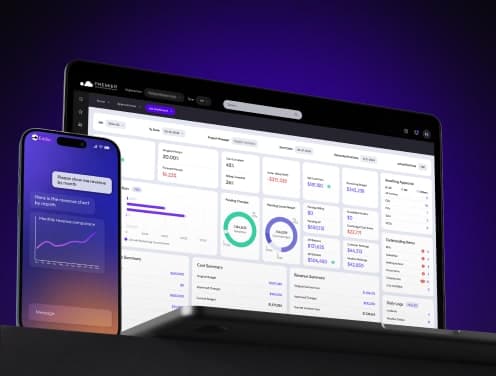
Quick Comparison
Software | Type | Starting Price | Best For |
|---|---|---|---|
Premier Construction Software | Construction ERP (100% native) | Transparent tiered pricing | GCs, subs, and specialty contractors of all sizes |
CMiC | Construction enterprise ERP | Custom quote ($150K+ implementation) | Large ENR-ranked general contractors |
Acumatica Cloud ERP | General ERP with construction add-ons | $10,000–$80,000/year (license) | Mid-market firms needing multi-industry flexibility |
Introduction
The construction software market was valued at $3.7 billion in 2024 and is projected to reach $7.6 billion by 2034, growing at a 7.7% CAGR (GM Insights). That growth reflects one thing: more construction companies are moving off spreadsheets and legacy systems and looking for a single platform that handles both field and finance.
If you are evaluating CMiC vs Acumatica, you are comparing two very different approaches to the same problem. CMiC goes deep on construction workflows for large enterprise contractors. Acumatica offers flexible, general-purpose ERP with construction modules bolted on. Neither was purpose-built for the full range of construction company sizes.
This guide covers both platforms objectively: verified pricing, user ratings, and real-world trade-offs. It also introduces Premier Construction Software as a third option worth considering, particularly for growing general contractors that want construction-native depth without the enterprise price tag.
Platform Overview
CMiC
CMiC is an enterprise ERP suite designed for large general contractors, heavy civil firms, and ENR-ranked organizations. The platform covers project management, financials, HR, payroll, and content management in one environment. With over 40 years in construction software, its depth reflects that tenure, and so does its complexity.
CMiC earns a 3.9/5 ease-of-use rating from verified users (Software Advice), reflecting a steep learning curve that often requires dedicated IT support. Implementations run 6 to 18 months and cost between $150,000 and $500,000 or more. The platform serves 25% of ENR's top 400 contractors and processes roughly $100 billion in construction revenue annually (CMiC).
For large enterprises with the budget and resources to support a complex deployment, CMiC delivers. For mid-market firms, the cost-to-value ratio is harder to justify.
Acumatica Cloud ERP
Acumatica is a cloud-native general ERP platform that serves construction through its Construction Edition, a set of add-on modules built on top of its core financial engine. Its resource-based pricing model charges by transaction volume and modules rather than per user, making it attractive to growing firms that want to add headcount without watching licensing costs climb.
Acumatica holds a 4.4/5 overall rating and an 8.3/10 ease-of-use score from verified users (Software Advice). SMB deployments typically run $10,000 to $50,000 per year in licensing, with enterprise configurations reaching $50,000 to $150,000 annually (Protelo). Implementation through a Value Added Reseller (VAR) adds $25,000 to $200,000.
The platform's general-purpose design is both its strength and its limitation. Firms outside construction benefit from cross-industry functionality. Construction-only firms often find they need third-party integrations to get the workflow depth that a purpose-built system provides out of the box.
Premier Construction Software
Premier Construction Software is a modern construction ERP built exclusively for the construction industry since 2009. Unlike CMiC (large enterprise focus) and Acumatica (general ERP with construction add-ons), Premier Construction Software serves general contractors, land developers, home builders, and specialty contractors across a wide revenue range: from $5M to $500M+.
The platform holds a 4.7/5 overall rating from over 1,000 verified reviews across G2, Capterra, Software Advice, and GetApp. In 2026, Forbes Advisor named Premier Construction Software the #1 Construction Cloud ERP, its fourth consecutive year of recognition. Premier Construction Software runs on Microsoft Azure, delivers 540 product enhancements per year across 26 releases, and is backed by Constellation Software, a $68 billion publicly traded enterprise with 125,000+ customers in 100 countries.
Deployment and Accessibility
Cloud vs. On-Premise
Cloud-based ERP held 62% of the construction ERP market share in 2024, and that share continues to grow (GM Insights). Construction's distributed workforce, split across job sites, trailers, and offices, makes cloud deployment a practical necessity.
CMiC offers both cloud (private hosted) and on-premise deployment. On-premise gives large enterprises control over hardware and security, but carries higher maintenance overhead, slower update cycles, and greater IT burden.
Acumatica runs on AWS in a multi-tenant SaaS model, with private cloud and perpetual license options. Updates and security maintenance are handled by the vendor.
Premier Construction Software is cloud-first on Microsoft Azure. No servers to maintain, no manual updates, no IT overhead. The system updates automatically and continuously.
Mobile Access
CMiC offers a mobile app for iOS and Android with offline capability, though users report the mobile experience is more limited than the desktop version.
Acumatica provides full mobile browser support and a dedicated app, with strong usability for field access.
Premier Construction Software delivers full mobile access with field-ready interfaces built for construction workflows: timesheets, daily logs, photo documentation, approvals, and cost tracking, from any device, anywhere. The mobile app lets field teams track expenses and receipts that import directly into the system.
Core Features Compared
Project Management
All three platforms cover project management fundamentals: budgeting, cost tracking, scheduling, and change order management. The difference is in how native and how deep that functionality runs.
CMiC's project management module integrates tightly with its financial engine, making it a strong tool for large, multi-phase projects. Configuring it for specific workflows often requires consulting engagement.
Acumatica provides project management through its Construction Edition, but some construction-specific functions (advanced bid management, AIA billing) may require third-party add-ons through a VAR partner.
Premier Construction Software's project management is native and construction-specific. Job costing, AIA billing, subcontract management, lien waiver tracking, and progress billing are built in, not bolted on. 90% of construction projects experience cost overruns (AlterSquare). Having real-time budget-to-actual visibility inside the project management module directly reduces that risk.
"The job dashboard, that is the greatest feature. Just be able to open that up and to see where accounts receivables are at, the cash flow, overbilling, underbillings." (Mike Van Orman, Nomad Infrastructure)
Financial Management
Construction accounting differs from standard business accounting. Percentage-of-completion revenue recognition, retention tracking, certified payroll, multi-entity consolidation, and WIP reporting are baseline requirements.
CMiC handles complex construction financial reporting well, including multi-company and multi-currency support. The trade-off is significant configuration effort.
Acumatica has solid core financials, but construction-specific workflows often depend on third-party integrations. Support quality scores (8.0/10) trail Premier Construction Software's 9.3/10 rating.
Premier Construction Software covers P&L statements, cash flow reporting, balance sheets, WIP tracking, and multi-entity financials natively. The job dashboard gives project managers and controllers a real-time view from any device, with drilldown to the transaction level.
"WIP reports are instantaneously created out of Premier Construction Software. You click a button, that report comes out. In the past it was a big process, took a lot of time." (Mike Van Orman, Nomad Infrastructure)
"I went from billing for an entire week, 40 hours, to billing in 8 hours on a Saturday. I've gone from about 3% profit up to about 8% by using Premier Construction Software because I'm very confident that the numbers are right." (Mark Marshall, Owner, JM Construction)
Document Management
CMiC includes an integrated content management system with drawing management, version control, annotation, and RFI linking. It is one of the stronger document management systems in the enterprise ERP space.
Acumatica handles document management through its core platform, with construction document workflows available through add-on integrations.
Premier Construction Software's document management includes submittals, RFIs, drawing management (Cortex module), shared drives, and a subcontractor portal where subs can submit invoices in 45 seconds. All documents tie directly to project workflows, approvals, and financial records.
"It takes our subs 45 seconds to submit an invoice now." (Brian Wessels, President, Intent Built)
AI and Automation
CMiC has limited native AI capabilities, relying primarily on reporting tools and integrations for predictive analysis.
Acumatica includes general-purpose AI tools (machine learning for data entry automation and anomaly detection), but these are not construction-specific.
Premier Construction Software integrates AI-powered predictive forecasting directly into its construction workflows. The Eddie AI assistant provides on-demand financial insights and flags budget risks before they reach the bottom line. Companies using AI in ERP report a 40% productivity increase in financial tasks (AlterSquare). The global market for AI in construction is projected to grow from $1.80 billion in 2023 to $12.10 billion by 2030 (MarketsandMarkets).
"Premier Construction Software allowed us to catch red flags as soon as they happen and protect our margins." (Carlo Frediani, Controller, Broccolini)
Ease of Use and User Experience
Interface Design
User adoption is the single biggest risk in any ERP deployment. A system that is technically powerful but hard to navigate will not be used consistently, and inconsistent use produces unreliable data.
CMiC's interface is functional but dated compared to modern cloud-native platforms. Its 3.9/5 ease-of-use rating reflects the complexity of navigating a feature-rich legacy environment (Software Advice).
Acumatica offers a modern, customizable interface with an 8.3/10 ease-of-use score. Dashboard personalization and role-based views help users find what they need without wading through irrelevant features.
Premier Construction Software's interface is built for construction professionals, not IT administrators. Navigation follows construction workflows, and the 4.5/5 ease-of-use rating reflects an interface that requires minimal training for daily tasks.
"The transition from our server-based system to Premier Construction Software's cloud-based platform reduced task clicks by 80%." (Cherise Quimby, VP of Accounting, Ovation Property Management)
Learning Curve and Onboarding
CMiC's learning curve is significant. Users report that proficiency can take months, and some firms experienced staff turnover during rollout.
Acumatica is more approachable, with training delivered through its VAR partner network. Quality can vary by partner.
Premier Construction Software provides structured onboarding led by construction-focused CPAs and PMs, alongside unlimited training, monthly webinars, and a Learning Management System. Ongoing support includes a dedicated account manager and quarterly check-ins.
Customer Support
Support Channels
CMiC offers a 24-hour support line and a ticket-based portal. Customers are assigned an Account Manager for general questions.
Acumatica routes support through its VAR partner network. Service quality depends on the partner, which can create inconsistency across deployments.
Premier Construction Software provides direct, in-house support through chat, phone, and case management, with a guaranteed one-hour response time for business-critical issues. Customer support is rated 4.8/5 by verified users, the highest in this comparison.
"Premier Construction Software saves us probably upwards of 25% of our daily schedule because of how it's tracking things, entering things, and the approval process has been greatly expedited." (Scott Largley, Senior PM, Ally Construction Services)
Training Resources
Acumatica's VAR-based training introduces variability. CMiC training is thorough but tied to a longer implementation process.
Premier Construction Software provides live training workshops, on-demand walkthroughs, guided tours, and contextual help, plus one-to-one sessions post-implementation for tailored recommendations.
Industry Fit and Scalability
Who Each Platform Serves
CMiC is built for construction and scales well for large enterprises with complex, multi-entity environments. Firms under $50M in annual revenue may find the platform overbuilt and overpriced.
Acumatica is a general ERP with a construction edition. It scales across industries, which suits diversified companies. Construction-only firms often spend significant time configuring a general tool to act like a specialized one.
Premier Construction Software is built 100% for construction, from day one. The platform scales from specialty contractors to large general contractors running $500M+ in revenue. Customers have grown their revenue 30x while on Premier Construction Software.
"In a span of 4 years we've doubled our size with Premier Construction Software. We're doing way bigger projects. The projects are starting to have a couple of extra zeros behind them. We would not have been able to do it without it." (Streamline General Contractors)
"Since adopting Premier Construction Software over a decade ago, we have grown our revenue by 30x." (Eric Engelke, Engelke Construction Solutions)
Scalability for Growing Firms
52% of construction firms cannot hire enough craft workers even when project volume grows (AGC of America). Scaling a construction business is already hard. Your ERP should remove barriers, not add them.
Premier Construction Software's modular design lets firms start with core functionality and add capabilities as they grow. Modern ERP can reduce operating costs by 30 to 50% (AlterSquare), but only if implementation does not consume those savings upfront.
User Ratings and Real-World Feedback
CMiC: 3.9/5
Users give CMiC mixed feedback. Strong marks for construction-specific depth and financial reporting. Usability is a consistent concern: roughly 82% of reviewers cite complexity, and some note staff turnover during rollout (Software Advice). Resource planning and budgeting tools earn positive feedback from experienced users.
Acumatica: 4.4/5
Strong marks for its modern interface and flexible licensing. Users highlight customization and logical navigation. Construction-specific reviewers frequently note the need for third-party add-ons and the variability of VAR partner support (Capterra).
Premier Construction Software: 4.7/5
Premier Construction Software leads this comparison with a 4.7/5 overall rating from over 1,000 verified reviews. Ease-of-use rates at 4.5/5 and customer service at 4.8/5. Forbes Advisor named Premier Construction Software the #1 Construction Cloud ERP in 2026. Software Advice named it Most Recommended. GetApp awarded it Best Functionality and Features 2026.
"It has cut down my workload by 15 to 25 hours per week." (Verified Controller, Capterra)
"Premier Construction Software makes us more efficient because we're not spending half our time balancing and ensuring every system has the same information. The efficiency has increased tenfold." (Verified User, Software Advice)
"Since implementing Premier Construction Software, we have grown about 40% over the last 3 years. But the biggest thing that has grown is our profit margin." (Mark Marshall, Owner, JM Construction)
Final Comparison: CMiC vs Acumatica vs Premier Construction Software
Software | Best For | Starting Price | Key Features | Rating | Verdict |
|---|---|---|---|---|---|
Premier Construction Software | GCs, subs, specialty contractors ($5M–$500M+) | Transparent tiered pricing; 30-day money-back guarantee | • Real-time job dashboard with drilldown • WIP reporting in 2 clicks • AI predictive forecasting (Eddie) • AIA billing and subcontractor portal • Implementation in as few as 60 days | 4.7/5 | Best overall for construction firms of all sizes. Purpose-built, fast to implement, transparent pricing. |
CMiC | Large ENR-ranked GCs and heavy civil firms | Custom quote ($150K–$500K+ implementation) | • Construction-native financial engine • Multi-company and multi-currency • Drawing and document management • On-premise or private cloud options | 3.9/5 | Strong for large enterprises with IT resources. Steep learning curve and high cost make it a poor fit for mid-market firms. |
Acumatica Cloud ERP | Mid-market firms needing multi-industry ERP | $10,000–$80,000/year (license); $25K–$200K implementation | • Resource-based pricing (no per-user fees) • Modern, customizable interface • Construction Edition with add-on modules • VAR-supported implementation | 4.4/5 | Solid general ERP with construction add-ons. Best for diversified firms. Construction-only firms may find configuration overhead significant. |
Frequently Asked Questions
1. What is the main difference between CMiC and Acumatica?
CMiC is a construction-specific enterprise ERP designed for large general contractors and heavy civil firms. Acumatica is a general-purpose cloud ERP that serves multiple industries, with construction functionality through its Construction Edition and third-party add-ons. CMiC goes deeper into construction workflows but costs more and has a steeper learning curve. Acumatica is more flexible and easier to use, but requires additional configuration to match construction-specific needs.
2. Is CMiC worth the cost for small contractors?
For most small and mid-size contractors, CMiC is not the best fit. Implementation costs typically start at $150,000 and can exceed $500,000. CMiC is built for large organizations with dedicated IT teams. Smaller contractors will find better value and faster ROI with platforms like Premier Construction Software, which offers transparent pricing, lower implementation costs, and construction-specific features without the enterprise overhead.
3. How does Acumatica pricing work?
Acumatica uses resource-based pricing rather than per-user licensing. You pay based on transaction volume, storage, and modules selected, which means unlimited users without per-seat fees. SMB deployments typically run $10,000 to $50,000 per year; enterprise configurations range from $50,000 to $150,000 annually. Implementation through a VAR partner adds $25,000 to $200,000 or more (Protelo).
4. What makes Premier Construction Software different from CMiC and Acumatica?
Premier Construction Software is the only platform in this comparison built 100% for the construction industry from day one. Unlike CMiC (which targets large enterprises) and Acumatica (which adapts a general ERP for construction), Premier Construction Software serves construction firms of all sizes with purpose-built workflows. It holds a 4.7/5 overall rating, offers AI-powered predictive forecasting, delivers in-house support with a guaranteed one-hour response time, and was named Forbes Advisor's #1 Construction Cloud ERP in 2026.
5. How long does it take to implement a construction ERP?
CMiC deployments typically take 6 to 18 months. Acumatica implementations through a VAR run 3 to 12 months. Premier Construction Software's guided onboarding is designed to get construction firms live in as few as 60 days. The average ERP implementation runs $7,200 per user (The Software Path), so faster deployment directly reduces your total cost.
6. What are the hidden costs of construction ERP?
Watch for: data migration fees, custom report development, API integration charges, premium support tiers, additional training, annual price escalation clauses, and consultant fees for configuration changes. Always request a three-year total cost of ownership (TCO) estimate, not just Year 1 licensing.
Conclusion
CMiC is a viable option for large ENR-ranked contractors with the budget and IT resources to support a complex enterprise deployment. Acumatica suits mid-market firms that need a general ERP with construction add-ons and want flexible resource-based pricing. Both platforms have real trade-offs worth evaluating carefully.
Premier Construction Software serves a different need: a modern, construction-native ERP that works for growing general contractors without requiring an enterprise budget or a 12-month implementation timeline. With a 4.7/5 rating, Forbes Advisor's #1 Construction Cloud ERP designation in 2026, transparent pricing, and go-live in as few as 60 days, Premier Construction Software gives mid-market construction firms the depth of a purpose-built system with the speed of a modern cloud platform.
"Our source of truth will always be Premier Construction Software." (Nomad Infrastructure)
Want to see how Premier Construction Software compares to your current system? Book a demo and we will walk through it with you.
Latest articles



Trusted by global leaders
Join those who have put their trust in us