
Detailed Real Time Job Costing: Best Practices for Contractors and Construction Teams
Last updated: March 2026
A QuickBooks study found that 25% of construction companies risk insolvency after two or three unprofitable projects. Live construction job costing gives you the financial clarity needed to avoid becoming part of that statistic. Net profit margins run at 3-7%, and you can't afford to wait weeks for cost data. This piece covers job costing construction fundamentals, from labor and materials tracking to implementing construction job costing software. You'll learn how job cost accounting construction practices protect your bottom line and support smarter bidding.
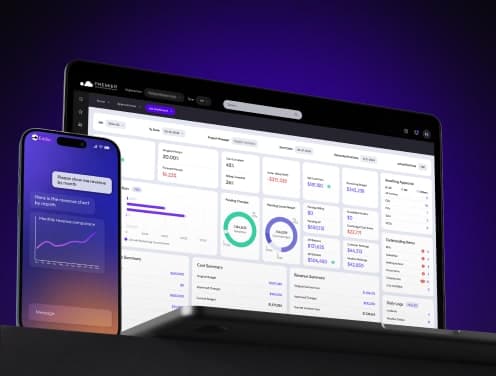
What is Real-Time Job Costing in Construction
Job costing construction compares what you budgeted in your estimate against actual costs as they occur on each project. You track labor, materials, and subcontractor expenses, then measure them against your projections to understand where you stand financially.
The difference between traditional and real-time approaches comes down to timing.
Traditional vs Real-Time Job Costing
Traditional job cost accounting construction relies on paper forms, spreadsheets, and manual data entry. Field supervisors fill out timesheets at the end of the week. Someone back at the office enters that information into disconnected systems. Accounting teams create reports. Those reports get emailed around. Project managers review the numbers, but by that time the job has moved to a different phase.
28 percent of contractors still use spreadsheets to track job costs and 14 percent remain stuck using paper forms, according to Dodge Data & Analytics. Contractors using commercial or custom software report vastly better job costing abilities.
Real-time construction job costing captures costs at the source. Field hours post to jobs and phases the same day they're worked. Materials and subcontractor invoices get coded to cost codes when received. Change orders are tracked and approved before billing happens. Dashboards show live budget versus actuals and variances.
The result? You see costs as they occur, not weeks after project completion.
Why Real-Time Visibility Matters for Contractors
Seeing issues early beats finding them at month-end. Take the case of labor overruns. You spot crew productivity problems on Tuesday instead of finding them during a month-end review. You can reassign resources or adjust the work plan before costs snowball.
Real-time visibility allows several critical capabilities:
- Catch labor or material overruns before they escalate
- Forecast cost-to-complete and finish margin with precision
- Prioritize crews and purchasing based on live needs
- Strengthen cash flow with timely billing
Project managers can view budget-versus-actual reports in real time and identify trends. They adjust course before small cost overruns become serious problems. Costs tracked at the phase and cost-code level help you identify variances that signal change order opportunities quickly.
More than half of contractors say improving their data gathering process has given them better knowing how to complete projects at or under budget.
The Financial Impact of Delayed Cost Data
Delays between field activity and executive awareness carry measurable costs. Manual or delayed entry hides the truth and profits suffer. Paper timesheets create delayed, error-prone data that limits proactive project management.
Contractors who experience job costing weeks after project completion find the data useless for active decision-making. Data sits in disconnected systems. Timesheets in one place, payroll in another, accounting elsewhere. Costs are compiled, but by that time you've lost the chance to negotiate change orders.
Scope deviations and productivity issues are found too late without timely job cost data. Costs are incurred, and your knowing how to recover them through change orders has diminished. You end up absorbing costs that should be recoverable under contract.
Therefore, real-time job cost accounting construction shifts you from looking backward at what jobs cost to managing costs as they occur. The pace of modern projects just needs information that is current, verified, and available across all functions.
Core Cost Categories in Construction Job Costing
Every dollar you spend on a construction project falls into one of four buckets. Understanding these core categories transforms how you approach job cost accounting construction and protects your margins from erosion.
Labor Costs and Burden Rates
Your field carpenter earns $30 per hour. You bill that time to the job at $30, right? Wrong. That worker costs you between $41 and $51 per hour when you factor in the labor burden.
Labor burden represents the total indirect costs of employing someone beyond their base wages. This has payroll taxes, workers' compensation insurance, health benefits, paid time off, and retirement contributions. The average employer pays an additional 40% of the standard hourly wage in burden costs. Some contractors see this climb to 70%.
The U.S. Bureau of Labor Statistics reports that a full-time construction employee costs $100,880 in total compensation. Wages account for $69,950 and labor burden costs make up $30,930. The labor burden amounts to 44% of base pay.
Most contractors underestimate labor costs by 20-35% because they ignore what it costs to put a person in the field for one hour. Imagine budgeting 1,000 labor hours at $30 per hour when the true cost is $41 per hour. That $11,000 difference on a single job can wipe out your expected profit.
The burden calculation itself is straightforward: divide indirect costs by direct wages and multiply by 100. Direct costs equal the wages you pay. Indirect costs cover payroll taxes like FICA, FUTA, and SUTA plus mandatory benefits such as health insurance and retirement plans. Optional benefits like paid vacation days, communication costs, and vehicle insurance for company trucks all factor into this calculation.
Materials and Equipment Tracking
Materials and equipment represent the physical resources that turn estimates into structures. Lumber, concrete, and steel can cost serious money. Poor tracking creates a ripple effect on your entire project.
Equipment delays and misplaced materials disrupt project flow. Significant machinery goes missing or materials arrive at the wrong location. You're forced to shift schedules, reallocate resources, or halt work altogether. Poor tracking increases errors and drives up costs.
Up-to-the-minute visibility into materials and equipment delivers measurable benefits. Equipment tracking improves efficiency through better resource allocation. You know the exact location and status of every asset. You can deploy resources where they're needed most and reduce downtime.
Cost reduction happens when you avoid overstocking or running out of significant equipment. Overstocking ties up capital without reason. Stockouts force expensive rush orders or project delays. A centralized platform for tracking all supplier costs creates transparency and improves cost controls.
Over-ordering and inventory shrinkage top the list of issues construction companies face with materials management. Digital tracking tools increase data accuracy by minimizing human error from manual entry and updating inventory records instantly.
Subcontractor Expenses
Subcontractors add their own expenses into the project mix. Managing these costs requires a centralized platform that tracks all subcontractor payments and connects them to your budget.
Supplier payment applications need visibility against total work to be completed. You should incorporate approved subcontractor change orders and match supplier invoices to purchase orders. This matching process connects expenses to your construction budget and provides clear accountability for when and how much to pay.
Overhead Allocation Methods
Overhead costs, also called indirect costs, are expenses not tied to producing a specific project. Office rent, administrative salaries, insurance premiums, utilities, depreciation, and licenses all fall under overhead.
Construction companies can allocate overhead using several approaches. Direct labor hours or labor costs work well for labor-intensive contractors. Square footage allocation assumes larger projects consume more resources. Equipment usage or depreciation suits companies that rely heavily on machinery.
The proportion of direct costs method looks at each job's share of total company activity. Activity-based costing identifies specific activities and cost drivers and allocates based on consumption.
You're not limited to a single allocation method. A coatings contractor might allocate most overhead by labor hours while using materials cost for resource consumption overhead like roller heads and towels. The key is choosing methods that reflect where your overhead originates and distributing costs fairly to projects that caused or benefited from those expenses.
Everything in Up-to-the-Minute Job Cost Accounting
Your superintendent codes 40 hours to "site work" while your bookkeeper posts the same labor to "excavation." Three weeks later, your project manager reviews budget reports that show one line item over and another under. Nobody knows which number tells the truth. This confusion stems from missing the foundational components of construction job costing in real time.
Direct vs Indirect Cost Classification
Direct costs attach to specific construction activities. You can point to materials like cement or steel, trace onsite labor hours to particular tasks, or link subcontractor fees to defined scope. These expenses constitute the main costs that form the bulk of your construction budget.
Indirect costs support projects without tying to any single construction activity. Administrative salaries, office rent, and vehicle fuel all fall into this category. Direct costs are traceable to individual tasks. Indirect costs spread across projects and get allocated based on cost drivers or estimates.
You need to understand both cost types for accurate budgeting and financial viability. Overhead has job site costs, home office expenses, and general conditions. Project managers, superintendents, support staff, and office trailers all count as overhead. Labor burden has FICA taxes, workers compensation, unemployment insurance, and vacation pay.
Three common allocation methods distribute indirect costs fairly. You can allocate based on direct labor hours or costs, material expenses, or equipment usage. Consistency matters more than the specific method itself. The goal is to distribute indirect costs so individual projects bear an appropriate share of expenses.
Cost Code Structure and Standardization
Construction cost codes are unique identifiers that track and categorize costs. Each code assigns to a specific project aspect such as labor, materials, equipment, or construction phases.
Cost codes organize within a work breakdown structure that starts with broad categories and becomes more specific. A code like "0210-005-030" might represent site work (0210), site grading (005), and excavation costs (030). This hierarchical structure creates header accounts that summarize corresponding detail accounts.
Header accounts roll up related cost codes depending on detail level. They contain only a job number and cost code. Detail accounts define down to specific cost types with a job number, cost code, and cost type. This structure allows optimal cost analysis throughout the job's lifecycle to foresee changes quickly.
Two systems dominate the industry. CSI MasterFormat offers six-digit specification numbers segmented into three tiers to categorize project costs. Uniformat classifies building elements by functional parts like foundations and walls rather than materials.
Project-Level Budget Tracking
Job budgets break down into original and revised components. You can lock original budgets to preserve baseline comparisons. The system captures these within work breakdown structure account balances as either fixed cost input or per unit cost input.
Revised budgets and change orders appear as journal entries that adjust the original budget while providing an audit trail. This tracking method maintains visibility into how project scope evolved over time.
The system tracks committed costs through purchase orders for job-specific materials within separate ledger types. Different computation methods calculate estimate-to-complete values when materials ship from distribution warehouses to job sites.
Change Order Management
Change orders modify the original construction contract and alter scope, cost, or timeline. These modifications require precise documentation to minimize risk and improve approval chances.
The change order form must have the contract number, owner and contractor contact information, and project details. Add the date you complete the change order plus notification dates per contract requirements. Typical timeframes for notifying project owners run 5-10 days, though contracts vary.
Describe work changes in detail, whether extra work performed or scope no longer required. Document the triggering condition, such as site conditions, design issues, or scope changes.
The form needs the new schedule showing completion days for the change and the revised finish date. Cost breakdowns must show positive and negative charges, overhead, and profits.
Track contract value progression by listing the original contract value, all past approved change orders, and the current change order cost. This format matches application for payment structures so owners can compare against original contract values.
Change order management affects payroll accuracy directly. Payroll teams must adjust pay rates or classifications, track additional hours, and recalculate overtime. Payroll becomes reactive instead of controlled without clear processes.
Best Practices for Capturing Labor Costs in Real-Time
Labor represents the largest variable cost on most construction projects, yet it remains the hardest to measure consistently. Your foreman scratches hours onto a crumpled timesheet Friday afternoon and tries to remember what the crew did Monday morning. You're not capturing costs. You're capturing guesses.
Digital Time Tracking Systems
Mobile time entry replaces those crumpled timesheets with verified data captured at the point of work. Workers clock in using smartphones or tablets, and GPS validation confirms they're on site. This eliminates buddy punching, where one worker clocks in for another who hasn't arrived yet.
Geofencing takes location verification further by setting virtual job site boundaries. Workers can only clock in when they're physically at the location. Biometric options like facial recognition make it impossible to punch for a friend. One construction company using automated time tracking reported a 75% reduction in payroll processing time.
The financial stakes run high. Industry research estimates that time theft and time leakage cost contractors an average of $4,285 per worker each year. A contractor with 200 field workers faces roughly $857,000 per year in potential labor exposure.
Eliminating Manual Timesheet Entry
Paper timesheets create delayed, error-prone data. Supervisors collect forms at the week's end. Someone back at the office keys information into disconnected systems. Accounting teams wait for complete datasets before running reports.
Companies using mobile time entry save 2-3 hours per supervisor per week on administrative tasks. Payroll administrators save even more by eliminating manual data entry and follow-up calls for missing time.
Automated Cost Code Assignment
Cost code accuracy breaks down when field teams search through long, irrelevant lists. Better systems surface relevant and recently used cost codes. Workers check in using biometric verification, then assign time to the correct project and cost code. This happens while the work is fresh in their minds, not days later when details blur.
Field Data Collection Methods
Offline functionality matters when job sites lack reliable internet. Time gets recorded and stored on the device locally, then syncs automatically when connection returns. This prevents lost hours and payroll discrepancies. Workers can track hours even without internet access, then sync later.
GPS tracking provides location-based data to verify on-site presence. Photo verification adds another layer and allows workers to take a photo when clocking in to verify attendance. Audit logs show when time entries were created or edited, reducing payroll disputes.
Best Practices for Materials and Equipment Cost Tracking
Your project manager ordered 500 sheets of plywood three weeks ago. Half arrived at Site A. The other half went to Site B by mistake. Nobody knows which purchase order covered what delivery. The invoice sitting on your desk doesn't match any PO in the system. Sound familiar?
Purchase Order Management
Construction purchase orders outline the price and quantity of goods needed to complete a project contract. These documents are binding and protect you when payments happen before work completion.
The reference number stands as the most critical piece of any construction PO. Projects can have hundreds of purchase orders attached. Proper reference numbers keep these documents from getting lost or jumbled during a project's lifetime. You need to locate the respective PO by its reference number to prove a service or material was completed or delivered as requested.
Vendor Invoice Integration
OCR technology captures vendor details, amounts, and job-specific codes while reducing manual entry errors. Three-way matching compares invoices against corresponding purchase orders and receipts, then flags discrepancies before payment goes out.
Financial information like invoices updates instantly instead of at week's end once your accounting and project management systems connect. Project teams make budgeting decisions based on actuals from the accounting team.
Equipment Utilization Monitoring
You can verify assets are where they're needed by tracking equipment location and usage. GPS dashboards show equipment assigned to jobsites, when it was last used, and whether it can be assigned to another location.
Know your equipment is being used versus sitting idle on a job site. You can see the location and activity of all equipment at different jobsites to stop equipment hoarding and improve utilization. This approach reduces hire costs by preventing unnecessary equipment rentals.
Waste and Variance Documentation
Upload receipts and note order condition after delivery. Document incorrect items, mismatched quantities, or damaged materials. This documentation becomes critical when purchasing different supplies at high volume.
Implementing Real-Time Job Costing Software
Selecting job cost accounting construction software isn't about picking features from a brochure. You're connecting multiple systems that need to talk to each other without manual intervention.
ERP Integration Requirements
Your construction ERP needs direct connections to accounting, payroll, and project management functions. Single-database systems eliminate the problem of data living in multiple places. At the time someone enters a timecard or codes an invoice, that information flows to every connected system automatically.
Mobile Access for Field Teams
Field teams need access to project data without calling the office for updates. Mobile apps provide live access to budgets, schedules, drawings, and change orders from any device. Superintendents check job cost details and approve timecards while standing on the jobsite.
Offline functionality matters when internet connectivity drops. Workers enter time and document field conditions even without network access, then sync automatically when connection returns. GPS tracking verifies on-site presence, and geofencing sets virtual boundaries around job sites.
Automated Data Flow and Validation
Manual data transfer between systems creates errors and delays. Time entries flow directly to payroll and job costing without someone downloading spreadsheets and uploading elsewhere with automated integration. OCR technology captures vendor details and invoice amounts while three-way matching compares invoices against purchase orders and receipts.
Validation rules catch errors at entry rather than discovering them weeks later during month-end close. Continuous data verification replaces after-the-fact reconciliation with this live accuracy.
Cloud-Based vs On-Premise Solutions
Cloud solutions deliver remote access from any location with internet connectivity. Teams cooperate live and scale resources up or down without hardware investments. Cloud providers handle updates, backups, and infrastructure security automatically. North Mechanical selected cloud specifically for 24/7 access and eliminating server maintenance.
However, fewer than 10% of companies have moved mission-critical processes to the cloud, in part due to concerns about availability and regulatory compliance. On-premise solutions give you complete control over servers and operations. Miron Construction chose on-premise to connect 18 siloed systems into one platform. Users work from anywhere at any time with no downtime without internet dependency.
On-premise was involved in 70% of breaches versus 24% for cloud-based systems according to Verizon's 2020 report.
Monitoring and Analyzing Job Cost Performance
Monthly budget reviews arrive too late to save margins. Contractors who adopt immediate profitability tracking see profit margins improve by 15-20% because they identify and address issues as they happen.
Budget vs Actual Variance Reports
Budget versus actual analysis in job costing construction involves comparing several elements at different stages. You need to track original estimate versus current budget, budgeted costs versus committed costs, committed costs versus actual costs, and actual costs to date versus estimate at completion. These should be tracked at the project level, phase level, and cost code level throughout the project.
Monthly reports miss the mark because variance issues need addressing within days, not weeks. High-level reports won't help either. Variances should be broken down by cost code, phase, crew, and time period to spot problems fast. Track variances in percentage terms rather than just dollar amounts. Break down any cost code that exceeds 10% over budget with 20% or more of work remaining.
Weekly Cost Review Cadence
Run cost reviews weekly instead of monthly. Weekly reviews catch profit leaks before they drain your project. Compare actuals versus budget to identify variances and break down why they occurred. Review change orders to confirm all pending items are approved or denied. Forecast final costs using software to predict end-of-project profitability.
Profitability Tracking by Project Type
Focus on metrics that affect profitability. Target gross profit margin above 20% and keep labor cost ratio below 40% of total project costs. Track variance at completion and monitor change order effect, keeping it under 10% of revenue.
Building Historical Cost Databases
Historical databases inform future estimates and client cost predictions. Compare similar projects sorted by building types and region to analyze performance. This transparent data shows where things went wrong and what went right. Better project decisions follow.
Common Job Costing Challenges and Solutions
Even the best up-to-the-minute construction job costing systems hit roadblocks when field teams and office staff operate from different playbooks.
Cost Code Confusion and Inconsistency
Cost codes become useless when they're too generic or overly specific. Some companies create hundreds of detailed codes that overwhelm field teams. Others use broad categories that hide where money goes. Teams that don't line up cause the damage. Project managers, office admins and field workers all interact with job costs differently. Costs get entered wrong or not at all when expectations aren't aligned.
Invoice Lag and Committed Cost Tracking
Tracking only actual costs leaves you driving blind. Your superintendent orders $50,000 in steel on Day 1, but the invoice doesn't hit your desk until Day 60. You've lost 10 weeks to fix budget problems by then. Committed costs fill this dangerous gap and show obligations the moment purchase orders get issued. Waiting 60 days for updates can wipe out your profit margin with 8-12% quarterly material price swings.
Split-Time Allocation Across Projects
A task requiring 4 hours on a single project can span three days when that same worker juggles five other projects at once. The work duration stays constant, but project timelines extend.
Indirect Cost Allocation Issues
Fluctuating project timelines, scope changes and high variability in indirect costs create allocation headaches. Shared resources in multiple projects compound the problem.
Conclusion
Up-to-the-minute job costing separates contractors who thrive from those who barely survive. Margins run 3-7%. Wait weeks for cost data and you edge dangerously close to the 25% of companies that fail after two or three unprofitable projects. The tools exist today to capture labor and materials costs as they happen, not after project completion.
Premier Construction Software enterprise construction management software connects your field teams with back-office accounting so costs flow to the right jobs and cost codes automatically. You'll spot overruns early and recover change orders that protect margins before small problems become profit killers. Stop managing projects through the rearview mirror. Start making decisions with data that matters.
Latest articles




Trusted by global leaders
Join those who have put their trust in us