
Foundation Software vs Procore: Full Comparison (2026)
Last updated: April 2026
Quick Answer: Foundation Software vs Procore
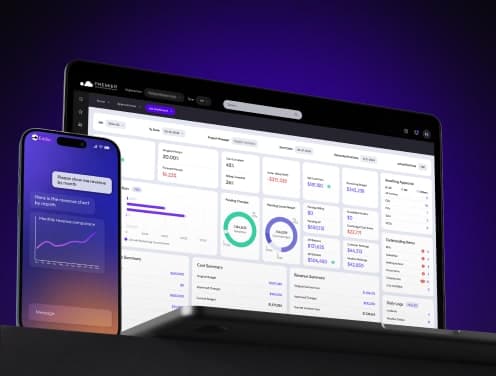
Foundation Software is a construction accounting platform built for financial control: job costing, payroll, and certified reporting. Procore is a project management platform built for team collaboration and field visibility. Premier Construction Software combines both into one modern construction ERP, without requiring separate systems or costly integrations.
Quick Comparison
Software | Type | Starting Price | Best For |
|---|---|---|---|
Premier Construction Software | Construction ERP (100% native) | Transparent tiered pricing | GCs, subs, and specialty contractors of all sizes ($5M–$500M+) |
Foundation Software | Construction accounting software | Custom quote ($1,200–$2,500/month est.) | Small to mid-size contractors prioritizing accounting and payroll |
Procore | Project management platform | $10,000–$150,000+/year (ACV-based) | Mid to large contractors needing project collaboration tools |
Introduction
The construction software market was valued at $3.7 billion in 2024 and is projected to reach $7.6 billion by 2034 (GM Insights). As construction companies grow, the pressure to replace disconnected tools with a single source of truth intensifies. Foundation Software and Procore represent two different answers to that pressure. One is built for accounting, one for projects.
Foundation has nearly 40 years of construction accounting experience and serves over 43,000 construction professionals. It excels at job costing, certified payroll, and financial reporting. Procore takes the opposite approach: broad project collaboration tools, unlimited user licenses, and a marketplace of third-party integrations.
Neither platform covers the full picture on its own. This guide breaks down where each one wins, where each one falls short, and where Premier Construction Software fills the gap.
Platform Focus: Accounting vs Project Collaboration
Foundation Software: Built for financial control
Foundation Software is a specialized construction accounting platform with nearly 40 years of industry experience (Foundation Software). It serves over 43,000 construction professionals and focuses on financial management above all else.
The platform handles the core financial functions that construction companies depend on:
- Job costing tied directly to the general ledger
- Certified payroll, union fringes, and multi-state tax calculations
- Progress billing and AIA invoice formats
- Accounts payable and receivable
Foundation's single-transaction posting model is one of its most practical advantages. One entry updates both job cost reporting and the GL, which removes duplicate data entry and reduces reconciliation errors. The platform's audit trail is comprehensive, making it a reliable choice for contractors who need clean financial records.
Where Foundation falls short is project collaboration. Document management, field workflows, change order routing, and real-time communication are not the platform's focus. Contractors who rely on Foundation for accounting often end up pairing it with a separate project management tool.
Procore: Built for project visibility
Procore is a cloud-based project management platform used by contractors of all sizes worldwide (Procore). Its pricing is based on Annual Construction Volume (ACV) rather than per user, which makes it attractive to firms with large teams.
The platform covers the full project lifecycle:
- Pre-construction planning and bid management
- On-site execution, daily logs, and field reporting
- Document control, submittals, and RFIs
- Project closeout and compliance records
Procore's strength is connecting everyone on a project. Owners, GCs, subs, and field crews all access the same information in real time. The platform's unlimited user model means subcontractors and owners can collaborate without additional licensing costs.
The trade-off is accounting depth. Procore's financial management tools are functional but require integration with a separate accounting system for full construction finance capabilities: certified payroll, multi-entity GL, and WIP reporting included. That integration adds complexity and cost.
Premier Construction Software: One system for both
Premier Construction Software is a modern construction ERP built exclusively for the construction industry since 2009. It combines the financial depth of an accounting platform with the project management and field tools of a collaboration platform, without requiring separate systems.
Premier Construction Software runs on Microsoft Azure and holds a 4.7/5 overall rating from over 1,000 verified reviews across G2, Capterra, Software Advice, and GetApp (Software Advice). Forbes Advisor named it the #1 Construction Cloud ERP in 2026, its fourth consecutive year of recognition.
The platform serves general contractors, land developers, home builders, and specialty contractors from $5M to $500M+ in annual revenue. Implementation runs in as few as 60 days, led by construction-focused CPAs and project managers.
"Premier Construction Software solved all of our business problems. It was an obvious choice." (Streamline General Contractors)
Project Management Tools
Task scheduling and Gantt charts
Procore provides visual Gantt chart scheduling that lets teams map timelines, link task dependencies, and track delivery dates. Project managers can spot conflicts before they affect site work.
Foundation's scheduling tools focus on financial milestones rather than visual project planning. Teams that need Gantt-style views typically use a separate scheduling tool alongside Foundation.
Premier Construction Software connects timeline planning directly to cost data. Schedule changes surface their budget impact in real time, so project managers see the full picture without switching between systems. Construction teams using visual timeline tools report saving 10 to 20% of administrative time (
FMI.
Document control and submittals
Construction teams spend 35% of their time searching for project information (FMI). Outdated documents are one of the leading causes of rework. Rework costs the US construction industry an estimated $177 billion per year (FMI).
Procore centralizes all project documents in one location: drawings, submittals, RFIs, and contracts. Teams always work from the latest approved version, which removes the version-control confusion that causes rework.
Foundation stores documents but lacks real-time collaboration features. It functions as a file repository rather than an active document management system.
Premier Construction Software's document management includes submittals, RFIs, the Cortex drawing management module, shared drives, and a subcontractor portal. All documents link to project records, workflows, and financial data. Version control and role-based access are built in.
"The unique thing about Premier Construction Software in our eyes was the ability to not only handle our full accounting functions; it could handle running the company and the jobs, but also the drawings, the submittals, the subcontracts and the job costing. It was a full turnkey opportunity for us." (Intent Built)
Change order management
Procore lets field teams record changes from a mobile device immediately. Office staff see those updates in real time, which accelerates approvals and keeps cost tracking current.
Foundation tracks the financial impact of change orders but does not provide a full workflow management system. Routing, approvals, and document attachments require manual coordination outside the platform.
Premier Construction Software automates the change order process from submission through approval, with automatic updates to project forecasts after each approved change. Every action stays in one place, which reduces the back-and-forth between field and office.
Daily logs and field reporting
Procore gives field teams mobile tools to document daily site activity: weather, deliveries, safety incidents, crew hours, and progress photos. All data is stored in the cloud with full search and filter capabilities.
Foundation's daily reporting focuses on labor hours and costs rather than full field documentation. It is not designed as a field-first tool.
Premier Construction Software's digital daily logs capture weather, safety incidents, deliveries, and labor activity. Each log links to cost codes and schedule activities so project status is visible the moment data is submitted.
Financial Features and Job Costing
Job costing
Foundation earns a 4.3/5 rating for job costing capabilities from verified users (Software Advice). Its single-transaction posting model eliminates double entry and maintains a clean audit trail from field cost to GL.
Procore tracks job costs in real time from the field. Teams report 73% better cost tracking and 70% more accurate forecasting after adopting Procore's financial tools (Procore). The platform surfaces cost issues faster than weekly report cycles.
Premier Construction Software handles job costing natively alongside the GL, billing, payroll, and WIP reporting in one system. Labor, materials, and overhead update in real time. Project managers see how each transaction affects margin the moment it posts.
"Premier Construction Software's real-time access to current costs has allowed our Project Managers to track Estimate at Completions (EAC) 20% more accurately." (David Schauer, VP of Operations, Gillam Group)
Payroll and certified reporting
Foundation leads the market on payroll. The platform holds an 89.39% weighted support score for payroll management, 25 percentage points above market average (Software Advice). It handles certified payroll, union fringe calculations, Davis-Bacon compliance, and multi-state taxation automatically.
Procore supports field time collection and connects to payroll systems but does not provide the same depth of construction-specific payroll processing as Foundation. Teams with complex union or prevailing wage requirements typically need a third-party integration.
Premier Construction Software includes live crew and employee time tracking with occupation codes, union support, and approval routing that verifies time entries against job and location data before they flow into payroll.
Billing and invoicing
Paper invoices cost $15 to $40 each to process and take 10 to 20 days to clear (Levvel Research). Digital billing workflows compress that cycle significantly.
Foundation supports progress billing and AIA formats, with accounts receivable linked to job costing for accurate financial records.
Procore gives teams access to budget data from anywhere, removing the problem of contractors working from outdated financial snapshots.
Premier Construction Software supports multiple billing methods from one platform: progress billing, cost-plus, lender draws, and time-and-materials billing. One-click reversals and revisions eliminate manual corrections. Subcontractors can submit invoices in 45 seconds through the portal.
"I went from billing for an entire week, 40 hours, to billing in 8 hours on a Saturday. I've gone from about 3% profit up to about 8% by using Premier Construction Software because I'm very confident that the numbers are right." (Mark Marshall, Owner, JM Construction)
Mobile Access and On-Site Usability
Mobile app capabilities
Procore's mobile app runs on iOS and Android with strong field functionality: photo capture, document access, daily logs, and RFI management. The cross-platform experience is consistent.
Foundation offers mobile access for time tracking and basic financial data collection. Field functionality is more limited than dedicated project management platforms.
Premier Construction Software delivers full mobile access on iOS and Android with field-ready interfaces: timesheets, daily logs, photo documentation, expense capture, and approvals. Receipts and expenses import directly from the mobile app into the financial system.
Offline access
Procore's app works in areas with poor connectivity, with automatic syncing when connection returns. Construction teams in remote locations can capture data throughout the day and sync at night.
Premier Construction Software handles offline sessions the same way: data is stored locally and synced on reconnection. No work is lost during connectivity gaps.
Field data capture
Procore is strong here. Field teams can photograph site conditions directly from a smartphone, link photos to drawings, and search image records by location, date, or parameter. Cloud storage for photos is unlimited.
Premier Construction Software makes visual capture equally straightforward. Photos and notes link automatically to the relevant project record, change order, or RFI, creating documentation that all stakeholders can access without hunting through email chains.
"Premier Construction Software's mobile app is top of the line. We're able to track internal costs, expenses, receipts, and have that information directly import into the software." (Intent Built)
Automation and Workflow Efficiency
Approval routing
Procore routes documents through custom approval paths automatically, with live notifications to reviewers. Every action is logged, creating a clear record of who approved what and when.
Foundation automates financial approvals but does not provide the same depth of project document routing. Multi-step workflows for change orders, submittals, or RFIs require manual management.
Premier Construction Software's approval routing responds to specific conditions (cost thresholds, document types, or user roles) and sends automated alerts when action is needed. Every approval creates an audit trail in the same system as the underlying financial data.
Payroll and billing automation
Foundation's payroll automation is one of its strongest differentiators. Smart defaults pre-fill timecard information based on prior entries, calculate pay rates, taxes, and fringes automatically, and handle multi-state and union payrolls without manual calculation.
Procore automates time collection from the field and connects it to payroll systems, addressing the gap between field hours and office processing.
Premier Construction Software's cost-plus billing automation consolidates actual project costs into client-ready reports without manual assembly. Bank feed imports and transaction matching reduce accounts payable processing time. One CFO reported that Smart UI for accounts payable reduced admin hours enough to process invoices in one day per week.
"Premier Construction Software's automation of monthly draw requests has saved us significant time. Smart UI for accounts payable has reduced our admin hours; processing invoices now takes just one day a week." (Jason Drucker, CFO, Sweibel Group)
AI and predictive intelligence
Foundation does not include AI capabilities.
Procore is developing AI tools, primarily focused on document processing and reporting.
Premier Construction Software's Eddie AI assistant monitors project data to identify cost overruns, compliance gaps, and billing delays before they become problems. Eddie learns from coding patterns over time, reducing manual categorization work and improving accuracy. The global construction AI market is projected to grow from $1.80 billion in 2023 to $12.10 billion by 2030 (MarketsandMarkets). Premier Construction Software's AI capabilities are purpose-built for construction, not adapted from a general-purpose model.
"Premier Construction Software allowed us to catch red flags as soon as they happen and protect our margins." (Carlo Frediani, Controller, Broccolini)
Integration and ERP Compatibility
Third-party integrations
Procore has one of the largest integration marketplaces in construction software, with hundreds of third-party connections (Procore App Marketplace). Open API access allows custom integrations with accounting, estimating, and field tools. Procore's project management integration scores 8.8/10 on G2.
Foundation's integration ecosystem is more focused, targeting accounting and ERP systems rather than the breadth of Procore's marketplace. The depth of financial system connections is strong; the breadth is narrower.
Premier Construction Software offers API integrations with partner tools while centralizing the core functions that other platforms require multiple systems to deliver. Accounting, project management, document control, field operations, and AI analytics all live in one database, removing the integration layer entirely for most workflows.
ERP and accounting sync
Many Procore customers connect Procore to a separate accounting system (Sage, QuickBooks, Viewpoint, or Foundation itself) to access construction-specific financial reporting. ERP integration setup through a third party typically costs $2,000 to $10,000 and adds ongoing maintenance overhead.
Foundation connects to common accounting platforms but functions as an accounting system rather than a full ERP. Teams needing project collaboration tools still need an additional platform.
Premier Construction Software eliminates the integration requirement by housing both functions natively. Financial data and project data share a single database, so there is no sync lag, no mapping errors, and no reconciliation between systems.
"Switching to Premier Construction Software consolidated three systems into one, saving us valuable time. We now have real-time access to financials, actuals, and invoices, keeping us in complete control." (Brock Droescher, PM, Streamline General Contractors)
Training, Support, and Onboarding
Implementation
Foundation implementations focus heavily on accounting module configuration, which requires careful attention to chart of accounts, payroll setup, and job cost structures. The process is thorough but can take time for companies with complex financial workflows.
Procore's step-by-step implementation approach lets teams learn one module before moving to the next, which reduces the feeling of being overwhelmed. Their support team guides the process with regular check-ins.
Premier Construction Software's guided onboarding runs in as few as 60 days, led by construction-focused CPAs and project managers who build a custom Operational Playbook for every customer. Implementation consultants work as an extension of the client's team rather than as external consultants.
Role-based training
Procore provides learning paths tailored to specific roles: project managers, field operations, and safety personnel each have their own training tracks. The platform's online learning resources are extensive.
Foundation's training focuses on accounting and financial workflows. Role differentiation is more limited.
Premier Construction Software adapts training by department and user role. Accounting teams, project managers, field supervisors, and executives each receive training relevant to their daily tasks. Unlimited training, monthly webinars, and a Learning Management System are included with every plan.
Ongoing support
Foundation assigns support representatives to accounts and provides a dedicated setup experience, but long-term support responsiveness varies by report.
Procore offers strong online resources, training content, and a customer success team. Support quality is generally well-rated.
Premier Construction Software provides direct, in-house support through chat, phone, and case management with a guaranteed one-hour response time for business-critical issues. Customer support is rated 4.8/5 by verified users. A dedicated account manager and quarterly check-ins are standard.
"When Premier Construction Software identified what our work scopes were, they immediately catered to how we did business. They made changes and alterations to the coding, to the programming to make sure that the way that we like to do construction, they stood right alongside of us." (Eric Engelke, Engelke Construction Solutions)
Pricing Models and Long-Term ROI
Foundation Software: Module-based pricing
Foundation does not publish standard pricing. Cost is customized based on modules selected, number of users, and support tier. Third-party estimates put Foundation at $1,200 to $2,500 per month for typical mid-size configurations (RedHammer). The base package includes Job Costing, Payroll, Purchase Orders, and Accounts Receivable. Mobile Time Tracking, Service Dispatch, and Equipment Management are add-ons.
The module-based structure lets companies pay for what they need, but costs can grow as the business adds functionality.
Procore: Annual Construction Volume pricing
Procore prices based on Annual Construction Volume (ACV), the total dollar value of your construction projects, rather than per user. Pricing is not published and requires a custom quote. Based on contractor reports (Projul):
- Small contractors (under $50M revenue): $10,000–$80,000/year
- Mid-size contractors ($50M–$250M): $50,000–$150,000/year
- Large contractors ($250M+): $100,000–$600,000+/year
Implementation adds $10,000 to $30,000. ERP integration setup costs $2,000 to $10,000 additional. Annual price increases of 5 to 14% at renewal are common (Projul).
Premier Construction Software: Transparent tiered pricing
Premier Construction Software publishes pricing with no hidden fees. Tiers scale by user count with implementation costs included:
- Starter: $349/month per user (implementation from $15,000)
- Premium: $249/month per user (implementation from $25,000)
- Enterprise: $125/month per user (implementation from $50,000)
Every plan includes unlimited entities and concurrent user licenses. A 30-day full money-back guarantee applies across all tiers. Per-user costs decrease at higher tiers, so Premier Construction Software gets proportionally more affordable as companies grow.
Three-year cost perspective
Modern ERP delivers an ROI of 150 to 300% over three years, but only if implementation costs do not consume those gains upfront (AlterSquare). Procore's ACV-based price increases compound over multi-year contracts. Foundation's module add-ons accumulate as business complexity grows. Premier Construction Software's flat-rate structure makes budget planning predictable.
"Saving $50,000/year with Premier Construction Software." (Cassie Glover, Controller, VPAC Construction Group Ltd)
"We've secured $20M in new business since switching." (Stacy Hernandez, Inland Building Construction Companies)
User Ratings
Foundation Software
Foundation holds a 4.0/5 overall rating from verified users on Software Advice (Software Advice). Positive feedback centers on payroll accuracy, GL integration, and audit trail reliability. Common criticisms include a dated interface, limited mobile functionality, and insufficient project collaboration tools for growing firms.
Procore
Procore holds a 4.5/5 overall rating on G2 and Capterra (G2). Users praise the project management depth, unlimited user access, and mobile usability. Common criticisms include pricing opacity, steep ACV-based increases, and the need for a separate ERP to handle full construction accounting.
Premier Construction Software
Premier Construction Software holds a 4.7/5 overall rating from over 1,000 verified reviews across G2, Capterra, Software Advice, and GetApp (Software Advice). Ease-of-use rates at 4.5/5. Customer support rates at 4.8/5. Forbes Advisor named Premier Construction Software the #1 Construction Cloud ERP in 2026. Software Advice named it Most Recommended. GetApp awarded it Best Functionality and Features 2026.
"Premier Construction Software makes us more efficient because we're not spending half our time balancing and ensuring every system has the same information. The efficiency has increased tenfold." (Verified User, Software Advice)
"In a span of 4 years we've doubled our size with Premier Construction Software. We're doing way bigger projects. The projects are starting to have a couple of extra zeros behind them. We would not have been able to do it without it." (Streamline General Contractors)
Final Comparison: Foundation Software vs Procore vs Premier Construction Software
Software | Best For | Starting Price | Key Features | Rating | Verdict |
|---|---|---|---|---|---|
Premier Construction Software | GCs, subs, specialty contractors ($5M–$500M+) | Transparent tiered pricing; 30-day money-back guarantee | • Real-time job dashboard with drilldown • WIP reporting in 2 clicks • AI predictive forecasting (Eddie) • AIA billing and subcontractor portal • Implementation in as few as 60 days | 4.7/5 | Best overall for construction firms of all sizes. Full ERP: accounting, project management, field tools, and AI in one platform. |
Foundation Software | Small to mid-size contractors focused on accounting and payroll | Custom quote ($1,200–$2,500/month est.) | • Job costing and GL integration • Certified payroll and union fringes • Davis-Bacon compliance • AIA progress billing • Module-based pricing | 4.0/5 | Strong for financial control and payroll. Limited project management and document collaboration. Scaling firms may outgrow it. |
Procore | Mid to large contractors needing project collaboration | $10,000–$150,000+/year (ACV-based, custom quote) | • End-to-end project management • Document control, submittals, and Gantt scheduling • Unlimited users per license | 4.5/5 | Best for project visibility and team collaboration. Accounting depth requires third-party ERP integration. Pricing can be opaque and scales steeply. |
Frequently Asked Questions
1. What is the main difference between Foundation Software and Procore?
Foundation is a construction accounting platform built around job costing, payroll, and GL accuracy. Procore is a project management platform built around team collaboration, document control, and field visibility. They solve different problems, which is why many contractors use both, and why Premier Construction Software offers both in one system.
2. Can Foundation Software replace Procore?
No. Foundation handles accounting and job costing well, but it does not provide the project management, document control, or field collaboration tools that Procore offers. If your business needs both financial accuracy and strong project management, you will need a third system or a platform like Premier Construction Software that covers both natively.
3. How much does Procore cost?
Procore does not publish pricing. Costs are based on Annual Construction Volume (ACV). Based on contractor reports, small contractors (under $50M) typically pay $10,000 to $80,000 per year. Mid-size contractors ($50M–$250M) pay $50,000 to $150,000 annually. Annual price increases of 5 to 14% at renewal are common (Projul).
4. What makes Premier Construction Software different from Foundation and Procore?
Premier Construction Software is the only platform in this comparison purpose-built for the full range of construction business needs: accounting, project management, field operations, document control, and AI analytics, in one cloud-based system. Unlike Foundation (accounting-only) and Procore (project management-only), Premier Construction Software eliminates the need for multiple platforms. It holds a 4.7/5 overall rating and was named Forbes Advisor's #1 Construction Cloud ERP in 2026.
5. How long does it take to implement Premier Construction Software?
Premier Construction Software's guided onboarding is designed to get construction firms live in as few as 60 days. Implementation is led by construction-focused CPAs and project managers who build a custom Operational Playbook for every customer. The average ERP implementation runs $7,200 per user (The Software Path), so Premier Construction Software's faster timeline directly reduces total cost.
6. Is Foundation Software good for small contractors?
Foundation is well-suited to small and mid-size contractors with complex payroll needs: union labor, Davis-Bacon compliance, or multi-state taxation. For contractors who also need project management tools, field reporting, and document collaboration, Foundation will require a second system. Premier Construction Software covers both at a comparable price point with a lower total cost of ownership.
Conclusion
Foundation Software and Procore are both strong in their respective lanes. Foundation delivers financial precision that few accounting systems match, particularly for payroll, certified reporting, and GL accuracy. Procore provides project collaboration and field visibility at a scale that keeps large teams connected across complex projects.
The problem is that most construction companies need both. Pairing them adds integration cost, maintenance overhead, and the ongoing risk of data not syncing correctly between systems. That is the core argument for Premier Construction Software: one modern construction ERP that covers accounting, project management, field operations, and AI analytics, built for construction from the start.
With transparent pricing, go-live in as few as 60 days, and a 4.7/5 rating from over 1,000 verified users, Premier Construction Software removes the trade-off between financial control and project visibility.
"Our source of truth will always be Premier Construction Software." (Nomad Infrastructure)
Want to see how Premier Construction Software compares to your current stack? Book a demo and we will walk through it with you.
Latest articles



Trusted by global leaders
Join those who have put their trust in us