
8 Best Construction Job Costing Features in 2026
Last updated: April 2026
Quick Answer: What Are the Best Construction Job Costing Features?
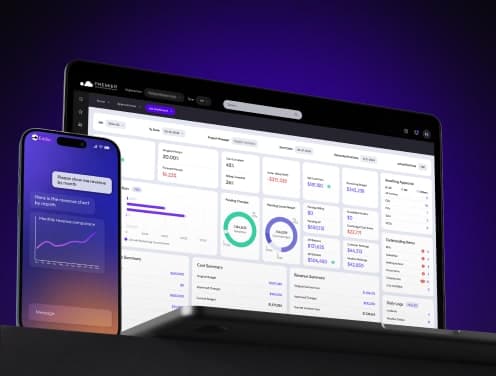
The eight job costing features that protect construction margins are: real-time labor cost tracking, change order management, cost code and phase-based budgeting, mobile time and expense capture, committed cost and PO tracking, WIP reporting, subcontractor and equipment cost allocation, and accounting integration. A modern construction ERP like Premier Construction Software puts all eight in one platform so your field and finance teams always work from the same numbers.
Construction runs on thin margins. A 2–3% net profit is common, which means a single cost overrun on a mid-size project can erase weeks of work. The global construction market is on track to hit $1.74 trillion by 2027 (Statista), yet most contractors still reconcile job costs from multiple disconnected systems, often days after the damage is done.
The core problem is not a lack of data. It is that the data arrives too late to act on. Labor costs surface after payroll closes. Change orders sit in email chains. WIP reports get built manually in Excel the week before a lender meeting. By the time the numbers are ready, the decision window has passed.
The right job costing features flip that dynamic. Real-time visibility into costs, commitments, and forecasts lets you catch margin erosion before it compounds. A survey of 7,800 construction software buyers found that 16% rank accounting and job costing capabilities as their top software priority (Software Advice), ahead of scheduling, document management, and field tools.
Below are the eight features that separate profitable contractors from those perpetually chasing overruns.
Quick Software Comparison
Software | Type | Starting Price | Best For |
|---|---|---|---|
Premier Construction Software | Construction ERP | $125/user/month | Mid-market GCs, $5M–$500M+ revenue |
Procore | Project Management | ~$375/month (ACV-based) | Large GCs needing PM tools |
Sage 300 CRE | Legacy ERP | ~$195/user/month | Established firms with internal IT |
CMiC | Enterprise ERP | Custom pricing | Large enterprise contractors |
Acumatica | General ERP | Custom pricing | Companies needing customization |
Real-Time Labor Cost Tracking
What is real-time labor cost tracking?
Real-time labor cost tracking captures workforce hours and costs as work happens, not days after payroll closes. Field crews log time through a mobile app or digital time clock. Those hours flow directly into your job costing system, updating project budgets throughout the day.
The best systems include:
● Mobile time entry: Workers clock in and out from the jobsite using a phone
● Cost code tagging: Hours tie automatically to the right job and phase
● Supervisor approval workflows: Managers review and approve before hours hit the books
● GPS location verification: Confirms workers are on-site at clock-in
● Payroll sync: Approved hours feed directly into payroll without re-entry
Why it matters for job costing
Labor accounts for 50–60% of total construction project costs (Construction Financial Management Association). Most contractors check those costs every one to two weeks, after payroll runs and budgets get updated by hand. That lag creates a window where small overruns compound into large ones.
Manual time tracking makes the problem worse. Studies show manual payroll entry carries an average error rate of 1.2% (American Payroll Association). On a $5 million project, that is $60,000 in potential misallocated costs. Automated systems reduce administrative overhead by up to 30% (McKinsey).
How Premier Construction Software handles it
Premier Construction Software's mobile app captures labor hours, receipts, and field expenses in real time. The data imports directly into the job costing module with no duplicate entry. Project managers see labor costs update against budget throughout the day, not at month end.
"Premier Construction Software's real-time access to current costs has allowed our Project Managers to track Estimate at Completions (EAC) 20% more accurately." — David Schauer, VP of Operations, Gillam Group
Integrated Change Order Management
What is change order management in a construction ERP?
Change order management formalizes contract modifications and automatically updates your financial projections. Every project faces scope adjustments. The question is whether those adjustments get tracked in your job costing system or in a separate spreadsheet nobody reconciles until the job closes.
Change orders typically stem from three sources:
● Unforeseen site conditions: Soil issues, hidden utilities, structural surprises
● Design errors or omissions: Gaps in drawings or specs that require field resolution
● Owner or regulator requests: Scope additions or modifications after contract signing
Why it matters for job costing
Traditional change order processes delay approvals for weeks (Construction Industry Institute). That delay hits cash flow twice: once when the work happens before approval, and again when billing lags behind cost. Contractors who track change orders outside their job costing system often discover they have been absorbing costs that should have been billed to the owner.
Integrated change order management keeps the financial picture current. Every approved change updates your budget, your cost-to-complete, and your billing schedule automatically.
How Premier Construction Software handles it
Premier Construction Software links change orders directly to job budgets and billing. Field teams document scope changes on mobile, attach photos, and submit for approval. Once approved, the system updates the budget and triggers the corresponding billing. Every change has a full audit trail.
"Premier Construction Software allowed us to catch red flags as soon as they happen and protect our margins." — Carlo Frediani, Controller, Broccolini
Cost Code and Phase-Based Budgeting
What are cost codes and phases?
Cost codes are unique identifiers that categorize project expenses. Think of them as filing folders for every dollar spent on a job. Instead of tracking all labor in one bucket, cost codes separate framing labor from finish labor from site labor, so you can see where money is going at a granular level.
A code like "0210-005-030" breaks down as site work (0210), site grading (005), excavation (030). That specificity lets you compare actual versus budgeted costs at every level of the work breakdown.
Construction companies track costs across three main categories:
● Materials: Concrete, steel, lumber, mechanical, and electrical supplies
● Labor: Field crews by trade and phase
● Subcontractors: Specialty trades with their own scope and contracts
Why it matters for job costing
Without cost codes, budget overruns are hard to locate. You know you are over budget, but not why or where. Cost codes give you the map. When concrete is at 90% of its budget but only 60% complete, you see that immediately.
Cost codes also improve future bids. Historical data by cost code shows actual crew productivity and material usage. That data builds more accurate estimates and more competitive proposals.
How Premier Construction Software handles it
Premier Construction Software supports customizable cost code structures that mirror how your business operates. Budgets load against cost codes at project setup. As costs post, variances appear in real time. The job dashboard shows budget versus actual at summary and line-item level, with full drilldown to the underlying transactions.
Mobile Time and Expense Capture
What is mobile time and expense capture?
Mobile time and expense capture lets field crews record hours and job-related expenses directly on their phones. Workers clock in, assign their time to a cost code, photograph receipts, and submit, all without leaving the jobsite.
Core capabilities typically include:
● Digital clock-in and clock-out with timestamp and GPS location
● Receipt capture: Photo, amount, category, cost code, and job
● Cost code assignment on the spot, not reconstructed later from memory
● Automatic sync to job costing and payroll systems
Why it matters for job costing
The gap between field and office is where job cost data breaks down. Paper timesheets arrive late, get lost, or contain errors that take hours to reconcile. Automated time tracking cuts payroll errors by up to 80% compared to manual entry (Aberdeen Group).
GPS verification confirms workers are on-site at clock-in. Buddy punching stops. Disputed hours have a clear record.
How Premier Construction Software handles it
Premier Construction Software's mobile app handles time entry, expense capture, and receipt photo upload. Data imports directly into the job costing system without any manual re-entry. Field supervisors approve timecards in the app. Payroll runs off the approved data.
"Premier Construction Software's mobile app is top of the line. We're able to track internal costs, expenses, receipts, and have that information directly import into the software." — Intent Built
Committed Cost and Purchase Order Tracking
What are committed costs in construction?
Committed costs are financial obligations you have agreed to but have not yet paid. Subcontract agreements, purchase orders sent to suppliers, equipment rental commitments, and approved credit card expenses all qualify. The money is spoken for even if the invoice has not arrived.
Common committed cost types include:
● Open subcontractor agreements: Subcontracts signed but not yet billed
● Purchase orders: Materials ordered from suppliers
● Equipment rentals: Agreements in place for future or ongoing use
● Unposted payroll: Wages earned for work already completed
Why it matters for job costing
A budget that only tracks invoices paid is a dangerous budget. It shows what you have spent but not what you owe. Contractors have approved new spending thinking they had room, only to find committed costs had already consumed those funds.
Committed cost tracking closes that gap. Your financial picture includes both actual expenses and outstanding obligations. Forecast accuracy improves significantly when the budget reflects the full picture.
How Premier Construction Software handles it
Premier Construction Software tracks purchase orders from creation through approval, receipt, and invoice posting. All open commitments appear in the job dashboard alongside actuals, so your available budget reflects real obligations, not just posted costs. PO variance limits flag any invoices that come in above the approved amount.
Work-in-Progress (WIP) and Percent Complete Reporting
What is WIP and percent complete reporting?
A WIP report is a financial snapshot of every active project. It shows contract value, costs to date, estimated costs to complete, percent complete, and the difference between revenue earned and revenue billed. Lenders and bonding companies request WIP statements regularly because they reveal the true financial health of a contractor's portfolio.
The three methods for calculating percent complete:
● Cost-to-cost: Costs incurred divided by total estimated costs
● Units of work: Measured quantities of completed work
● Physical progress: Site observation of completed scope (most accurate for complex jobs)
Why it matters for job costing
WIP reports reveal two critical exposures: overbilling (you have billed more than you have earned) and underbilling (you have earned more than you have billed). Both create cash flow problems if left unmanaged. A contractor who is consistently underbilling is effectively financing the owner's project with their own cash.
Bonding companies and lenders use WIP data to assess financial health. A clean, current WIP report builds confidence with those partners.
How Premier Construction Software handles it
Premier Construction Software generates WIP reports in two clicks. No manual assembly. No spreadsheet reconciliation. The report pulls from live job cost data and updates automatically as costs post and billings go out.
"WIP reports are instantaneously created out of Premier Construction Software. You click a button, that report comes out. In the past it was a big process, took a lot of time." — Mike Van Orman, Nomad Infrastructure
Subcontractor and Equipment Cost Allocation
What is subcontractor and equipment cost allocation?
Subcontractor cost allocation tracks payments to specialty trades and holds them to their contract limits. Equipment allocation assigns costs for owned or rented machinery to the specific jobs and phases that used them.
Equipment costs typically include:
● Ownership costs: Depreciation, insurance, financing
● Operating costs: Fuel, maintenance, repairs
● Usage fees: Transportation, mobilization, and idle time
Why it matters for job costing
Subcontractor costs often represent 30–50% of total project spend on commercial work (Associated General Contractors of America). Without clear allocation, those costs are difficult to track against approved contract values. Overruns on subcontract scope go undetected until the sub submits their final billing.
Equipment costs are equally opaque without allocation. Contractors who do not track equipment by job often underbid work requiring heavy machinery, because they have never measured the real cost of ownership against what they recover in job budgets.
How Premier Construction Software handles it
Premier Construction Software tracks subcontractor agreements, approved change orders, and pay app submissions in one place. Subcontractors submit invoices through Premier Construction Software's portal in about 45 seconds. Those submissions queue directly into accounts payable without manual data entry.
"It takes our subs 45 seconds to submit an invoice now." — Brian Wessels, President, Intent Built
Equipment rates load into the system and apply automatically based on field-reported usage. Every hour of equipment time ties to a job, phase, and cost code.
Accounting System Integration
What is accounting integration in a construction ERP?
Accounting integration links project financials to the general ledger so both update from the same transaction. Field time entries, approved invoices, and posted change orders all flow into accounting without manual re-entry. The job costing module and the general ledger stay in sync.
Why it matters for job costing
Disconnected systems create two parallel realities: one in your project management tool and one in your accounting software. Reconciling them takes time, introduces errors, and often produces different numbers depending on which system you look at first.
Companies managing multiple entities face additional complexity. Intercompany transactions, equipment charges between divisions, and consolidated reporting all require tight accounting integration to work cleanly.
How Premier Construction Software handles it
Premier Construction Software is a native construction ERP, which means project management and accounting run on the same database. There is no separate integration to maintain and no reconciliation to perform. Every transaction posts once and appears everywhere it needs to, in job costing, AP, AR, payroll, and the general ledger.
The OData feature extends that data into real-time modeling tools. CFOs and controllers use OData to build live financial models directly from Premier Construction Software data, without exporting to Excel first.
"Premier Construction Software has transformed our operations by streamlining accounts payable and enhancing project insights. The OData feature enables real-time modeling and analysis." — Josh Richardson, CFO, Redbud Partners LLC
Construction Job Costing Software: Full Comparison (2026)
Software | Best For | Starting Price | Key Features | Rating | Verdict |
|---|---|---|---|---|---|
Premier Construction Software | Mid-market GCs, $5M–$500M+ revenue | $125/user/month | • Real-time job dashboard • WIP report in 2 clicks • AI red flag alerts (Eddie AI) • Mobile field capture • Subcontractor portal (45-sec invoice) • Change order management • OData live reporting | 4.7/5 (GetApp 2026) | Best all-in-one construction ERP for growing contractors |
Procore | Large GCs prioritizing project management | ~$375/month (ACV-based) | • RFIs, submittals, drawings • Budget tracking • No native accounting • Requires separate ERP | 4.5/5 | Strong PM tool; requires a separate accounting system |
Sage 300 CRE | Established contractors with internal IT | ~$195/user/month | • Job costing and payroll • General ledger • Legacy architecture • Complex UI; steep learning curve | 4.0/5 | Powerful but slow to implement |
CMiC | Enterprise contractors, $100M+ revenue | Custom pricing | • Full ERP with HR and equipment • 9–12 month implementation • Business intelligence module • Over-engineered for mid-market | 4.1/5 | Enterprise-grade; too complex for most mid-size GCs |
Acumatica | Companies needing customization | Custom pricing | • General ERP with construction module • Requires configuration • Not construction-native • Customization adds cost and time | 4.2/5 | Flexible but requires significant setup |
Conclusion
The eight job costing features above are the difference between a contractor who knows their margins and one who finds out what they made three months after the job closes.
Real-time labor tracking stops payroll overruns before they compound. Change order management keeps scope growth from becoming a billing gap. Cost codes give you a map of where every dollar is going. Mobile capture brings field data into the office the same day it is created. Committed cost tracking shows your full financial picture, not just what has been invoiced. WIP reporting gives you and your bonding company a clear view of project health. Subcontractor and equipment allocation removes the hidden cost drains that erode margin quietly. And accounting integration means your project data and your books always agree.
Premier Construction Software puts all eight features in one platform. Controllers at companies like Broccolini use it to catch red flags the moment they appear. PMs at firms like Nomad Infrastructure pull a full WIP report with a single click. Owners like Mark Marshall at JM Construction went from 3% margins to 8% after getting real-time visibility into costs and billing.
If your current tools cannot do all of this, or if they do it across multiple systems that do not talk to each other, it is worth seeing what a purpose-built construction ERP looks like.
Latest articles



Trusted by global leaders
Join those who have put their trust in us