How to Track and Allocate Indirect Overhead Costs on Construction
Last updated: April 2026
Your construction project profits might be slipping away right under your nose. The culprit? Indirect costs you're not tracking correctly.
Construction indirect costs don't link directly to specific projects, but they're essential to keeping your business running. Picture your overhead costs - everything from equipment wear and tear to maintenance, tool rentals, insurance, and site facilities. These expenses can eat into your bottom line a lot. Intelligent allocation of these costs to each project isn't just about keeping your books clean. You need it to know exactly what each project costs and to price your work competitively.
Here's the reality: Your project budget falls apart when you miss these indirect costs in your calculations. This common mistake leaves you charging clients too little while watching your profits disappear. Your business's success depends on how well you track and understand these expenses. They shape everything from your project budgets to bid strategies and profit margins.
Let us walk you through proven methods for tracking and allocating overhead costs across your construction projects. Our step-by-step approach will help you spot, measure, and fairly spread these expenses. Premier Construction Software's financial tools will help you price better, win more bids, and boost your profits.
What Are Indirect Overhead Costs in Construction?
Your construction business has overhead costs that you can't tie to specific projects, but that you need to keep the business running. These indirect costs differ from the materials and labor costs that go into particular buildings. They support multiple projects at once and keep your company running smoothly.
How they differ from direct costs
Traceability makes the most significant difference here. You can easily track direct costs to specific construction tasks - like concrete for foundations, carpenter wages, or what you pay subcontractors. These costs go straight into building your structures.
Your overall operations benefit more from indirect costs than from specific construction work. Direct costs change based on what each project needs, but many indirect costs stay the same, regardless of the number of projects you manage.
This difference matters when managing your finances:
- Attribution: Project budgets show direct costs, while indirect costs spread across projects
- Variability: Project specs change direct costs; many indirect costs stay fixed, regardless of your project volume
- Impact on pricing: Direct costs are the foundations of your bid; you need to spread indirect costs carefully to stay profitable
Examples of common indirect costs
Your construction business probably has many more indirect costs that fit these categories:
Administrative and Office Expenses
- Office rent and utilities
- Administrative staff salaries (accounting, HR)
- Office supplies and equipment
- Business software licenses and subscriptions
Equipment and Vehicle Costs
- Depreciation on company-owned equipment
- Maintenance and repairs for shared tools
- Company vehicle costs (fuel, maintenance)
- Small tools used across multiple projects
Insurance and Compliance
- General liability insurance
- Workers' compensation
- Professional liability coverage
- Bonding costs
- Legal fees and consulting services
Business Development
- Marketing and advertising expenses
- Travel for client meetings
- Proposal preparation costs
Project Support Expenses
- Project manager and superintendent salaries
- Temporary office trailers
- Site security
- Safety training and certifications
Indirect costs are classified as fixed or variable. Fixed costs, such as office rent, remain the same regardless of what happens. Variable indirect costs change with business activity, such as utilities and equipment depreciation.
You need to understand all your indirect costs to budget projects accurately. Spreading these expenses correctly across projects helps you price competitively and protect your profits. These "invisible" expenses can erode your profitability if you ignore them, especially on larger, longer-running projects.
Why Accurate Allocation Matters
The difference between profitable construction companies and struggling ones often boils down to one key factor: accurate overhead allocation. This accounting practice affects your bottom line in ways many contractors don't see.
Impact on project profitability
Accurate allocation of indirect costs shows the true picture of job performance. You'll get a false sense of profitability without proper tracking. Projects might seem profitable when they're actually losing money. By the time you notice, it's usually too late to fix things.
To name just one example, see how construction companies that use strategic overhead allocation get ahead through better estimating and resource allocation. These companies can:
- Make data-driven decisions about equipment investments and labor planning
- Identify which market segments deliver the highest margins
- Monitor project profitability immediately
- Spot cost overruns early enough to fix them
- Adjust future bids based on actual indirect cost impacts
Construction overhead typically ranges from 10% to 11%, depending on project size and complexity. Much of your expenses fall into this category, so you can't ignore them. Proper allocation helps you bid more accurately - you won't overprice and lose jobs or underprice and lose money. Additionally, it enables you to budget and control costs more effectively across your operation.
Risks of misallocation
Poor indirect cost allocation can significantly harm your business. Here's what happens when your allocation methods don't work:
Financial Consequences:
- Underbidding and shrinking profit margins
- Budget overruns and unexpected money problems
- Cash flow shortages that slow down projects
- Lower overall profitability
Operational Impacts:
- Poor resource management
- Reduced operational effectiveness
- Budget-friendly measures that hurt quality
- Projects get delayed or stopped
Strategic Fallout:
- Damaged reputation and less competitive edge
- Bad bidding strategies that cost you opportunities
- Wrong financial statements that mislead management decisions
Many companies don't include overhead costs in project bids and budgets. This leads them to underprice and accept smaller profit margins, setting themselves up to fail before the project starts.
Another major issue arises when costs are misclassified as direct or indirect. Project managers often mix up project-specific overhead with company-wide expenses. This leads to double-counting some costs or omitting others in financial reports.
Your overhead allocation formulas get outdated quickly without quarterly reviews. This provides inaccurate information about project costs and reduces profit margins. Bad allocation methods mean bad decisions.
Construction costs continue to rise: hourly wages are up 17%, and overall construction input costs have jumped 40.7% since 2020. Your business needs accurate cost data to survive in this challenging market.
Types of Indirect Costs You Need to Track
Competent contractors know exactly which indirect costs affect their bottom line. Proper expense tracking can make the difference between profitable projects and financial headaches. Let's get into the four major categories of indirect costs that need your attention.
Administrative and office expenses
Administrative expenses are the foundations of your operational infrastructure. These costs keep your business running behind the scenes, though you can't bill them directly to specific projects.
Office-related expenses typically include:
- Rent or mortgage payments for your headquarters
- Utility bills (electricity, water, heating/cooling)
- Office supplies and equipment
- Communication systems and internet services
Your administrative staff's salaries account for a significant portion of your overhead. This includes bookkeepers, HR personnel, office managers, and other support staff who run day-to-day operations. Additionally, it covers technology investments such as computers, software licenses, and subscriptions that power your business functions.
Marketing costs fall into this category,y too. These expenses, covering advertising campaigns, website maintenance, trade show participation, and business development activities, ultimately helped you secure future projects.
Project-specific indirect costs
Project-specific indirect costs (often called "general conditions") are different from company-wide overhead. These expenses aren't directly tied to construction activities but are driven by specific project requirements.
Unlike general administrative costs, these expenses change a lot between projects:
- Salaries for project managers, superintendents, and safety managers
- Temporary jobsite office trailers and facilities
- Site-specific utilities (temporary power, water)
- Waste disposal and daily cleanup costs
Note that project-specific indirect costs need separate estimates for each job. Using the same overhead percentage across projects of all sizes results in inaccurate budgets.
Insurance, bonding, and compliance
This category represents financial safeguards that protect your business against various risks and meet legal requirements.
Insurance comes in multiple forms, including general liability, builder's risk, professional liability, workers' compensation, and excess liability coverage. These policies protect your company from accidents, property damage, and legal claims. The cost varies based on several factors, including project size, work type, and your safety record.
Bonding costs involve financial guarantees that your company will complete projects as agreed. Common bonds include:
- Performance bonds (guaranteeing job completion)
- Payment bonds (assuring subcontractors and suppliers get paid)
- Bid bonds (ensuring you'll honor your bid if selected)
- Maintenance bonds (covering repairs during warranty periods)
Bond premiums typically range from 0.5% to 3% of the contract value, though rates can reach 10% for contractors with poor credit or limited experience.
Compliance costs involve meeting regulatory requirements at the local, state, and federal levels. These cover permit fees, inspection costs, and expenses associated with environmental, health, and safety standards. The National Association of Home Builders reports that government regulations at all levels account for approximately 24% of the final price of a new single-family home.
Tools, vehicles, and equipment
Your construction equipment is a significant investment that creates substantial indirect costs.
Equipment depreciation allocates the cost of long-term assets such as machinery and tools over their useful lives. Maintenance and repair expenses for shared tools used across multiple projects also increase overhead.
Vehicle-related costs include:
- Fuel expenses for company-owned trucks and equipment
- Regular maintenance and unexpected repairs
- Insurance coverage for your fleet
Rental equipment costs are straightforward; rental fees and fuel are typically direct project costs. But owned equipment needs more detailed tracking. Financial experts suggest working with your accountant to combine depreciation expenses, insurance costs, and expected maintenance into an hourly rate for each piece of equipment.
Choosing the Right Allocation Method
Your choice of allocation method can significantly affect the accuracy of indirect cost distribution. Every construction business operates differently, so the best method depends on your operations, project types, and overhead structure.
Labor hours vs. direct costs
Contractors often struggle to choose between labor-based and cost-based allocation. Here's what makes each important:
Labor hour allocation distributes overhead costs based on hours worked per project. A labor-intensive contractor might distribute payroll-related overhead to jobs with more payroll activity. This method works best when:
- Your projects need substantial self-performed work
- Labor is your primary cost driver
- You have detailed time tracking systems
Labor-based allocation doesn't work well for contractors with minimal self-performed work. A factual point expresses, "a general contractor with little or no self-performed direct labor should use total direct costs instead of direct labor hours.
Direct cost allocation distributes overhead based on each project's portion of total direct costs. This approach suits companies that:
- Rely heavily on subcontractors
- Have projects with varying material costs
- Use less labor compared to the overall expenses
To name just one example, see a company that spent $1 million in project management costs against 100,000 direct labor hours last fiscal year. The rate would be $10 per direct labor hour.
Machine hours and square footage
Some specialized approaches suit specific construction niches better than standard methods.
Machine hour allocation suits equipment-intensive operations. This method assigns costs based on equipment usage time and allocates expenses to projects that use those resources. This approach makes sense if:
- Your company owns lots of heavy machinery
- Equipment depreciation makes up much of your overhead
- Projects use equipment at different rates
The square-footage method allocates overhead based on project size, assuming larger projects require more indirect resources. This fits well with:
- Multi-site jobs with different footprints
- Projects where space use drives indirect costs
- Developments where temporary facilities grow with project size
A construction financial expert states, "For large-scale developments, indirect costs may be allocated based on the total project footprint, ensuring larger projects absorb a proportionate share of general overhead.
When to use activity-based costing
Activity-Based Costing (ABC) is the most sophisticated allocation approach, assigning costs to specific activities that drive expenses.
ABC traces costs to specific activities and allocates them to projects based on usage patterns, unlike traditional methods that use broad allocation bases. This approach works well when:
- Your projects differ in complexity
- Some jobs need more administrative resources
- You want detailed cost visibility
ABC implementation needs these steps:
- Identify your business's project completion activities
- List resources used for each activity
- Choose measurable units for resources and calculate prices
- Multiply the cost per unit by the units consumed, then add indirect costs
High-rise projects may require more frequent safety inspections, so they should incur higher compliance costs than smaller residential projects.
Your chosen method should follow a system, make sense for your company, and stay consistent to ensure valid comparisons.
Step-by-Step: How to Allocate Indirect Costs
Let's dive into the practical side of indirect cost allocation. These five steps will help you implement the proper allocation method for your business.
1. Identify all indirect costs
Getting a complete picture of your construction business starts with identifying all indirect costs. You need to review your financial statements to identify expenses that don't directly relate to specific projects.
Start by looking at your profit and loss (P&L) report to categorize your costs. Look for expenses that support multiple projects but can't be tied to individual jobs. Here are some common ones:
- Administrative salaries and benefits
- Office rent and utilities
- Insurance premiums
- Depreciation on equipment and vehicles
- Software licenses and subscriptions
- Legal and professional fees
Group these costs logically to make tracking easier. The best approach is to structure your P&L report with indirect cost accounts below direct expenses and subtract them from revenue to calculate gross profit.
2. Estimate fixed and variable overhead
The next step is to predict amounts for each indirect cost category. Your overhead splits into two types:
Fixed indirect costs remain the same, regardless of your project volume, such as monthly office rent or one-time expenses like setting up a project site office.
Variable indirect costs vary with your level of activity. These include equipment fuel costs that change with usage, marketing expenses for business development, and certain insurance premiums tied to payroll.
This difference helps create better budget forecasts. Fixed costs give you stable numbers to work with, while variable expenses need adjustments based on predicted business volume.
3. Select an allocation base
Picking the right allocation base, your measuring stick for spreading costs, means knowing what drives your business. Here are some standard bases:
- Direct labor hours
- Direct labor costs
- Machine hours
- Material costs
- Total direct costs
- Square footage
The most crucial factor isn't which method you pick,k but using it consistently. Your chosen base should clearly show the connection between costs and how you allocate them.
For example, if liability insurance costs your company $100,000 annually, dividing by 365 yields $274 per day, or about $8,333 per month. You then spread this amount across active projects using your chosen base.
4. Apply the allocation rate
After picking your base, calculate your indirect cost rate with this formula:
Indirect Cost Rate = Total Indirect Costs ÷ Selected Cost Base
Use this rate for individual projects based on their share of the allocation base. If you use labor hours and a project makes up 25% of total labor hours, it should get 25% of the allocated overhead.
5. Review and adjust regularly
You can't just set up allocation methods and forget them. Construction experts suggest checking your rates every quarter or when significant business changes happen.
Regular checks help you:
- Monitor financial performance
- Identify trends in overhead consumption
- Spot irregularities early
- Adapt to market changes affecting variable costs
Without regular reviews, your allocation formulas become outdated quickly, which leads to wrong job costing and smaller profit margins.
Note that reasonable allocation isn't about complexity, it's about fairness. You want to distribute indirect costs to projects that caused or benefited from them in ways that show each job's true share.
Using Technology to Simplify Allocation
Manual spreadsheets and gut-feel overhead allocation are things of the past. Construction technology now changes the way you track and distribute indirect costs. Your process becomes faster, more accurate, and needs less manual work.
How Premier Construction Software's financial tools help
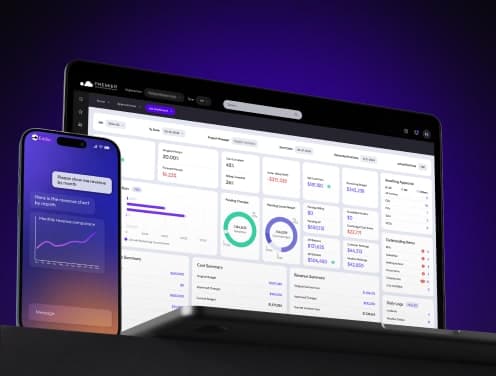
Premier Construction Software construction management software puts your financial management in one place with specialized tools for indirect cost allocation. The system connects your general ledger with job costing data automatically. This creates a continuous connection between your accounting and project management teams. You get these advantages with this integrated approach:
- Live visibility into budget status and overhead consumption
- Full drill-down capabilities to track cost details and data formation
- Built-in alerts that prevent budget overages and coding errors
You can monitor job profitability, cash flow, and project KPIs without switching between systems. Premier Construction Software’s construction financial management software also makes inter-company transactions smooth by recording and reconciling expenses between different entities in your organization. Large contractors with multiple divisions that share common overhead resources find this feature especially valuable.
Premier Construction Software's job costing features support up to five hierarchy levels. You can track costs by building, lots, phases, or any classification structure that fits your operations. This detailed tracking creates the foundation for exact overhead allocation.
Benefits of automation and live tracking
Automated indirect cost allocation brings many advantages beyond just convenience. Construction cost tracking software fixes traditional problems by bringing together financial data from procurement systems, payroll, equipment logs, and vendor invoices.
The system dramatically cuts down human error. Spreadsheet-based operations have mistakes in up to 40% of cases. Automated systems eliminate these errors and provide reliable information for decisions.
Budget discrepancies show up within hours instead of during monthly reviews. You can adjust material orders or labor costs quickly before they hurt your profitability.
Modern systems can predict trends effectively. These tools analyze historical data to spot patterns in indirect cost overruns or savings. This helps you plan future projects better. Your budgeting and cost estimations become more accurate.
Integrating with project management systems
Your financial tools show their actual value when they connect with broader project management systems. This creates a complete view of your projects' financial health.
Cloud-based solutions let teams see cost information from anywhere. Your office and field teams use one central system that updates budgets, approvals, and expenses instantly. Site managers enter labor hours, material usage, and equipment data directly. This removes delays from end-of-day data entry.
Connecting financial and project management gives you these concrete benefits:
- Better cost control: The system flags problems as they happen so that you can fix them right away
- Resource optimization: Automated workforce planning matches teams based on skills and availability
- Improved cash flow management: Live financial monitoring helps you adjust spending based on current data
Look for platforms that have strong financial tools and connect easily with other systems. The goal goes beyond better allocation; you want a unified system where indirect costs flow to the right projects automatically.
Common Mistakes and How to Avoid Them
Competent financial managers can make pricey mistakes when dealing with indirect costs. These mistakes quietly eat away at profits, and many don't notice until severe damage is done. Let's get into the most common traps and practical ways to avoid them.
Misclassifying direct vs. indirect costs
Direct and indirect costs often blur together in day-to-day operations. Many contractors put expenses in the wrong category, which creates misleading financial reports that guide poor bidding decisions.
Take time to check each expense carefully. Equipment rental for a specific project belongs in direct costs, not overhead. A project manager's salary should go into indirect costs when they handle multiple jobs at once.
Construction companies often mix up project-specific overhead with company-wide expenses. This creates two big problems:
- Double-counting costs in both categories
- Missing certain expenses in financial reporting completely
Clear written guidelines for your team can prevent these errors. A standard chart of accounts should spell out which expenses fit in each category. Your accounting staff needs training to spot the difference between costs that support specific projects versus those that keep your whole operation running.
Using outdated allocation methods
Contractors often use similar overhead allocation approaches for every project, something financial experts strongly warn against. This cookie-cutter approach might work in manufacturing, butit falls short in construction, where projects vary significantly in complexity.
The "one-size-fits-all" method usually charges too much overhead for simple jobs while undervaluing complex ones. This imbalance creates pricing problems that hurt your bottom line over time.
Monthly overhead changes make forecasting tricky if you only look at past periods. Changes in business structure or project types can quickly make old allocation methods useless.
Ignoring overhead in bids and budgets
The mistake that hurts the most? Leaving out overhead when preparing project bids. Construction companies usually carry overhead between 10% and 11%, but many contractors only look at direct costs during bidding.
This mistake leads to underpricing and smaller profit margins, setting up your projects to struggle financially before they start. This practice creates a company-wide profit problem that gets harder to fix as time goes on.
Note that these costs don't vanish just because you ignore them; they just make recovery more complicated down the road.
Tracking for Continuous Improvement
The ability to turn data into strategic insights separates average performers from exceptional ones in construction. Your tracking systems need to be in place before you can make use of information to refine your approach to indirect costs.
Using data to refine cost strategies
Analytics lets your construction business analyze cost patterns, identify trends, and make smarter decisions about overhead allocation. This approach strengthens your strategic planning in several ways:
Research in construction found that the most critical connection exists between project quality and how often project managers meet field supervisors to review indirect costs. These regular reviews showed positive results across five key project performance metrics.
Your team can refine overhead allocation methods and boost profitability across projects through careful analysis. This approach turns historical data from a static record into a dynamic planning tool.
Measuring and forecasting with analytics
Analytics helps you move from reactive measures to proactive decisions about costs. When you measure against industry averages, you can:
- Find inefficiencies before they hurt profitability
- Update procurement strategies based on predicted material cost increases
- Build more accurate future budgets using past performance
- Plan better by forecasting potential financial scenarios
Note that accurate indirect cost allocation improves project pricing by showing actual costs clearly, which results in more precise bidding strategies. Detailed cost information also guides better resource allocation decisions and shows a clearer picture of your business's financial health.
Conclusion
Your construction business's financial picture changes when you track and allocate indirect costs properly. This piece explains how these hidden expenses can affect your bottom line. You can bid more competitively, price projects accurately, and keep healthier profit margins with precise allocation.
Understanding which expenses qualify as indirect costs puts you in control of your financial management. Your overall overhead burden includes administrative expenses, project-specific indirect costs, insurance, and equipment-related expenses.
The proper allocation method can make a big difference. You should pick labor hours, direct costs, or a sophisticated approach like activity-based costing based on what works best. Your company's unique operations should guide your choice while ensuring fair cost distribution across projects.
Anyone can follow the five-step allocation process. Each step leads to more accurate project financials, from identifying all indirect costs to reviewing your allocation rates regularly.
Premier Construction Software makes this process easier with its financial tools. These tools automate allocation, minimize errors, and provide up-to-the-minute data analysis. Your team saves time while improving accuracy.
Contractors often misclassify costs, use outdated allocation methods, or leave overhead out of bids completely. These mistakes quietly eat away at profits, but you can avoid them with sound systems and regular reviews.
The data from careful tracking becomes a valuable asset. You can use analytics to improve cost strategies, measure performance, and predict future trends.
Cost tracking goes beyond accounting - it helps create a profitable, green construction business. Eveminorll improvements in overhead allocation can boost your bottom line substantially. Your financial clarity and project profitability will grow when you put these practices to work.
Latest articles



Trusted by global leaders
Join those who have put their trust in us